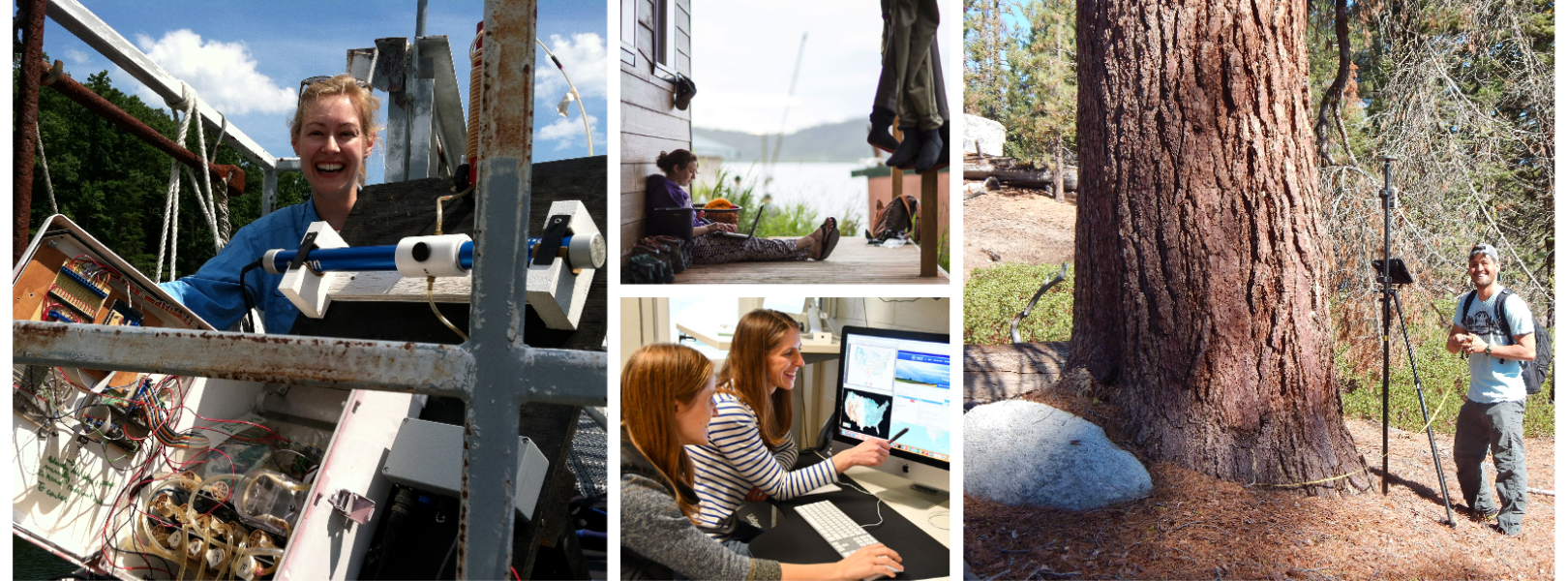
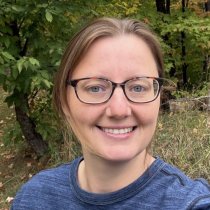
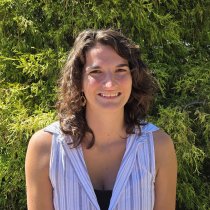
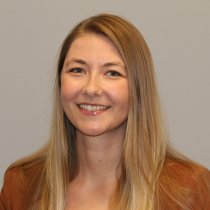
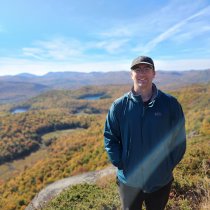
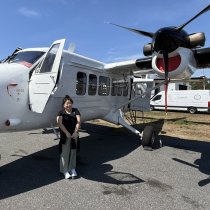
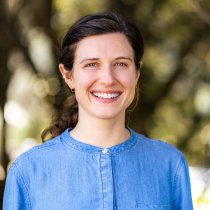
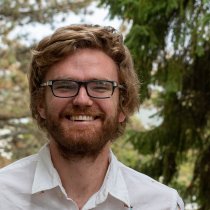
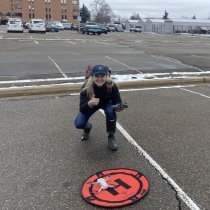
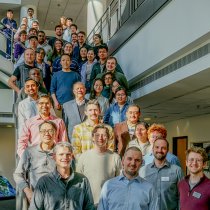
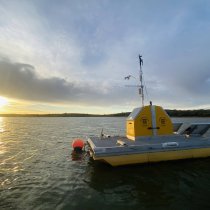
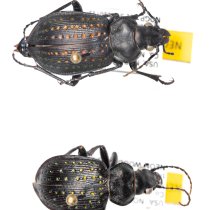
The NEON Ambassador Program empowers and connects a cohort of early-career researchers and educators eager to augment NEON’s engagement with a breadth of scientific communities of practice. Meet the nine outstanding individuals joining the 2026-2028 NEON Ambassador cohort.
Ashley Spink, Field Operations Manager for Domain 05, knows the foundation for quality ecological data well. Read the conversation with Ashley about what NEON looks like in real time in Domain 05: the people doing the fieldwork, the places where data and sample collection happens, and the partnerships that strengthen the scientific value of the Observatory’s data and samples.
Meet Dr. Alexi Besser! Dr. Besser is a postdoctoral research scholar in the School of Earth and Space Exploration at Arizona State University. She uses field and lab-based approaches to study how energy and nutrients move through ecosystems. The mentorship component of the NEON Ambassador program helped Besser design her Ambassador capstone project for IsoCamp, a training program for stable isotope ecology.
Meet Dr. Max Glines! Dr. Glines is a postdoctoral associate and data scientist at the Cary Institute of Ecosystem Studies. A limnologist by training, Glines studies lakes using large-scale datasets, remote sensing, and high-frequency sensor data. He joined the NEON Ambassador Program to learn more about NEON aquatic data and help raise awareness of NEON resources within the Global Lake Ecological Observatory Network (GLEON), a grassroots network of lake researchers who share data and collaborate across sites.
Meet NEON Ambassador Dr. Di Yang! Dr. Yang is an Assistant Professor in the Department of Geography at the University of Florida, where she studies how remote sensing, geospatial analytics, machine learning, and citizen science can help scientists understand changing landscapes. As a NEON Ambassador, Yang has focused on data literacy and citizen science: helping students, researchers, and members of the public connect field observations with larger environmental datasets.
Meet NEON Ambassador Dr. Anna Spiers! Spiers is an ORISE Fellow with the Alaska Climate Adaptation Science Center, a partnership between the U.S. Geological Survey and the University of Alaska Fairbanks. The NEON Ambassador program cohort connected her with early-career researchers she might not otherwise have met: people working in different areas of ecology and evolution but navigating similar career stages and sharing an interest in NEON data.
Meet NEON Ambassador Dr. Reid Longley! Longley is an Assistant Professor at North Carolina State University, where his lab studies how interactions among microbes influence plant health, agricultural productivity, and ecosystem services. Through the NEON Ambassador program, he explored NEON's metagenomics datasets and built a stronger professional network that has opened new opportunities for collaboration, publishing, and grant development.
Meet NEON Ambassador Kit Lewers! Lewers is a Ph.D. candidate in information science at the University of Colorado – Boulder and a NASA FINESST Fellow. Her research focuses on how technical infrastructure can help scientists work across disciplinary boundaries, especially in fields that depend on large, complex datasets. A major focus of her Ambassador work has been exploring how NASA’s ISOFIT, an open-source tool for processing imaging spectrometer data, can be used with NEON Airborne Observation Platform data.
Meet NEON Ambassador Dr. Yujie Liu! Liu studies carbon cycling in terrestrial ecosystems, with a focus on how large-scale ecological datasets can help scientists better understand ecosystem change. As a postdoctoral researcher at Northern Arizona University, she is working on an NSF-funded project evaluating the continuity of NEON and AmeriFlux data streams.
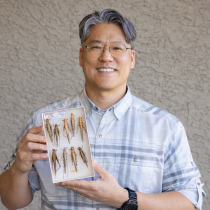
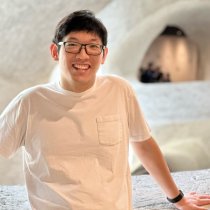
How do mammals and their gut microbes evolve together, and what can microbial communities reveal about the movement and history of animal populations? Dr. Taichi Suzuki and his lab at Arizona State University seek to understand the evolution and distribution of gut microbiomes and the microbiome's impacts on the host.
With so much NEON data available, new users may ask, “where should I start?” In a conversation with Dr. Christine Laney, NEON data scientist, she offers a practical starting point for new users, whether they’re looking for data for research, teaching how to work with data, or just generally learning about NEON.
How much water is actually moving through a stream at any given moment? NEON continuous discharge data tracks flow over time at rivers and wadeable stream sites, creating a usable record of a primary driver of change in aquatic ecosystems.
Kim Nitschke, Instrumentation Group Manager, explains why quality assurance and quality control (QA/QC) are central to NEON’s value, how instrument systems are maintained at a continental scale, and what it takes to build confidence in ecological data from the field to the data portal.
Researchers Anthony Pignatelli and Tad Dallas of University of South Carolina used NEON aquatic data from 18 streams to investigate whether aquatic macroinvertebrate species increase and decrease together, or in sync, or whether they fluctuate independently. Feeding strategies best explained differences in community synchrony indicating that biological roles may be a key factor in shaping community change over time.
Researchers, practitioners and early-career scientists came together for the Remote Sensing and Fluxes for Real-world Impact Workshop, hosted by NEON in collaboration with AmeriFlux and CarbonDew. The workshop focused on connecting eddy covariance flux measurements with remote sensing and geospatial data. Participants explored how to take measurements collected at a single point on the landscape and turn them into insights that can guide decisions at regional or global scales.
Across the continental-scale network of NEON, aquatic field sites provide a long-term, standardized view of how streams, rivers and lakes are changing over time. In a conversation with NEON ecologist Zach Nickerson, learn what makes aquatic ecosystems so complex, how NEON data enables researchers to study them at scale, and why long-term data is essential.
NEON and the Environmental Data Science Innovation & Impact Lab (ESIIL), in collaboration with the HDR Imageomics Institute at The Ohio State University (OSU), hosted a virtual hackathon to provide the tools for researchers to test how well machine learning models can make predictions in conditions they were not trained on. Participants were able to take what they learned to submit entries to the NSF Harnessing the Data Revolution Scientific-MOOD FAIR Challenge. The Challenge winners will present their solutions this week at the FARR RCN workshop.
As hydrogen becomes a potential clean energy source, scientists want to know what happens when small amounts leak directly into the atmosphere. Dr. Laura Meredith's NSF-funded University of Arizona research team worked with NEON’s NRSS for support in investigating how soil microbes absorb hydrogen from the atmosphere and how that process might change with different hydrogen levels.
NEON provides an extraordinary level of data using its scientific infrastructure and offers its infrastructure for specialized use through its NEON Research Support Services (NRSS). Learn more about NRSS in conversation with Dr. Rommel Zulueta, Senior Research Scientist at NEON Battelle and NRSS Lead.
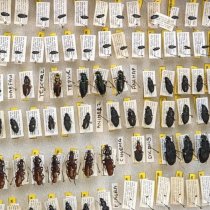
How are insect communities changing across ecosystems over time, and what environmental factors are driving those changes? NEON data can help answer that question!
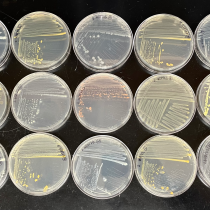
Soil microbes may be tiny, but they play an outsized role in ecosystems. These microscopic powerhouses release small bioactive molecules—“secondary metabolites”—that support nutrient uptake by plants and other critical ecosystem functions.
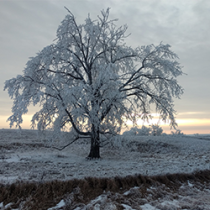
Senior field ecologist, Jessie Hall, North Dakota (Domain 09), and field ecologist Aaron Schoofs, Wisconsin (Domain 05), share how two of NEON’s northernmost teams prepare aquatic sites and sensors to survive harsh winters—and why flexibility, safety and teamwork are key.
A team of NEON scientists—including Dr. Mike SanClements, Dr. Cedric Hagan and Dr. Chris Florian—are working with NREL, NVIDIA and the NSF ASCEND Engine to build digital twins of the environment: virtual ecosystems powered by NEON data, advanced hydrology modeling and AI. See how this partnership is creating high-tech forecasts for wildfire risk, water availability and soil health—and opening the door to a new generation of ecosystem-scale decision tools.
Battelle NEON will have a major presence at this year's American Geophysical Union conference. Stop by and visit staff at the Battelle NEON booth in the exhibit hall and check out one of the many sessions staff are involved in.
Learn more about featured expert Dr. Tong Qiu's and his co-investigators' work that correlated nutrient availability and seed production to build better models of forest growth and regeneration. The results were published in the journal Ecology : “Remotely sensed crown nutrient concentrations modulate forest reproduction across the contiguous United States.”
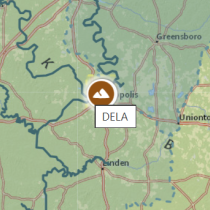
NEON has initiated the decommissioning of the Dead Lake NEON (DELA) terrestrial gradient site in Domain 08 (AL), at the request of the site host. Instrument Systems (IS) data collection has been discontinued as of Oct. 6, 2025, and Observation Systems (OS) data collection will end in December 2025. Airborne Observation Platform (AOP) data will continue to be collected.
At this year's Ecological Society of America (ESA) Annual Meeting, Corinne Vietorisz received the “Best NEON Presentation Award” for her research on how soil microbes drive nutrient cycling, a process critical to plant growth, carbon storage, and ecosystem health. Using NEON’s datasets, she uncovered surprising links between fungi, bacteria, and nutrient cycling processes across diverse ecosystems.