2024 in Photos: A Look Back Across the Observatory
December 30, 2024
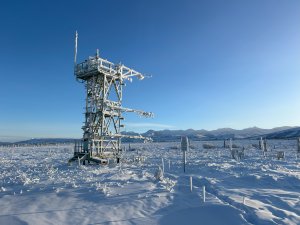
Science is a year-round enterprise at the National Ecological Observatory Network (NEON). The NEON Program – funded by the U.S. National Science Foundation and operated by Battelle – is tasked with collecting and providing high-quality, open-access environmental data from across the U.S. that can be used to characterize and understand our nation's ecosystems. A key component is the people who make this endeavor possible, no matter the season. As 2024 draws to a close, here’s a look back at science in action (plus a little fun!) across the Observatory.
January
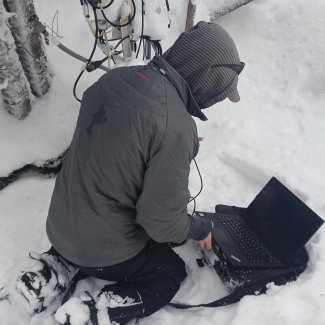
Field ecologist Matt Olivier downloaded data from an in-stream sensor at the West St. Louis Creek site (WLOU) in the Rocky Mountains in Domain 13.
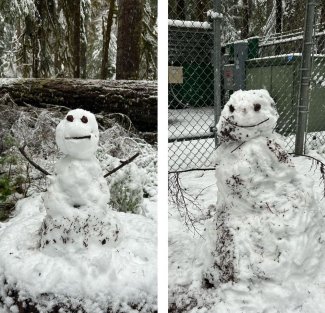
In the Pacific Northwest (Domain 16), field staff found time to build some companions during a snowstorm at the Wind River Experimental Forest site (WREF) in Washington.
February
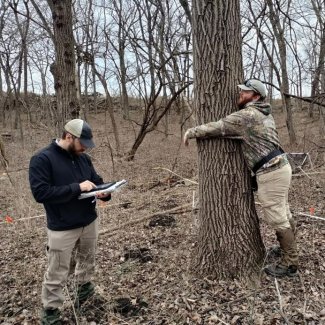
Out on the Prairie Peninsula (Domain 06), botanists completed vegetation structure surveys for a Research Support Services project. One technician used a range finder to determine the height of the tree, while another took the diameter at chest height.
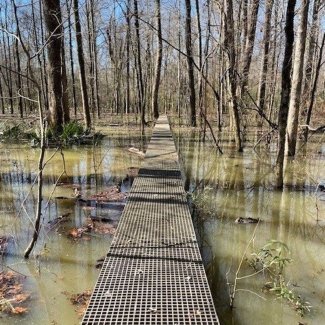
In Alabama (Domain 08), field sites Dead Lake (DELA) and Mayfield Creek (MAYF) experienced high flooding, capturing the highest discharge rates on record for MAYF! Fortunately, the NEON groundwater wells are fitted with snorkel caps to prevent flood water from intruding.
March
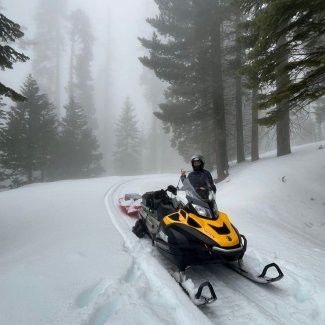
At 6700 ft. elevation in California, NEON Domain 17 aquatic technicians used snowmobiles to access Teakettle Creek (TECR), a site often buried in snow during harsh Sierra Nevada winters and into the spring.
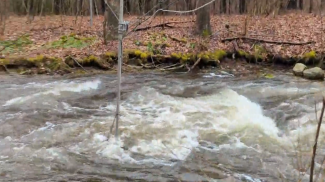
Across the country in Massachusetts, the Lower Hop Brook site (HOPB) in Domain 01 experienced heavy snow melt in March, when the stream pushed flow rates up to 2400 cubic meters per second—six times its normal flow rate!
April
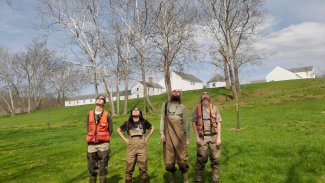
What was the biggest event in early April 2024? The eclipse! The Mid-Atlantic field team in Domain 02 took some time to admire the partial eclipse on April 8 – with proper eye protection of course!
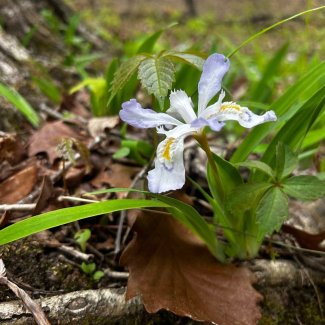
Spring started to emerge in places across the Observatory; here, a spring iris bloomed beautifully at the Talladega National Forest (TALL) site in Domain 08, the Ozarks Complex Domain.
May
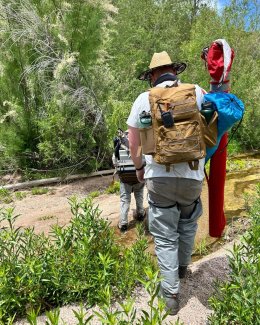
In the Desert Southwest, Domain 14 field staffers Taylor Jarvis and Madie Ritter lugged gear to the groundwater wells at the Sycamore Creek (SYCA) site in Arizona to conduct the biannual groundwater chemistry protocol.
NEON Airborne Observation Platform (AOP) staff flew to a lot of interesting places this year and met up with field staff when they could. Here, Domain 08 technicians got to tour the aircraft ahead of the summer flight surveys.

June
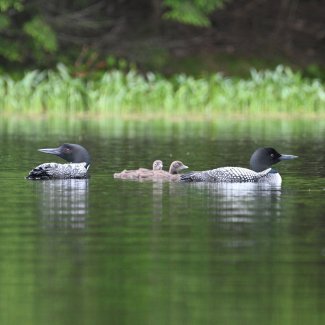
This family of common loons (Gavia immer) was seen at Crampton Lake (CRAM) in the Great Lakes, Domain 05. We love to see loons because they are an indicator of excellent water clarity.
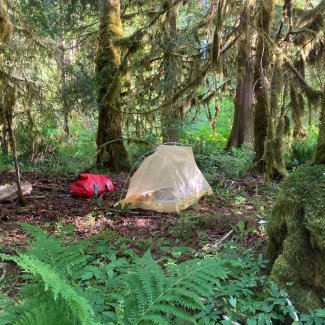
June is a great time to go camping in the Pacific Northwest. Domain 16 field crews took the opportunity to spend even more time in nature and get extra familiar with the field sites there.
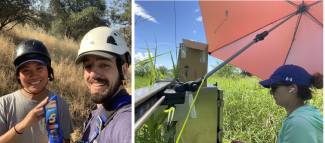
With a hot summer all over the U.S., sun protection was key for doing safe field work! Left: in Puerto Rico (Domain 04), technician Maria Beltrocco performed some troubleshooting at Lajas Experimental Station (LAJA). Right: Evan Donoso and Eissas Ouk of Hawaii (Domain 20) traveled to California to help with the Lower Teakettle (TEAK) sensor refresh – they were sure to apply sunscreen!
July
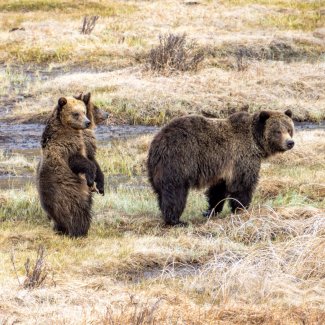
We always watch out in bear country! This family of grizzlies (Ursus arctos horribilis) was spotted near Blacktail Deer Creek (BLDE) in Domain 12, the Northern Rockies. Grizzly bears are a cornerstone species in the Greater Yellowstone Ecosystem.
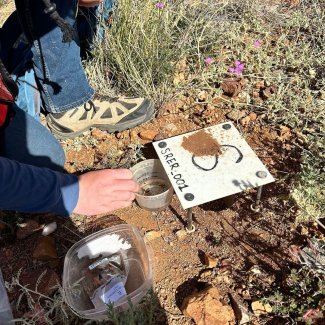
The Domain 14 fauna team was hard at work in the Desert Southwest with beetle and mosquito trapping in the summer months. Here, they worked with one of the pitfall traps, which captures specimens that are then processed for data and sent to the NEON Biorepository.
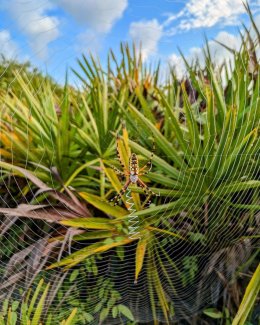
This stunning yellow garden spider was found at the Disney Wilderness Preserve site (DSNY) in Domain 03, the Southeast. What a web!
August
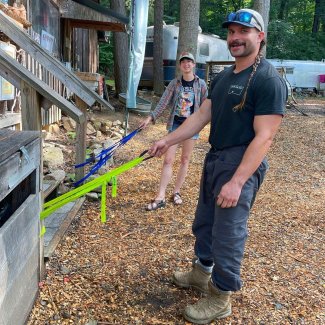
Aquatics technicians from Domain 08 (Alabama) and Domain 03 (Florida and Georgia) attended a swiftwater rescue course hosted by the Nolichucky Outdoor Learning Institute on the Nolichucky River in Tennessee. The best field work is safe field work!
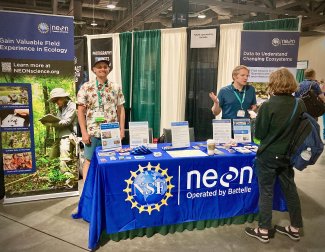
The 2024 Annual Meeting of ESA in Long Beach, CA was a fantastic chance to meet many people in the ecological community and share all about the Observatory. NEON staff and leadership members hosted a booth and led several contributed talks, short courses, and workshops.
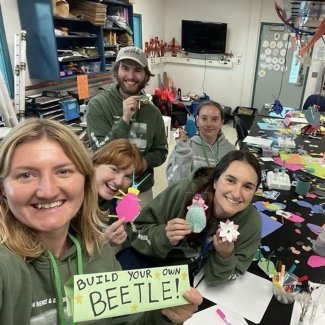
At NEON’s farthest north site at Utqiaġvik (BARR) in the Alaska Tundra Domain, Domain 18/19 staff had the opportunity to facilitate a fun hands-on activity at the BARC Science and Culture Fair. The fair was an event facilitated by the NSF, Battelle, and Ukpeaġvik Iñupiat Corporation Science.
September
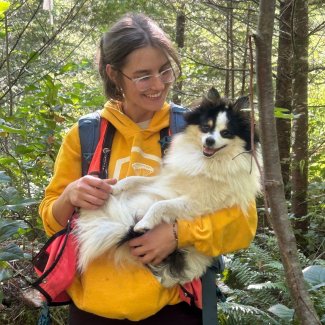
When a lost pup showed up at the Abby Road (ABBY) field site in the Pacific Northwest, the Domain 16 field crew took time out of their day to help him find his family.
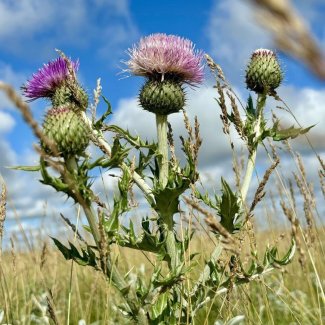
In the fall, thistles are among the flowers that bloom in North Dakota, home to the NEON Northern Plains Domain (Domain 09).
October
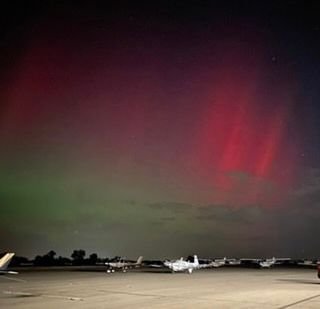
The aurora borealis was especially strong in many places across North America in early October. This stunning photo was captured at the Boulder airfield in Colorado, where the NEON Airborne Observation Platform undergoes post-season calibration before winter down-time.
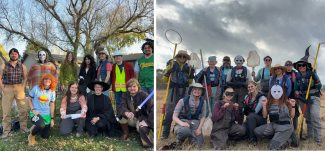
Many NEON field staff across the Domains got into the Halloween spirit! Pictured here are staff in North Dakota (Domain 09; left), and from Texas and Oklahoma (Domain 11; right). The D11 team was completing the fall fish sampling protocol – in one day, they caught and processed 847 fish, from 23 unique species.
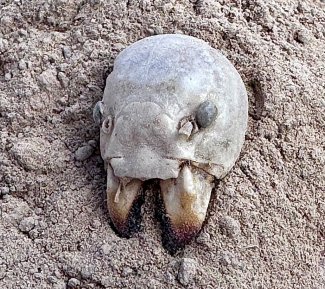
Also for the spooky season, staff in Domain 15 (the Great Basin) shared this photo of the remnants of a Jerusalem cricket (or “potato bug”) found at the Onaqui (ONAQ) field site in Utah. They sometimes find these critters as bycatch in the NEON beetle pitfall traps.
November
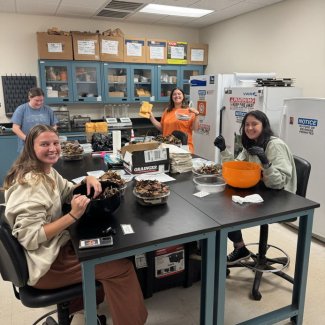
In Domain 07 in the Appalachian Mountains, a few seasonal technicians helped with sorting below-ground biomass cores, including cores sent from NEON California and Alaska Domains (D17, D18/19). We had four seasonal technicians washing and sorting roots!
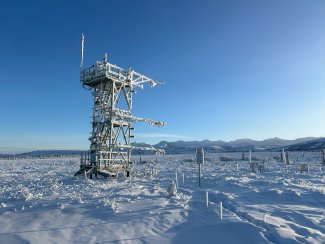
Far to the north in Alaska’s Taiga (Domain 19), winter had already taken over the Healy site (HEAL) by November. Domain 18/19 field staff are always excited to don snow gear and trek out to the site.
December
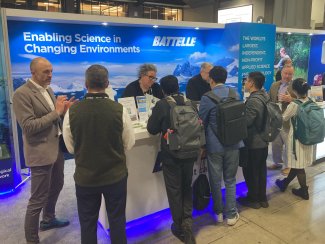
Mid-December, members of the NEON Science team attended and presented at the American Geophysical Union Annual Meeting in Washington, D.C.! They also supported other Battelle staff at the Battelle exhibit booth, spreading the word about how NEON data and resources are advancing ecological science.
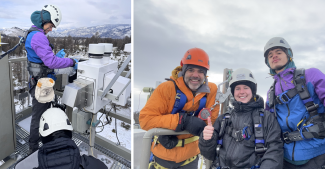
And finally, although most field sampling has stopped for the season in December, quarterly maintenance of aquatic sensors and tower instrumentation swaps are in full swing. Here are NEON field techs braving the cold in Domain 12 at the Yellowstone National Park site (YELL).
NEON wishes everyone a warm and wonderful start to the New Year!