
About Samples
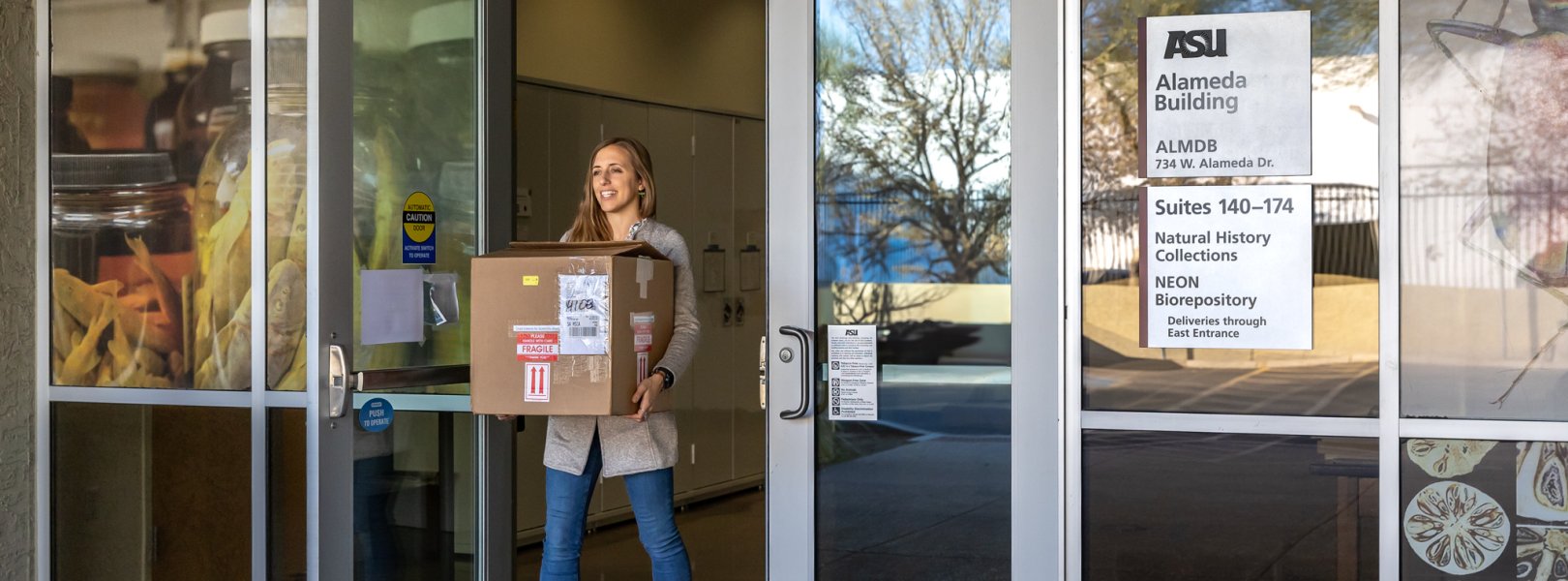
NEON has been collecting specimens as part of its sampling program since 2012. In 2018, NEON began construction of the NEON Biorepository – a facility intended to archive most specimens curated by the NEON program - at the ASU Center for Biological Collections and Discovery in Tempe, AZ. The NEON Biorepository publishes records for every archived sample and specimen and makes these samples available for loan.
Sample Organization
Sample Types
Explore the range of sample types archived at the Biorepository, including soils, organisms (whole and subsampled), and genomic extracts.
Other Sample Repositories
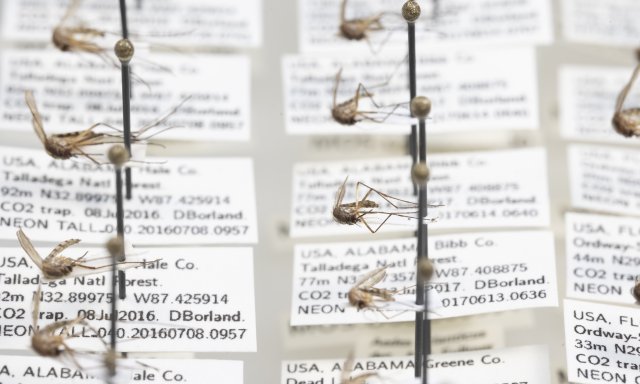
Although the NEON Biorepository is the primary facility housing NEON samples, select specimens are held by other institutions. Requests for these samples should be made directly to the hosting organization.
Sample Processing
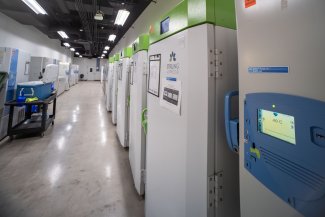
Providing high-quality, richly contextualized samples is a key component of NEON’s mission and allows for greater understanding of complex ecological processes at local, regional and continental scales. Each protocol describes field collection of samples. Some samples are immediately curated for archive at the NEON Biorepository and are not subject to direct analysis by NEON staff. Other samples are collected as a target for a particular analysis (e.g., chemical composition, taxonomic analysis, genetic analysis). Where possible, NEON strives to archive the downstream products of these analyses (e.g., the NEON Biorepository archives any remaining genomic DNA after small mammal ear tissue is processed for DNA sequence analysis). Researchers interested in intermediate sample products or desiring additional sample collection can submit a NEON Research Support Services request.
Sample Identification and Labeling
Every sample is identified in the NEON database with a unique primary identifier. All samples are designated a Sample Tag (sampleID) and/or Barcode (sampleCode) upon collection and a Catalog Number (archiveGuid) upon physical accession at the Biorepository. Each sample is also designated a Sample Class (sampleClass), describing the sample and stored in a Collection within the Biorepository, which roughly equates to sample type. NEON data products that include sampling will often record sampleIDs in their data tables. Within each data product download, an accompanying table that describes the products' variables will help you identify the sampleID variable names and the data table(s) in which they appear. All samples in the NEON Biorepository can be searched by sampleID, catalog number, or barcode through the Sample Search page.
Sample Tags
A Sample Tag (sampleID) is the identifier for the sample and contains as much information as is required to differentiate specimens within the same sample class; these identifiers may contain information about the sample encoded in the label, including the site or plot of collection, the date or time of collection, the taxon or sex (as applicable), or a unique number (e.g., tag number on a small mammal). Sample tags are auto-generated at time of collection within the field collection app, Fulcrum. As the observatory has moved into operations, sample tags have been supplemented and/or replaced by barcodes.
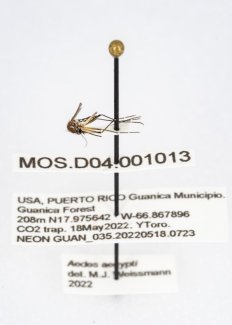
A pinned and labeled mosquito specimen
Barcodes
Barcode (sampleCode) labels were first used on NEON samples in 2017 on a select number of NEON specimens and expanded to most NEON sample types in subsequent years. NEON uses cryo-compatible barcode labels for specimens stored in -20 to -196 ˚C and non-cryo barcode labels for the remaining samples. The non-cryo labels are robust to exposure in solvents (particularly ethanol and water) and are optimized to hold up to field conditions. Within NEON systems, barcodes cannot be duplicated – as in, two separate/different samples cannot be affiliated with the same barcode. This enables NEON to leverage barcode tracking for duplicate checking in the database.
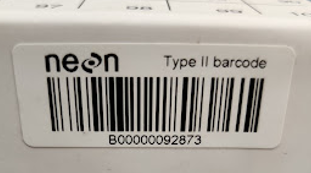
A NEON barcode on a box of specimens
Catalog Numbers
Upon arrival and check-in at the NEON Biorepository, samples are assigned a Catalog Number (archiveGUID). The Catalog Number is shorter, uniform, and globally unique across all accessioned samples. It ensures consistency, as sampleIDs can vary in structure and length based on sample type or collection details. Using a uniform catalog number streamlines sample tracking and referencing across systems, simplifying specimen management and ensuring accurate records as samples are accessed or loaned for research. These identifiers are also registered with SESAR, which assigns the catalog numbers an IGSN ID through DataCite. As a result, each sample is globally unique and web-resolvable with a DOI (e.g., https://doi.org/10.58052/NEON01I8P).
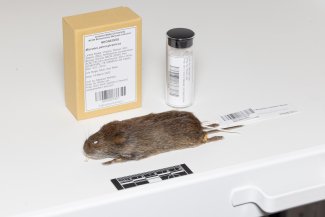
A study skin of a vole, with labeling
Sample Classes
Sample Classes (sampleClass) roughly equate to types of samples, such that carabid specimens mounted on pins (sample class: bet_IDandpinning_in.individualID) have a different class than mounted mosquito specimens (mos_identification_in.individualIDList). The first part of the sample class name identifies the data table that is input into NEON's database, e.g., bet = beetle, IDandpinning = identification and pinning activity, in = ingest. The second part of the sample class name identifies the specific field in the table that holds identifiers. New sample classes are often assigned as an originating field-collected sample goes through various processing steps, so not all sample classes correspond to samples archived at the Biorepository.