
About the NEON Biorepository
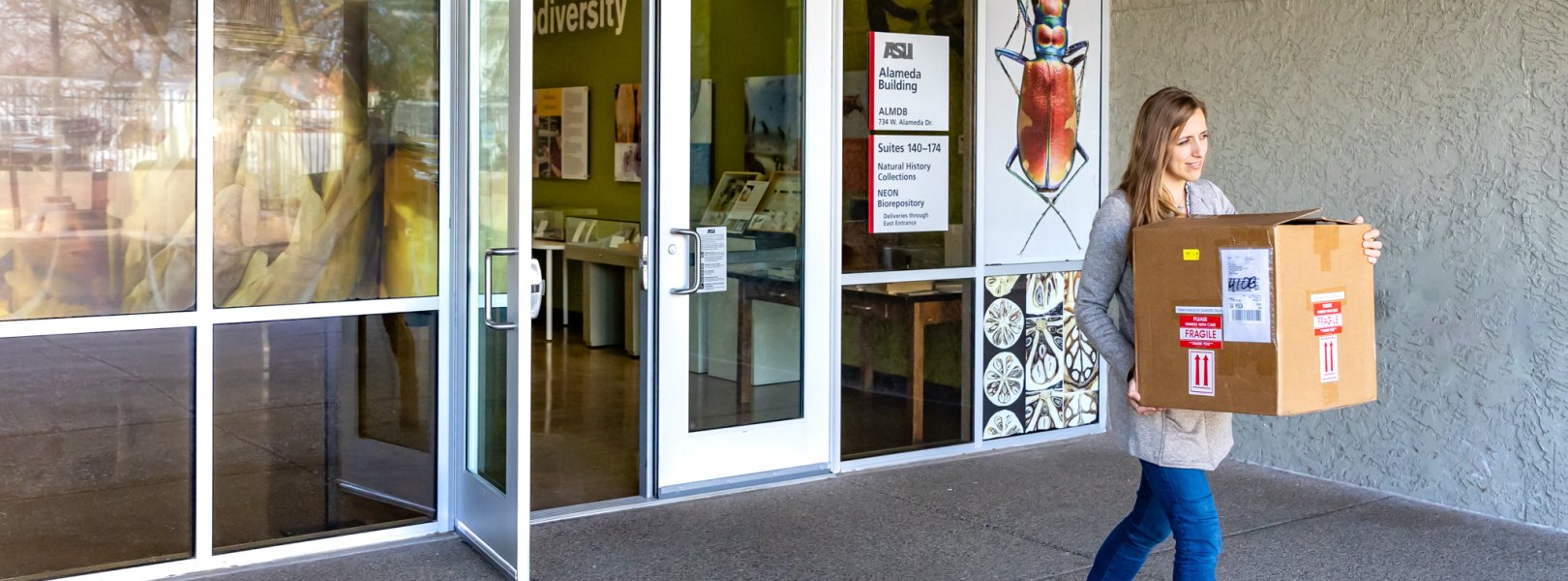
The NEON Biorepository is a long-term archive that preserves samples collected from NEON sites across the project’s duration. Since 2012, NEON has gathered biological, genomic, and environmental materials from terrestrial and aquatic sites using standardized protocols designed to enable cross-site comparability and open ecological research. These materials include both samples collected directly in the field and samples derived from those materials through subsequent processing and analysis.
Construction of the NEON Biorepository began in 2018 at Arizona State University Biocollections in Tempe, Arizona, where it now serves as the central facility for storing and curating the majority of NEON samples. The repository maintains secure, climate-controlled conditions to ensure long-term preservation and accessibility, and all archived materials are linked to rich contextual data generated by the NEON network. Through the use of the Symbiota software, researchers can search for high-quality, event-based sample records and request access to those samples.
What the NEON Biorepository Contains
The NEON biorepository archives a wide range of biological, genomic, and environmental materials collected from NEON sites, including:
- Pinned and alcohol-preserved specimens
- Pressed plant and algal samples
- Frozen microbial material
- Blood, tissue, and other biological derivatives
- DNA and other genomic extracts
- Soils, sediments, and other geochemical samples
Some materials are archived immediately and are not processed by NEON staff, while others are sent for specific analyses (e.g., pathogen testing, DNA barcoding, taxonomic identification, biogeochemical testing, metabarcoding). When analyses generate usable remaining material, the Biorepository retains those materials when possible.
A complete and current list of available materials, along with descriptions, collection methods, and associated data, is available through the Sample Types Browser.
Video orientation to the NEON Biorepository
How is the NEON Biorepository different from a natural history collection?
The NEON Biorepository is uniquely designed for long-term ecological research. Several factors make it a one-of-a-kind infrastructure.
- Non-conventional: In addition to traditional vouchers, the biorepository archives materials collected through ecological sampling protocols, including soils, sediments, canopy foliage, litterfall and others.
- Includes analytical derivatives: The biorepository archives materials generated through downstream analyses of some specimens, including tissues and DNA extracts.
- Fully-digitized: Because the NEON samples are collected following standardized protocols, every single specimen is fully digitized, representing hyper-extended specimens.
- Meant-to-be-used: Consumptive and destructive sampling is encouraged, which is often discouraged in typical natural history collections.
The main purpose of the NEON Biorepository is to preserve and document biodiversity and make the data accessible to the broader scientific community, which is identical to the purpose of any natural history collection. So, it is different but the same.