NSF NEON, Operated by Battelle

Main navigation

  • About
    • NEON Overview
      • Vision and Management
      • Spatial and Temporal Design
      • History
    • About the NEON Biorepository
      • ASU Biorepository Staff
      • Contact the NEON Biorepository
    • Observatory Blog
    • Newsletters
    • Staff
    • FAQ
    • Contact Us

    About

  • Data
    • Data Portal
      • Data Availability Charts
      • API & GraphQL
      • Prototype Data
      • Externally Hosted Data
    • Data Collection Methods
      • Airborne Observation Platform (AOP)
      • Instrument System (IS)
        • Instrumented Collection Types
        • Aquatic Instrument System (AIS)
        • Terrestrial Instrument System (TIS)
      • Observational System (OS)
        • Observation Types
        • Observational Sampling Design
        • Sampling Schedules
        • Taxonomic Lists Used by Field Staff
        • Optimizing the Observational Sampling Designs
      • Protocols & Standardized Methods
    • Getting Started with NEON Data
      • neonUtilities for R and Python
      • Learning Hub
      • Code Hub
    • Using Data
      • Data Formats and Conventions
      • Released, Provisional, and Revised Data
      • Data Product Bundles
      • Usage Policies
      • Acknowledging and Citing NEON
      • Publishing Research Outputs
    • Data Notifications
    • NEON Data Management
      • Data Availability
      • Data Processing
      • Data Quality

    Data

  • Samples & Specimens
    • Biorepository Sample Portal at ASU
    • About Samples
      • Sample Types
      • Sample Repositories
      • Megapit and Distributed Initial Characterization Soil Archives
    • Finding and Accessing Sample Data
      • Species Checklists
      • Sample Explorer - Relationships and Data
      • Biorepository API
    • Requesting and Using Samples
      • Loans & Archival Requests
      • Usage Policies

    Samples & Specimens

  • Field Sites
    • Field Site Map and Info
    • Spatial Layers & Printable Maps

    Field Sites

  • Resources
    • Getting Started with NEON Data
    • Research Support Services
      • Field Site Coordination
      • Letters of Support
      • Mobile Deployment Platforms
      • Permits and Permissions
      • AOP Flight Campaigns
      • Research Support FAQs
      • Research Support Projects
    • Code Hub
      • neonUtilities for R and Python
      • Code Resources Guidelines
      • Code Resources Submission
      • NEON's GitHub Organization Homepage
    • Learning Hub
      • Tutorials
      • Workshops & Courses
      • Science Videos
      • Teaching Modules
    • Science Seminars and Data Skills Webinars
    • Document Library
    • Funding Opportunities

    Resources

  • Impact
    • Research Highlights
    • Papers & Publications
    • NEON in the News

    Impact

  • Get Involved
    • Upcoming Events
    • Research and Collaborations
      • Environmental Data Science Innovation and Inclusion Lab
      • Collaboration with DOE BER User Facilities and Programs
      • EFI-NEON Ecological Forecasting Challenge
      • NEON Great Lakes User Group
      • NCAR-NEON-Community Collaborations
    • Advisory Groups
      • Science, Technology & Education Advisory Committee
      • Technical Working Groups
    • NEON Ambassador Program
      • Exploring NEON-Derived Data Products Workshop Series
    • Partnerships
    • Community Engagement
    • Work Opportunities

    Get Involved

  • My Account
  • Search

Search

Field Sites

  • Field Site Map and Info
  • Spatial Layers & Printable Maps

Breadcrumb

  1. Field Sites
  2. Healy NEON

Field Site

Healy NEON / HEAL

brown circle white drop icon

Gradient Terrestrial, AK, D19: Taiga

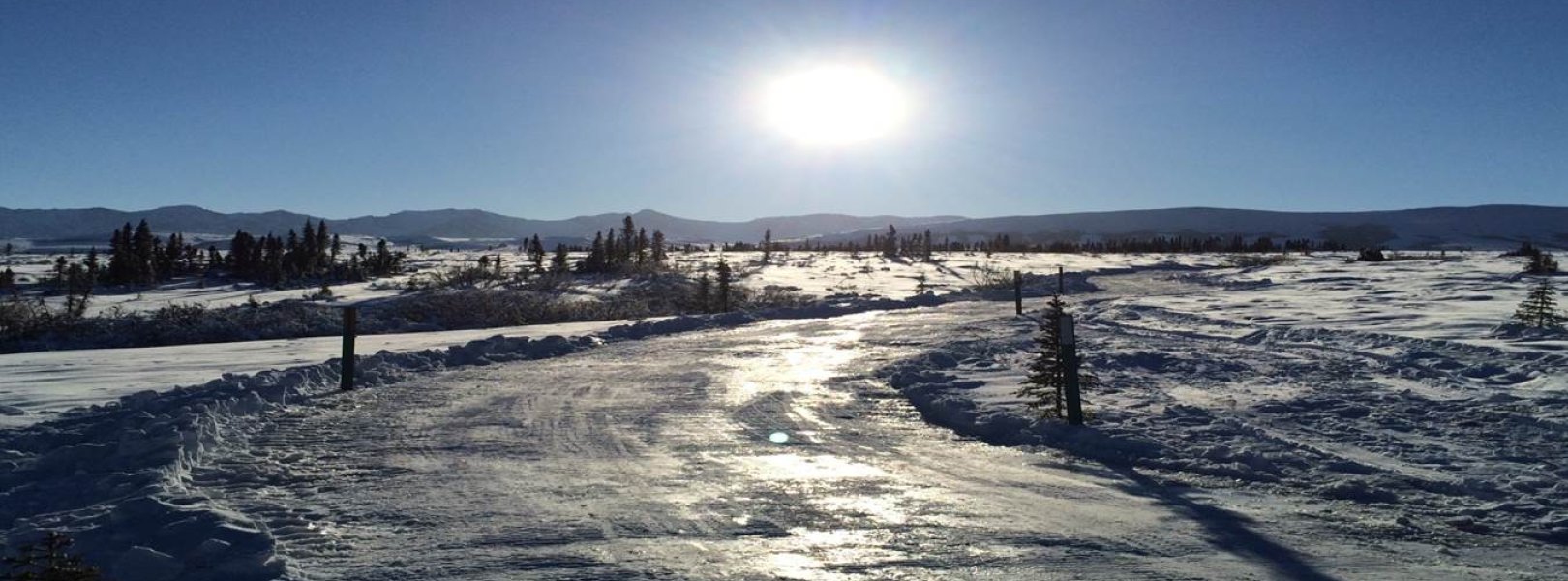
Frozen road at the HEAL field site

About Field Sites

Healy (HEAL) is a terrestrial NEON field site located in central Alaska, 120 km (75 mi.) southwest of Fairbanks and at the northern border of Denali National Park. The 45.6 km2 (11,300 acre) site is managed by the Alaska Department of Natural Resources. It sits at an average of 678 m (2224 ft.) in elevation and is situated in a high-elevation, glaciated valley where the dominant vegetation consists of dwarf shrubs and sedge meadows. This valley experiences widespread permafrost thawing, making it a valuable resource to understand how other permafrost systems in Alaska may experience and react to thawing in the future. The site is open to the public for recreation including hunting, berry picking, snowmobiling, and dog sledding. HEAL is one of the four sites (three terrestrial and one aquatic) located in the NEON Taiga Domain (D19), which comprises Alaska’s interior and the Alaska Peninsula. [1] [2]

Climate

HEAL has a subarctic climate, typified by long, cold winters and brief, mild summers. The mean annual precipitation is 385.3 mm (15 in.) and the mean annual temperature is -1.3°C (29.6°F). Due to its subarctic latitude, Healy experiences no night (only twilight) from May to early August, and only 4 to 5 daylight hours between November and January. [1] [3] [4] [5]

Geology

The bedrock at HEAL is Doxey Shale, and the soil parent material is dominantly quaternary loess over gravelly glacial till and outwash. Geomorphology includes alluvial fans and stream terraces. [2] [17]

Soils

The dominant soil at HEAL is a silty loess overlying glacial till and outwash which has been heavily reworked by environmental agents, including water, gravity, and cryoturbation. A thick (>20 cm) organic horizon is present, and organic accumulations are even heavier in areas that have undergone subsidence as a result of permafrost thawing. The majority of the site has continuous permafrost. [2]

Vegetation

Healy is located in a wet tundra biome, a landscape dominated by ericaceous shrubs, willow scrub, tussock grasses and (in drainages) spruce forests. The vegetation is broadly comparable to that found at the nearby Denali National Park. Common plants at the site include American dwarf birch (Betula glandulosa / Betula nana), white spruce (Picea glauca), marsh Labrador tea (Ledum palustre), bog blueberry (Vaccinium uliginosum), lingonberry (Vaccinium vitis-idaea), tealeaf willow (Salix pulchra), black spruce (Picea mariana), crowberry (Empetrum nigrum), Bigelow’s sedge (Carex bigelowii), and grayleaf willow (Salix glauca). The area around Healy has undergone dramatic changes in vegetation in association with the thawing of permafrost and development of thermokarst landscape, which falls into a wider pattern of vegetation changes in response to climate. As a NEON site, Healy offers the opportunity to study changes in vegetation structure and species diversity as the site undergoes permafrost degradation. [1] [2] [6] [7]

Fauna

Animals native to this region of Alaska include Grant’s caribou (Rangifer tarandus granti), coyote (Canis latrans), red fox (Vulpes vulpes), moose (Alces alces), lynx (Lynx canadensis), gray wolf (Canis lupus), and Dall sheep (Ovis dalli dalli). The site also falls within the range of wood bison (Bison bison athabascae), a subspecies of American bison which is considered threatened under the Endangered Species Act. The small mammal species studied at HEAL include North American brown lemming (Lemmus trimucronatus), several voles in the Microtus genus, northern red-backed vole (Myodes rutilus), northern bog lemming (Synaptomys borealis), and meadow jumping mouse (Zapus hudsonius). [6] [7] [8]

Past Land Management and Use

Humans have been present in Alaska since the late Pleistocene, with the earliest evidence currently dating to 14,000 years ago in the Tanana River valley. At this time, the Alaskan landscape was considerably different from what we find today: a treeless shrub tundra was host to now-extinct fauna including mammoth and horse, and the ice-free corridor from Siberia still allowed passage across Beringia. Though most early archaeology is limited to low-elevation areas, an alpine (>1000 m) archaeological site in Denali National Park called Bull Run II demonstrates that people were at least seasonally utilizing high-elevation areas (such as where Healy is located) as early as 12,500 years ago. People continued to occupy central Alaska throughout the Holocene, mostly using low-elevation valleys but increasingly using high-elevation sites after approximately 6200 years ago, a shift which suggests a change in resource exploitation and possibly an increased focus on caribou hunting. Following Russian contact and colonization during the 18th century, Alaska was incorporated into the United States as the Department of Alaska. Nearby Mount McKinley National Park (now Denali National Park) was established in 1917, and non-native settlements were first established near Healy in the 1920’s when coal mining in the area began and the Alaska Railroad connected the mining camps to Fairbanks and ports on the southern coast. Since the 1980s, the Healy area has been the focus of ecological research looking at the effects of permafrost degradation. [6] [9] [10] [11] [12] [13] [14] [15]

Current Land Management and Use

HEAL is located on land managed by the Alaska Department of Natural Resources (DNR), and is open to the public for general recreation. The DNR manages approximately 100 million acres of land and all freshwater resources in Alaska, and oversees land use including agriculture, forestry, mining, oil and gas operations, and outdoor recreation. The site is located within major land resource area (MLRA) 228, where the primary form of land use is remote wildland recreation (subsistence hunting, backcountry hiking, mountaineering, etc.). In the area near Healy, land use also includes coal mining operations. [1] [4] [16]

NEON Site Establishment

Plot establishment at HEAL began in 2014, and the site was reviewed for sampling readiness in 2015. Dry runs of observational sampling began in late 2015, followed by the first publications of data products for most observational protocols in the same year. Instrumentation systems went online and began producing data in 2016.

Additional Resources

[1] Terrestrial Observation System (TOS) Site Characterization Report: Domain 19. NEON.DOC.003902vB.

[2] Mulligan, Dennis. (2017). NEON Site-Level Plot Summary, Healy, Alaska (HEAL), May 2017. https://data.neonscience.org/documents/10179/2361410/HEAL_Soil_SiteSumm….

[3] National Oceanic and Atmospheric Administration National Centers for Environmental Information’s (NCEI) 1981-2010 climate normals (NCEI 2015).

[4] Land Resource Regions and Major Land Resource Areas of the United States, the Caribbean, and the Pacific Basin

[5] https://www.alaska.org/weather/daylight-hours

[6] Osterkamp, T. E., Jorgenson, M. T., Schuur, E. A. G., Shur, Y. L., Kanevskiy, M. Z., Vogel, J. G., & Tumskoy, V. E. (2009). Physical and ecological changes associated with warming permafrost and thermokarst in Interior Alaska. Permafrost and Periglacial Processes, 20(3), 235–256. doi: 10.1002/ppp.656

[7] https://www.fs.fed.us/pnw/pubs/pnw_gtr967.pdf

[8] TOS Protocol and Procedure: Small Mammal Sampling. NEON.DOC.000481vB. https://data.neonscience.org/documents/10179/2139401/NEON.DOC.000481vB/….

[9] Holmes, C. (2001). Tanana River valley archaeology circa 14,000 to 9000 B.P. Arctic Anthropology, 38(2), 154-170. Retrieved May 14, 2020, from www.jstor.org/stable/40316728

[10] Holmes, C. (2008). The Taiga Period: Holocene Archaeology of the Northern Boreal Forest, Alaska. Alaska Journal of Anthropology, 6(1-2), 69–81.

[11] Wygal, B. (2010). Prehistoric upland tool production in the central Alaska Range. Alaska Journal of Anthropology, 8(1), 107–119.

[12] Potter, B. A. (2008). Radiocarbon Chronology of Central Alaska: Technological Continuity and Economic Change. Radiocarbon, 50(2), 181–204. https://doi.org/10.1017/s0033822200033518

[13] Black, L. (2004). Russians in Alaska: 1732-1867. Fairbanks: University of Alaska Fairbanks.

[14] https://www.alaskacenters.gov/explore/culture/history

[15] https://irma.nps.gov/Datastore/DownloadFile/462515

[16] http://dnr.alaska.gov/commis/pic/about.htm

[17] U.S. Geological Survey, 2005, Mineral Resources Data System: U.S. Geological Survey, Reston, Virginia. https://mrdata.usgs.gov/mrds/

[18] Nawrocki, T., J. Fulkerson, and M. Carlson. (2013). Alaska Rare Plant Field Guide. Anchorage: University of Alaska.

[19] https://www.fs.usda.gov/Internet/FSE_DOCUMENTS/stelprdb5320150.pdf

[20] http://ecoatlas.itsakdev.com/oq-content/uploads/RareSpeciesList.pdf

Field Site Information

Latitude/Longitude

63.875798, -149.21335

Geodetic Datum

WGS84

Location

Denali County
AK, US

Elevation

Mean: 677m
Minimum: 588m
Maximum: 717m

Mean Annual Temperature

-1.3°C

Dominant Wind Direction

NW

Mean Canopy Height

0.3m

Dominant NLCD Classes

Dwarf Scrub, Evergreen Forest, Shrub/Scrub

Colocated Research

North Slope Science Initiative
Critical Zone Exploration Network
Ameriflux

Field Operations Office

3352 College Rd.
Fairbanks, AK 99709

Research Access

If your proposed research requires access to field sites where NEON is present, we can help.

Request Access

Observation Types

Remote Sensing

Remote sensing surveys of this field site collect lidar, spectrometer and high-resolution RGB camera data.

Meteorological Measurements

This site has a flux/meteorological tower that is 9 m (30 ft) tall with four measurement levels. The tower top extends above the vegetation canopy to allow sensors mounted at the top and along the tower to capture the full profile of atmospheric conditions from the top of the vegetation canopy to the ground. The tower collects physical and chemical properties of atmosphere-related processes, such as humidity, wind, and net ecosystem gas exchange. Precipitation data are collected by a tipping bucket at the top of the tower.

Phenocams

One phenocam is attached to the top and the bottom of the tower. Here we show the images from the most recent hour. The full collection of images can be viewed on the Phenocam Gallery - click on either of the images below.

Tower top

NEON.D19.HEAL.DP1.10033

Tower bottom

NEON.D19.HEAL.DP1.10042

Soil Sensor Measurements

This site has five soil plots placed in an array within the airshed of the flux tower. Photosynthetically Active Radiation (PAR) at soil surface, soil heat flux, and solar radiation are measured at the soil surface in each soil plot. Soil moisture, soil temperature, and CO2 concentration are measured at multiple depths in each soil plot.

Observational Sampling

At terrestrial sites, field ecologists observe birds and plants, and sample ground beetles, mosquitoes, small mammals, soil microbes, and ticks. Lab analyses are carried out to provide further data on DNA sequences, pathogens, soils, sediments, and biogeochemistry. Learn more about terrestrial observations or explore this site's data products.


Field Site Data

Site

Site Host

Alaska Department of Natural Resources

Site URL

http://dnr.alaska.gov/

Site Access Details

Coordinate communication with NEON Domain Manager prior to contacting the Alaska DNR.

Operations Office

NEON Field Operations Office

Domain 18/19 Support Facility

NEON Field Operations Address

3352 College Rd.
Fairbanks, AK 99709

NEON Field Operations Phone

907.459.5040

Location

Latitude

63.875798

Longitude

-149.21335

Geodetic Datum

WGS84

UTM Northing

7085047.87m

UTM Easting

391276.60m

UTM Zone

6N

County

Denali

State

AK

Country

US

Mean Elevation

677m

Minimum Elevation

588m

Maximum Elevation

717m

Terrestrial Sampling Boundary Area

45.17km^2

Climate

Mean Annual Temperature

-1.3°C

Mean Annual Precipitation

385mm

Dominant Wind Direction

NW

Vegetation

Mean Canopy Height

0.3m

Dominant NLCD Classes

Dwarf Scrub, Evergreen Forest, Shrub/Scrub

Average number of green days

110

Average first greenness increase date

135 DOY

Average peak green date

180 DOY

Average first greenness decrease date

210 DOY

Average minimum greenness date

245 DOY

Tower

Tower Height

9m

Number of Tower Levels

4

Soils

Megapit Soil Family

Coarse-silty - mixed - superactive - subgelic Typic Histoturbels

Soil Subgroup

Typic Histoturbels


Gallery

  • Photos
  • Videos

No Video


Related Field Sites

Other Domain D19 Field Sites

blue square white drop icon Caribou Creek NEON
Core Aquatic
brown square white mountain icon Caribou-Poker Creeks Research Watershed NEON
Core Terrestrial
brown circle white drop icon Delta Junction NEON
Gradient Terrestrial

Other Field Sites in AK

blue square white drop icon Caribou Creek NEON
Core Aquatic
brown square white mountain icon Caribou-Poker Creeks Research Watershed NEON
Core Terrestrial
brown circle white drop icon Delta Junction NEON
Gradient Terrestrial
blue square white drop icon Oksrukuyik Creek NEON
Core Aquatic
brown square white mountain icon Toolik Field Station NEON
Core Terrestrial
blue circle white drop icon Toolik Lake NEON
Gradient Aquatic
brown circle white drop icon Utqiaġvik NEON
Gradient Terrestrial
NSF NEON, Operated by Battelle

Follow Us:

Join Our Newsletter

Get updates on events, opportunities, and how NEON is being used today.

Subscribe Now

Footer

  • About Us
  • Contact Us
  • Terms & Conditions
  • Careers
  • Code of Conduct

Copyright © Battelle, 2026

The National Ecological Observatory Network is a major facility fully funded by the U.S. National Science Foundation.

Any opinions, findings and conclusions or recommendations expressed in this material do not necessarily reflect the views of the U.S. National Science Foundation.