
NSF NEON, Operated by Battelle

Main navigation

  • About
    • NEON Overview
      • Vision and Management
      • Spatial and Temporal Design
      • History
    • About the NEON Biorepository
      • ASU Biorepository Staff
      • Contact the NEON Biorepository
    • Observatory Blog
    • Newsletters
    • Staff
    • FAQ
    • Contact Us

    About

  • Data
    • Data Portal
      • Data Availability Charts
      • API & GraphQL
      • Prototype Data
      • Externally Hosted Data
    • Data Collection Methods
      • Airborne Observation Platform (AOP)
      • Instrument System (IS)
        • Instrumented Collection Types
        • Aquatic Instrument System (AIS)
        • Terrestrial Instrument System (TIS)
      • Observational System (OS)
        • Observation Types
        • Observational Sampling Design
        • Sampling Schedules
        • Taxonomic Lists Used by Field Staff
        • Optimizing the Observational Sampling Designs
      • Protocols & Standardized Methods
    • Getting Started with NEON Data
      • neonUtilities for R and Python
      • Learning Hub
      • Code Hub
    • Using Data
      • Data Formats and Conventions
      • Released, Provisional, and Revised Data
      • Data Product Bundles
      • Usage Policies
      • Acknowledging and Citing NEON
      • Publishing Research Outputs
    • Data Notifications
    • NEON Data Management
      • Data Availability
      • Data Processing
      • Data Quality

    Data

  • Samples & Specimens
    • Biorepository Sample Portal at ASU
    • About Samples
      • Sample Types
      • Sample Repositories
      • Megapit and Distributed Initial Characterization Soil Archives
    • Finding and Accessing Sample Data
      • Species Checklists
      • Sample Explorer - Relationships and Data
      • Biorepository API
    • Requesting and Using Samples
      • Loans & Archival Requests
      • Usage Policies

    Samples & Specimens

  • Field Sites
    • Field Site Map and Info
    • Spatial Layers & Printable Maps

    Field Sites

  • Resources
    • Getting Started with NEON Data
    • Research Support Services
      • Field Site Coordination
      • Letters of Support
      • Mobile Deployment Platforms
      • Permits and Permissions
      • AOP Flight Campaigns
      • Research Support FAQs
      • Research Support Projects
    • Code Hub
      • neonUtilities for R and Python
      • Code Resources Guidelines
      • Code Resources Submission
      • NEON's GitHub Organization Homepage
    • Learning Hub
      • Tutorials
      • Workshops & Courses
      • Science Videos
      • Teaching Modules
    • Science Seminars and Data Skills Webinars
    • Document Library
    • Funding Opportunities

    Resources

  • Impact
    • Research Highlights
    • Papers & Publications
    • NEON in the News

    Impact

  • Get Involved
    • Upcoming Events
    • Research and Collaborations
      • Environmental Data Science Innovation and Inclusion Lab
      • Collaboration with DOE BER User Facilities and Programs
      • EFI-NEON Ecological Forecasting Challenge
      • NEON Great Lakes User Group
      • NCAR-NEON-Community Collaborations
    • Advisory Groups
      • Science, Technology & Education Advisory Committee
      • Technical Working Groups
    • NEON Ambassador Program
      • Exploring NEON-Derived Data Products Workshop Series
    • Partnerships
    • Community Engagement
    • Work Opportunities

    Get Involved

  • My Account
  • Search

Search

Field Sites

  • Field Site Map and Info
  • Spatial Layers & Printable Maps

Breadcrumb

  1. Field Sites
  2. Teakettle Creek - Watershed 2 NEON

Field Site

Teakettle Creek - Watershed 2 NEON / TECR

blue square white drop icon

Core Aquatic, CA, D17: Pacific Southwest
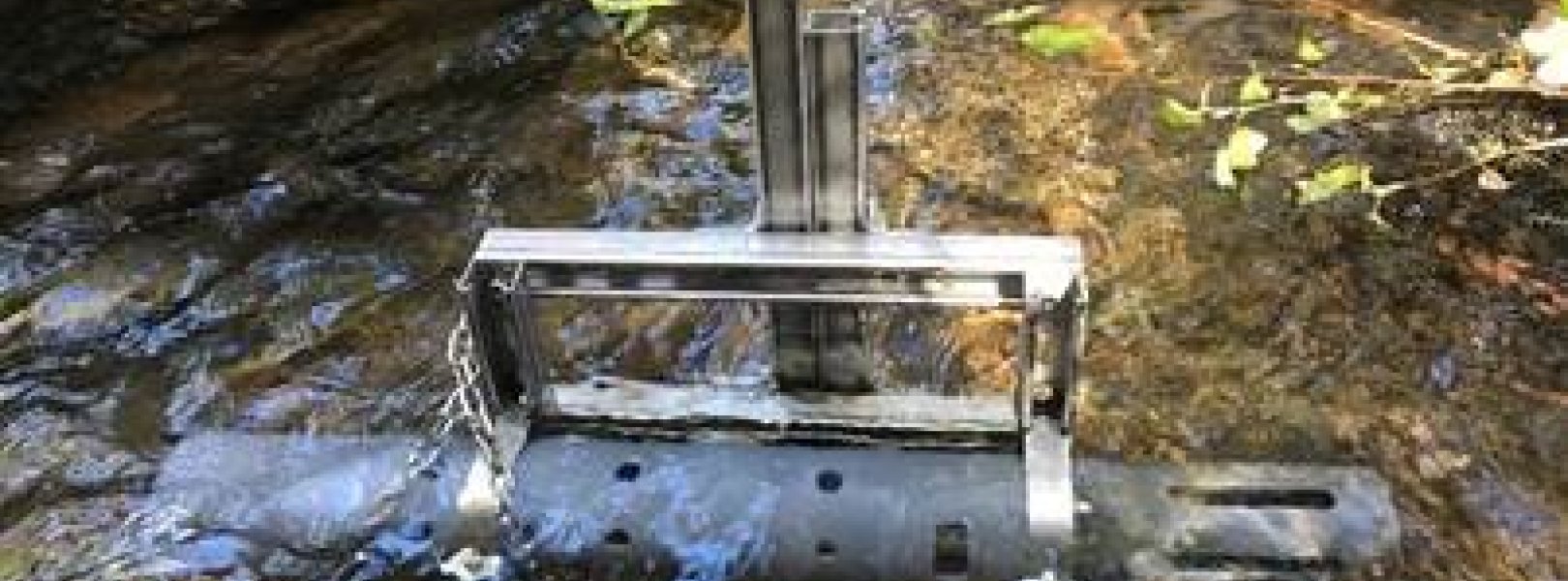
A low profile Sonde sensor from the Domain 17 TECR field site.

About Field Sites

Teakettle 2 Creek (TECR) is an aquatic NEON field site located in the Sierra National Forest, 80 km (50 mi.) east of Fresno, CA, near Courtright and Wishon Reservoirs. It is a wadeable stream on the western slope of the Sierra Nevada Mountains with a watershed size of approximately 3.0 km2 (740 acres). The TECR catchment is entirely located within the Teakettle Experimental Forest (TEF), which is located in the northern part of the Kings River watershed. The TEF was established in 1936 for timber management research and is owned and operated by the U.S. Forest Service Pacific Southwest Research Station. TECR is located at an elevation that spans 2109 - 2489 m (6900 - 8166 ft.). The TECR watershed is southeast-facing and passes through senescent red fir. TECR is part of the Pacific Southwest Domain (D17), which is bounded by the Pacific Ocean on the west and the Sierra Nevada Mountains on the east, and encompasses most of California. There are four other NEON field sites in D17, including three terrestrial sites and one additional aquatic site. TECR is colocated with the NEON terrestrial site Lower Teakettle (TEAK). [1]

Climate

The Sierra Nevada mountain range, influenced by the Mediterranean climate of adjacent California regions, is characterized by a cold forest climate in which precipitation falls mostly as snow in winter and summers are warm and dry. Typical of the Sierra Nevada range, the climate at Teakettle Creek is also characterized by hot, dry summers and mild, moist winters. The mean annual temperature is 8.7°C (48°F). Low humidity results in surface temperatures being strongly influenced by canopy. The difference in temperature between open and closed canopy areas can be as much as 30°C (50°F), particularly during high summer temperatures. The mean annual precipitation is 1174.9 mm (46.25 in.), the majority of which falls as snow. Snowfall occurs between November and May, with snowpack fully melting by late May or early June. [3] [4] [6]

Geology

The Teakettle 2 Creek watershed lies in the Sierra Nevada batholith within the southern extent of the Sierra Nevada mountain range. This batholith is comprised mainly of granodiorite and quartz monzonite and was formed approximately 200 million years ago. [1] [2]

Soils

Major soil series that are mapped near the TECR site include Cannell (Coarse-loamy, mixed, superactive, frigid Typic Dystroxerepts), Cagwin (Mixed, frigid Dystric Xeropsamments), and Stecum (Sandy-skeletal, mixed Typic Cryorthents). The soils in the region are poorly formed due to the climate (cold winters, dry summers), the resistance of the granite to weathering, and the removal of eroded material into drainages before further weather and soil formation can occur. Therefore, soils in this region have low horizonation, clay content, and weak structure. Weathering of granite rocks results in runoff with low dissolved solid content and leads to low nutrient waters. [1] [4] [11] [12] [13] [14]

Hydrology

The flow regime of Teakettle Creek (TECR) is typical of snowmelt-dominated mountainous streams in the west. Base flows are lowest in the winter (November - March) and highest in the late spring (April – June). TECR has a mean base flow of 11 liters per second in the autumn months. Snow melt begins in March and peaks in June. Discharge during the peak flow months of May and June is approximately 18 times greater than base flow. [1]

Vegetation

Teakettle Creek is located in the Teakettle Experimental Forest, a subalpine forest that is dominated by a mix of conifers. Vegetation is characterized by distinct patch conditions of closed-canopy tree clusters, persistent gaps, and shrub thickets. The composition of the vegetation follows the elevation gradient with white fir (Abies concolor), sugar pine (Pinus lambertiana), incense cedar (Calocedrus decurrens), Jeffrey pine (Pinus jeffreyi), and red fir (Abies magnifica) at the lower elevations, to red fir, lodgepole pine (Pinus contorta), and western white pine (Pinus monticola) at higher elevations. The riparian area is extremely dense with shrubs. [1]

Fauna

TECR hosts the non-indigenous brook trout (Salvelinus fontinalis). Native to the eastern United States, brook trout were introduced to California in 1872. Fishes native to the Sierra Nevada include Chinook salmon (Oncorhynchus tshawytscha), rainbow trout (Oncorhynchus mykiss), California roach (Lavinia symmetricus), hardhead (Mylopharodon conocephalus), and riffle sculpin (Cottus gulosus). The Sierra Nevada yellow-legged frog (Rana sierra), mountain yellow-legged frog (Rana muscosa), and Yosemite toad (Anaxyrus canorus) are threatened or endangered amphibians that occur at Teakettle Creek. [7] [8] [9] [10]

Past Land Management and Use

In the 1930s, state and federal agencies sought to increase the water supply of the California central valley via management of Sierra Nevada watersheds. In 1938, five Teakettle Creek drainages were selected for study, and the surrounding 13 km2 (3200 acres) was named the Teakettle Experimental Area. From 1938 to 1942, hydrology research began as stream-gauging stations and sediment basins were constructed. Research halted for 14 years due to World War II. In 1957, records of snowfall and water yields were collected again and studies were resumed. The area was renamed the Teakettle Experimental Forest (TEF) the following year.

The original research objective of the TEF was to determine how water yield could be increased via timber harvest patterns. However, studies conducted in the 1950s and 1960s at other Sierra Nevada watersheds demonstrated that timber harvests had little effect on water yield. From the 1960s to 1980s, the focus of TEF research shifted to the effects of weather patterns on water flow. This study ended in the 1980s due to budget constraints and logistical difficulties. In the 1980s and 1990s, TEF research shifted again to studies of snag dynamics and songbirds. A large ecological study comparing the effects of fire and tree thinning on the ecosystem, known as the Teakettle Experiment, began in 1998 and continues today.

The dominant forest types of the Sierra Nevada are fire-adapted and have been impacted by logging and fire suppression since the 1930s. Wildfires in the area are most often started by lightning strikes. During natural fire regimes, riparian areas buffer aquatic ecosystems by disrupting the spread of fires and burning at lower severity. Fire suppression can lead to fuels accumulating, resulting in higher intensity fires. Prescribed fires and tree thinning have had benign impacts on riparian and aquatic ecosystems of the Sierra Nevada. [15] [16]

Current Land Management and Use

The Teakettle 2 Creek (TECR) catchment is entirely located within the Teakettle Experimental Forest (TEF), which is located in the north part of the Kings River watershed. The TEF is owned and operated by the United States Forest Service (USFS) Pacific Southwest (PSW) Research Station. The PSW Research Station is part of the research and development arm of the Forest Service, which operates six other research stations and 81 experimental forests and ranges, including the Teakettle Experimental Forest (TEF). A large, ongoing experiment at the TEF is comparing the effects of fire and tree thinning on the ecosystem.

The Teakettle 3 Creek, just northeast of TECR, is currently being monitored and controlled for projects that are managed by the USFS PSW and the Kings River Experimental Watershed (KREW). The KREW is an ecosystem project examining the effects of fire and tree thinning on streams and riparian areas. [1] [4] [5] [17]

NEON Site Establishment

Site characterization for TECR began in January 2016 and establishment was completed in November 2017. The aquatic observation system (AOS) began sampling in October 2018. The aquatic instrumentation system (AIS) began streaming in December 2018. [19]

Additional Resources

[1] Aquatic Instrument System (AIS) Site Characterization Report: Domain 17. NEON.DOC.003536vA.

[2] U.S. Geological Survey, 2005, Mineral Resources Data System: U.S. Geological Survey, Reston, Virginia. https://mrdata.usgs.gov/mrds/

[3] https://nrm.dfg.ca.gov/FileHandler.ashx?DocumentID=116552&inline=1

[4] Adams, Mary Beth; Loughry, Linda; Plaugher, Linda, comps. 2004. Experimental Forests and Ranges of the USDA Forest Service. Gen. Tech. Rep. NE-321. Newtown Square, PA: U.S. Department of Agriculture, Forest Service, Northeastern Research Station. 178 p. GTR-NE-321

[5] https://www.fs.fed.us/psw/topics/water/kingsriver/index.shtml

[6] PRISM Climate Group., Oregon State University, http://prism.oregonstate.edu, created 4 Feb 2004.

[7] NEON (National Ecological Observatory Network). 2020. Data Product DP1.20107.001, Fish electrofishing, gill netting, and fyke netting counts. Provisional data downloaded from http://data.neonscience.org on May 1, 2020.

[8] Pam Fuller, and Matt Neilson, 2020, Salvelinus fontinalis (Mitchill, 1814): U.S. Geological Survey, Nonindigenous Aquatic Species Database, Gainesville, FL, https://nas.er.usgs.gov/queries/FactSheet.aspx?speciesID=939, Revision Date: 6/6/2019, Peer Review Date: 9/30/2015, Access Date: 5/1/2020

[9] Sierra Nevada Ecosystem Project: Final report to Congress, vol. II, Assessments and scientific basis for management options. Davis: University of California, Centers for Water and Wildland Resources, 1996.

[10] NEON Domain 17 federal & state RTE species lists

[11] https://soilseries.sc.egov.usda.gov/OSD_Docs/C/CANNELL.html

[12] https://soilseries.sc.egov.usda.gov/OSD_Docs/C/CAGWIN.html

[13] https://soilseries.sc.egov.usda.gov/OSD_Docs/S/STECUM.html

[14] O’Geen, A., M. Safeeq, J. Wagenbrenner, E. Stacy, P. Hartsough, S. Devine, Z. Tian, R. Ferrell, M. Goulden, J.W. Hopmans, and R. Bales. 2018. Southern Sierra Critical Zone Observatory and Kings River Experimental Watersheds: A synthesis of measurements, new insights, and future directions. Vadose Zone J. 17:180081. doi:10.2136/vzj2018.04.0081

[15] North, Malcolm; Oakley, Brian; Chen, Jiquan; Erickson, Heather; Gray, Andrew; Izzo, Antonio; Johnson, Dale; Ma, Siyan; Marra, Jim; Meyer, Marc; Purcell, Kathryn; Rambo, Tom; Rizzo, Dave; Roath, Brent; Schowalter, Tim. 2002. Vegetation and Ecological Characteristics of Mixed-Conifer and Red Fir Forests at the Teakettle Experimental Forest. Gen. Tech. Rep. PSW-GTR-186. Albany, CA: Pacific Southwest Research Station, Forest Service, U.S. Department of Agriculture; 52 p.

[16] Hunsaker, C.T.; Long, J.W. 2014. Forested riparian areas. In: Long, J.W.; Quinn-Davidson, L.; Skinner, C.N., eds. Science synthesis to support socioecological resilience in the Sierra Nevada and southern Cascade Range. Gen. Tech. Rep. PSW-GTR-247. Albany, CA: U.S. Department of Agriculture, Forest Service, Pacific Southwest Research Station: 323-340. Chap. 6.2.

[17] https://www.fs.fed.us/research/about/

Field Site Information

Latitude/Longitude

36.955931, -119.02736

Geodetic Datum

WGS84

Location

Fresno County
CA, US

Elevation

Mean: 2011m

Mean Annual Temperature

8.7°C

Dominant NLCD Classes

Evergreen Forest

Colocated Site(s)

Lower Teakettle NEON

Field Operations Office

4727 West Shaw Avenue
Fresno, CA 93722

Research Access

If your proposed research requires access to field sites where NEON is present, we can help.

Request Access

Observation Types

Remote Sensing

Remote sensing surveys of this field site collect lidar, spectrometer and high-resolution RGB camera data.

Meteorological Measurements

This site has one meteorological station located in the riparian area. The met station is outfitted with a subset of the same sensors used at terrestrial sites. Measurements include wind speed and direction, air temperature, barometric pressure, relative humidity, shortwave radiation, and PAR.

Phenocams

A phenocam is pointed toward the land-water interface of the site. Here we show the images from the most recent hour. The full collection of images can be viewed on the Phenocam Gallery - click on the image below.

NEON.D17.TECR.DP1.20002


Field Site Data

Site

Site Host

Pacific Southwest Research Station

Site URL

https://www.fs.fed.us/psw/ef/teakettle/

Site Access Details

Site host requests NEON approval of work be obtained prior to submitting inquiry to site host. External research is encouraged, observational work will be a quick process, but destructive sampling will require a more lengthy process (<6 months).

Operations Office

NEON Field Operations Office

Domain 17 Support Facility

NEON Field Operations Address

4727 West Shaw Avenue
Fresno, CA 93722

NEON Field Operations Phone

559.396.4119

Location

Latitude

36.955931

Longitude

-119.02736

Geodetic Datum

WGS84

UTM Northing

319530.63m

UTM Easting

4091831.33m

UTM Zone

11N

County

Fresno

State

CA

Country

US

Mean Elevation

2011m

Climate

Mean Annual Temperature

8.7°C

Mean Annual Precipitation

1175mm

Vegetation

Dominant NLCD Classes

Evergreen Forest

Watershed

USGS HUC

h18030010

Watershed Name

Upper King

Geology

USGS Geology Unit

CAgrMZ3;0

USGS Geology Name

Mesozoic granitic rocks, unit 3 (Sierra Nevada, Death Valley area, Northern Mojave Desert and Transverse Ranges)

USGS Lithologic Constituents

Primarily granodiorite, tonalite, quartz monzonite, and granite

USGS Geology Age

Permian to Tertiary; most Mesozoic


Gallery

  • Photos
  • Videos

No Video


Related Field Sites

Other Domain D17 Field Sites

brown circle white drop icon Lower Teakettle NEON
Gradient Terrestrial
brown square white mountain icon San Joaquin Experimental Range NEON
Core Terrestrial
brown circle white drop icon Soaproot Saddle NEON
Gradient Terrestrial
blue circle white drop icon Upper Big Creek NEON
Gradient Aquatic

Other Field Sites in CA

brown circle white drop icon Lower Teakettle NEON
Gradient Terrestrial
brown square white mountain icon San Joaquin Experimental Range NEON
Core Terrestrial
brown circle white drop icon Soaproot Saddle NEON
Gradient Terrestrial
blue circle white drop icon Upper Big Creek NEON
Gradient Aquatic
NSF NEON, Operated by Battelle

Follow Us:

Join Our Newsletter

Get updates on events, opportunities, and how NEON is being used today.

Subscribe Now

Footer

  • About Us
  • Contact Us
  • Terms & Conditions
  • Careers
  • Code of Conduct

Copyright © Battelle, 2026

The National Ecological Observatory Network is a major facility fully funded by the U.S. National Science Foundation.

Any opinions, findings and conclusions or recommendations expressed in this material do not necessarily reflect the views of the U.S. National Science Foundation.