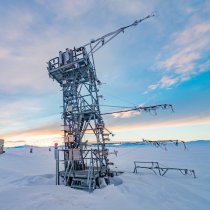
The Great Basin (Domain 15) is also home to the iconic Great Salt Lake, expansive salt flats, and rugged hills and canyons. The NEON program is monitoring changes in the desert ecosystems resulting from warming temperatures, decreased snowpack, and human activity.
How much of the water that enters terrestrial systems is used by plants for growth, and how much simply escapes back into the atmosphere unused? Chris Adkison, a researcher at Texas A&M University, used data from the NEON program to compare the accuracy of different methods of partitioning evaporation and transpiration in a Texas oak woodland.
Battelle is testing applications of DAS technology at a National Ecological Observatory Network (NEON) program ecological field site. The Battelle-led and funded study leverages NEON infrastructure and data analytics expertise from Los Alamos National Laboratory (LANL) to test new applications of a DAS technology.
A new study published in Nature Geoscience uses soil from NEON field sites across the continent to look for insights into how ecosystem variables impact the formation and composition of SOM.
With field sites at the Disney Wilderness Preserve, The Jones Center at Ichauway, and the Ordway-Swisher Biological Station, NEON's Southeast Domain provides a model for collaboration between industry, academia, and large-scale research infrastructures to further ecological and conservation research.
Arbuscular mycorrhizal (AM) fungi are found in nearly every ecosystem, quietly helping plants absorb nutrients from the soil. Dr. Bala Chaudhary wants to build a better model of how these vital ecosystem players disperse across the continent. She is using NEON’s Assignable Assets program to examine the role of aerial dispersal in AM fungal movement.
Dr. Zachary Kayler, an assistant professor in the Department of Soil and Water Systems at the University of Idaho, used NEON soil samples to test the ability of a widely-used soil health metric to detect changes from an extreme weather event - Hurricane Maria - in Puerto Rico.
Can technology fill in the missing pieces when humans can’t get to the field? While there will almost certainly be data gaps for NEON and other large-scale ecological programs this year, automated instrument programs can still provide a lot of ecological insights. In the future, emerging technologies such as drones, smart sensors, and robots could help ecologists collect field data even under challenging circumstances.
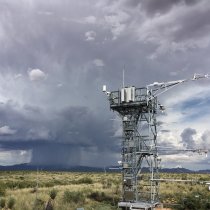
The NEON field sites in the Desert Southwest Domain (D14) collect data that can help researchers better understand how the monsoon impacts the ecology of the southwestern deserts and monitor how the monsoon season may be changing over time.
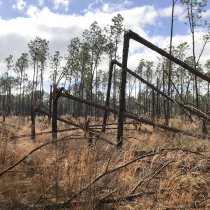
Jeffery Cannon, a Forest Management Scientist at The Jones Center, is using remote sensing data from the NEON program to understand how longleaf pine forests are impacted by and recover from major weather events. He and his colleagues will use the results to develop tools to help forest managers plan restoration and conservation efforts.
From the glaciers of Glacier National Park to the geysers of Yellowstone, the Northern Rockies Domain (D12) is home to some of the most stunning landscapes in the U.S. Sprawling across 290,000 km2 (112,000 square miles) of western Montana, Idaho, and northwestern Wyoming, the Domain boasts more than 20 national parks and forests and millions of acres of protected wilderness.
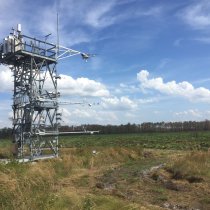
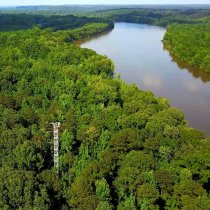
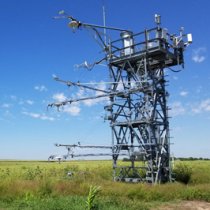
The NEON program has now made data from its 47 flux towers available through the AmeriFlux data portal. This will allow researchers to synthesize data from the NEON flux towers with data from other towers across the AmeriFlux network.
Andrew Fricker, used remote sensing data from the NEON Airborne Observation Platform to train a neural net to classify tree species in a Sierra Nevada forest. He and his coauthors describe their approach in Remote Sensing: “A Convolutional Neural Network Classifier Identifies Tree Species in Mixed-Conifer Forest from Hyperspectral Imagery.”
Chris Gough, an associate professor of biology at Virginia Commonwealth University (VCU), is using data from the NEON program to explore relationships between forest structure, biodiversity, and other characteristics and their ability to sequester carbon. His collaborative work with PIs from the University of Connecticut and Purdue University was recently published in Ecology: “High Rates of Primary Production in Structurally Complex Forests."
The Ozarks Complex (Domain 08) takes its name from the Ozark Mountains and Plateau, but this diverse Domain contains more than just mountains. Stretching across the southern U.S. from eastern Oklahoma and Texas to western Georgia, D08 supports a variety of ecosystems ranging from upland hardwood forests to coastal floodplains. The NEON program field sites in Alabama provide a window into watershed dynamics in the southeastern U.S.
Understanding why tick populations are increasing, and why some species are spreading into new geographic areas, is of critical importance to public health. In a recent study, researchers used NEON data to develop a model of tick population dynamics at the Ordway Swisher Biological Station field site.
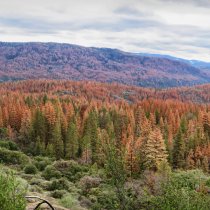
A team led by NEON scientists David Hulslander and Jessica Bolis has developed a method to map tree mortality with an unprecedented level of detail using hyperspectral remote sensing data from the NEON Airborne Observational Platform and a novel imaging algorithm.
The NEON program collects plant phenology data—that is, observations about the timing of biological events—at terrestrial and aquatic field sites across the continent. A partnership with the USA National Phenology Network (USA-NPN) has now made these data available through the USA-NPN data access and visualization tools.
D20 is the smallest and westernmost of the NEON domains, encompassing all of the islands that form the state of Hawai‘i. The Hawaiian Islands, lying at latitude 20° N, are part of a tropical zone that forms a band around the Earth near the equator. Other Pacific islands in this zone include the Marshall Islands, the Mariana Islands, Papua New Guinea, and the Federated States of Micronesia.
Earth Day reminds us that the earth and the environment belong to all of us—and everyone can get involved in observing, studying and protecting our ecological treasures. Citizen science projects offer opportunities for people of all ages, backgrounds and education levels to get involved in ecology and environmental science directly. The data gathered through these programs can complement and support the work being done by individual researchers and large-scale ecology observatories like the NEON program.
Small mammal pathogen testing protocols for the NEON program are about to get an overhaul. The Observatory is shifting the focus of Rodent-borne Pathogen Status data product from hantaviruses to tickborne diseases such as Lyme disease, anaplasmosis and Rocky Mountain Spotted Fever. The new testing protocols will be piloted at five sites in 2020 in preparation for a planned rollout to all NEON terrestrial field sites in 2021.
The NEON program generates ecological data on an unprecedented scale. Making sense of that data often requires sophisticated analytical techniques and computer programs. But if you’re not a coder, don’t worry—open source coding resources and community-made custom programs make NEON data more accessible to the ecology community. These resources are now being compiled in the NEON Code Resources Library.
NEON offers a variety of tools and resources for instructors and faculty moving to online teaching. We realize that these are challenging times for our communities around the globe to delivery high quality education in novel online teaching environments. The data and resources from NEON are naturally suited for teaching ecological concepts and skills in both synchronous and asynchronous learning situations.
We are committed to the safety and health of our employees, partners and communities, and to slowing the spread of COVID-19. With the concurrence of the National Science Foundation (NSF), we are temporarily suspending all activities across NEON that involve in-person or on-site work—including all domains, headquarters and airborne operations—due to the nationwide risks to health and safety associated with the COVID-19 pandemic.
How does human activity impact the environment? The Mid-Atlantic Domain (Domain 02) is a great place to find out. The eastern seaboard of the U.S. has undergone massive changes and development over the last 250 years. Data from the NEON field sites in Maryland and Virginia provide a window into how land use patterns, invasive species and long-term weather change are impacting eastern habitats and ecosystems.
Interested in planning a ground sampling project in coordination with one of our airborne remote sensing surveys? The 2020 NEON flight schedule is now available. Two aircraft will be deployed June through September to collect data over 20 terrestrial and 11 aquatic sites, covering 9 of the 20 NEON Domains.
A new modeling approach could allow researchers to use remote sensing lidar data to predict small mammal biodiversity based on the structure of vegetation in an area. The study was led by Sarah Schooler, now a Ph.D. candidate at State University of New York (SUNY)–Syracuse, and Harold Zald of the Humboldt State University Department of Forestry and Wildland Resources. Lidar Prediction of Small Mammal Diversity in Wisconsin, published in Remote Sensing, explores how measurements of vegetation structure created with lidar data could be used to predict the diversity of small mammal communities.
In the middle of the country, you'll find a land of windswept prairies, cattle ranches and enormous fields of wheat, corn, sorghum, hay and alfalfa. This is the Central Plains (Domain 10), where agriculture rules.
West of the Mississippi and east of the Rockies lies a northern landscape dominated by wide-open spaces, prairie grasslands and an abundance of agriculture. Welcome to the Northern Plains Domain, NEON Domain 09.