NSF NEON, Operated by Battelle

Main navigation

  • About
    • NEON Overview
      • Vision and Management
      • Spatial and Temporal Design
      • History
    • About the NEON Biorepository
      • ASU Biorepository Staff
      • Contact the NEON Biorepository
    • Observatory Blog
    • Newsletters
    • Staff
    • FAQ
    • Contact Us

    About

  • Data
    • Data Portal
      • Data Availability Charts
      • API & GraphQL
      • Prototype Data
      • Externally Hosted Data
    • Data Collection Methods
      • Airborne Observation Platform (AOP)
      • Instrument System (IS)
        • Instrumented Collection Types
        • Aquatic Instrument System (AIS)
        • Terrestrial Instrument System (TIS)
      • Observational System (OS)
        • Observation Types
        • Observational Sampling Design
        • Sampling Schedules
        • Taxonomic Lists Used by Field Staff
        • Optimizing the Observational Sampling Designs
      • Protocols & Standardized Methods
    • Getting Started with NEON Data
      • neonUtilities for R and Python
      • Learning Hub
      • Code Hub
    • Using Data
      • Data Formats and Conventions
      • Released, Provisional, and Revised Data
      • Data Product Bundles
      • Usage Policies
      • Acknowledging and Citing NEON
      • Publishing Research Outputs
    • Data Notifications
    • NEON Data Management
      • Data Availability
      • Data Processing
      • Data Quality

    Data

  • Samples & Specimens
    • Biorepository Sample Portal at ASU
    • About Samples
      • Sample Types
      • Sample Repositories
      • Megapit and Distributed Initial Characterization Soil Archives
    • Finding and Accessing Sample Data
      • Species Checklists
      • Sample Explorer - Relationships and Data
      • Biorepository API
    • Requesting and Using Samples
      • Loans & Archival Requests
      • Usage Policies

    Samples & Specimens

  • Field Sites
    • Field Site Map and Info
    • Spatial Layers & Printable Maps

    Field Sites

  • Resources
    • Getting Started with NEON Data
    • Research Support Services
      • Field Site Coordination
      • Letters of Support
      • Mobile Deployment Platforms
      • Permits and Permissions
      • AOP Flight Campaigns
      • Research Support FAQs
      • Research Support Projects
    • Code Hub
      • neonUtilities for R and Python
      • Code Resources Guidelines
      • Code Resources Submission
      • NEON's GitHub Organization Homepage
    • Learning Hub
      • Tutorials
      • Workshops & Courses
      • Science Videos
      • Teaching Modules
    • Science Seminars and Data Skills Webinars
    • Document Library
    • Funding Opportunities

    Resources

  • Impact
    • Research Highlights
    • Papers & Publications
    • NEON in the News

    Impact

  • Get Involved
    • Upcoming Events
    • Research and Collaborations
      • Environmental Data Science Innovation and Inclusion Lab
      • Collaboration with DOE BER User Facilities and Programs
      • EFI-NEON Ecological Forecasting Challenge
      • NEON Great Lakes User Group
      • NCAR-NEON-Community Collaborations
    • Advisory Groups
      • Science, Technology & Education Advisory Committee
      • Technical Working Groups
    • NEON Ambassador Program
      • Exploring NEON-Derived Data Products Workshop Series
    • Partnerships
    • Community Engagement
    • Work Opportunities

    Get Involved

  • My Account
  • Search

Search

About

  • NEON Overview
  • About the NEON Biorepository
  • Observatory Blog
  • Newsletters
  • Staff
  • FAQ
  • Contact Us

Breadcrumb

  1. About
  2. Observatory Blog
  3. Read the Updated NEON 5-Year Strategic Plan

Read the Updated NEON 5-Year Strategic Plan

February 12, 2025
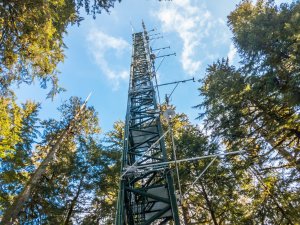
Wind River Tower in D16

The National Ecological Observatory Network (NEON) released its 5-Year Strategic Plan.

As a U.S. National Science Foundation (NSF) Large Research Facility, and operated by Battelle, NEON’s directive is to provide free and open data, samples, and infrastructure to enable the science of others. Our mission is to support researchers and the public to advance understanding of ecological processes and inform the sustainable management of U.S. ecosystems. The development of this plan was steered with these ultimate ideas in mind.

Strategies that steered this new plan include enabling partnerships, education, training, and community engagement; continuing high-quality data collection; optimizing technology and innovation; ensuring that federal agencies, commercial entities, and the public can effectively use NEON resources; and developing the ecological workforce. We are a platform that enables transformative science to inform ecosystem management, conservation, and sustainable development, and we aim to inspire global collaboration across ecological networks.

Only five years into its planned 30-year lifespan, NEON has already made significant contributions in many areas. However, we acknowledge there is more to be done. We are looking forward to expanding the Program's impact on ecological science and bolstering research into the understanding of our planet.

Read the Strategic Plan


5-Year Strategic Plan Goals

Goal 1: Enable Science Through Partnerships

Be a respected platform that integrates with the biological research community through collaboration, community-adopted standards, data and sample usage, linked and interoperable data, standardized sampling methods, curriculum content, and research support services.

Goal 2: Maximize Operational Excellence and Availability of High-quality Data

Provide trusted, freely available, high-quality, national-scale, critical data and samples that are easily accessed and made rapidly available for use to enable an informed and predictive understanding of ecological responses to environmental changes.

Goal 3: Harness Evolving Technology to Catalyze Discovery

Enable frontier science needs to provide an optimized, forward-looking technological and observational platform to be used as a catalyst for research and innovation.

Goal 4: Enhance Discoverability, Accessibility, and Usability of NEON Data and Services

Deliver educational and training resources to the next generation of ecologists and environmental scientists to expand the community for effective discoverability and use of NEON data, samples, and technology.

Goal 5: Foster An Engaged Workforce

Foster a culture that attracts, retains, and empowers a talented workforce where perspectives of all members are respected and valued.

Share

Related Posts:

NEON Operations coming to a close at Dead Lake, Alabama, field site

October 15, 2025

Map with DELA field site marker

NEON operations coming to a close at Dead Lake, Alabama, field site

October 15, 2025

NSF NEON, Operated by Battelle

Follow Us:

Join Our Newsletter

Get updates on events, opportunities, and how NEON is being used today.

Subscribe Now

Footer

  • About Us
  • Contact Us
  • Terms & Conditions
  • Careers
  • Code of Conduct

Copyright © Battelle, 2026

The National Ecological Observatory Network is a major facility fully funded by the U.S. National Science Foundation.

Any opinions, findings and conclusions or recommendations expressed in this material do not necessarily reflect the views of the U.S. National Science Foundation.