
NSF NEON, Operated by Battelle

Main navigation

  • About
    • NEON Overview
      • Vision and Management
      • Spatial and Temporal Design
      • History
    • About the NEON Biorepository
      • ASU Biorepository Staff
      • Contact the NEON Biorepository
    • Observatory Blog
    • Newsletters
    • Staff
    • FAQ
    • Contact Us

    About

  • Data
    • Data Portal
      • Data Availability Charts
      • API & GraphQL
      • Prototype Data
      • Externally Hosted Data
    • Data Collection Methods
      • Airborne Observation Platform (AOP)
      • Instrument System (IS)
        • Instrumented Collection Types
        • Aquatic Instrument System (AIS)
        • Terrestrial Instrument System (TIS)
      • Observational System (OS)
        • Observation Types
        • Observational Sampling Design
        • Sampling Schedules
        • Taxonomic Lists Used by Field Staff
        • Optimizing the Observational Sampling Designs
      • Protocols & Standardized Methods
    • Getting Started with NEON Data
      • neonUtilities for R and Python
      • Learning Hub
      • Code Hub
    • Using Data
      • Data Formats and Conventions
      • Released, Provisional, and Revised Data
      • Data Product Bundles
      • Usage Policies
      • Acknowledging and Citing NEON
      • Publishing Research Outputs
    • Data Notifications
    • NEON Data Management
      • Data Availability
      • Data Processing
      • Data Quality

    Data

  • Samples & Specimens
    • Biorepository Sample Portal at ASU
    • About Samples
      • Sample Types
      • Sample Repositories
      • Megapit and Distributed Initial Characterization Soil Archives
    • Finding and Accessing Sample Data
      • Species Checklists
      • Sample Explorer - Relationships and Data
      • Biorepository API
    • Requesting and Using Samples
      • Loans & Archival Requests
      • Usage Policies

    Samples & Specimens

  • Field Sites
    • Field Site Map and Info
    • Spatial Layers & Printable Maps

    Field Sites

  • Resources
    • Getting Started with NEON Data
    • Research Support Services
      • Field Site Coordination
      • Letters of Support
      • Mobile Deployment Platforms
      • Permits and Permissions
      • AOP Flight Campaigns
      • Research Support FAQs
      • Research Support Projects
    • Code Hub
      • neonUtilities for R and Python
      • Code Resources Guidelines
      • Code Resources Submission
      • NEON's GitHub Organization Homepage
    • Learning Hub
      • Tutorials
      • Workshops & Courses
      • Science Videos
      • Teaching Modules
    • Science Seminars and Data Skills Webinars
    • Document Library
    • Funding Opportunities

    Resources

  • Impact
    • Research Highlights
    • Papers & Publications
    • NEON in the News

    Impact

  • Get Involved
    • Upcoming Events
    • Research and Collaborations
      • Environmental Data Science Innovation and Inclusion Lab
      • Collaboration with DOE BER User Facilities and Programs
      • EFI-NEON Ecological Forecasting Challenge
      • NEON Great Lakes User Group
      • NCAR-NEON-Community Collaborations
    • Advisory Groups
      • Science, Technology & Education Advisory Committee
      • Technical Working Groups
    • NEON Ambassador Program
      • Exploring NEON-Derived Data Products Workshop Series
    • Partnerships
    • Community Engagement
    • Work Opportunities

    Get Involved

  • My Account
  • Search

Search

Breadcrumb

  1. Data Collection Methods
  2. Sensor Collection Frequency

Sensor Collection Frequency
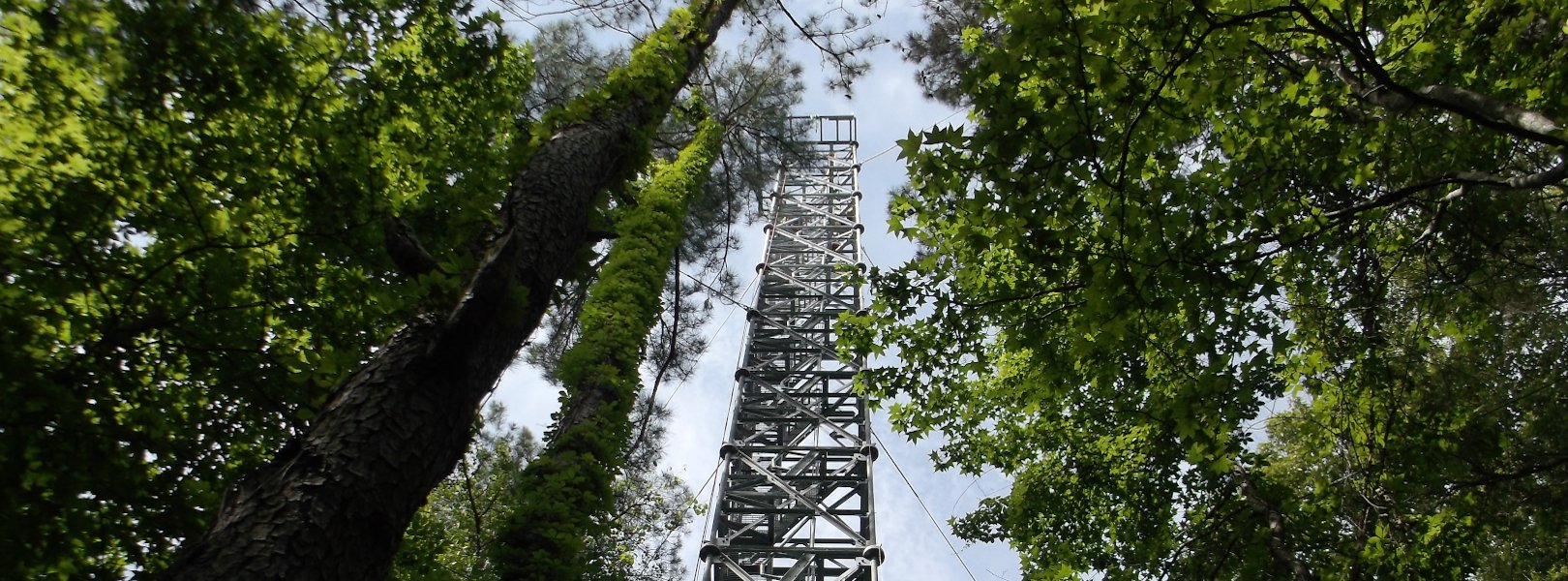
LENO tower from bottom looking toward top of forest canopy

Automated sensors in the field allow for continuous sampling at regular and high frequencies that are typically not feasible using field personnel. Below are some high-level comparisons of data collection frequency by different sensors at aquatic and terrestrial field sites.

Aquatic Sensor Collection Frequency

In streams, rivers, and lakes, constituent concentrations may vary over short time scales, often due to biological activities and meteorological events, which can be logistically challenging for collecting grab samples. Storm events, which are difficult to safely sample, can be responsible for large portions of the total annual flux of nutrients and organic carbon in streams. Thus, adequately capturing aquatic system variability requires the collection of high temporal resolution data using in situ sensors, where possible. The AIS sampling frequency is designed to measure concentrations that can be used to estimate fluxes of organic matter, nutrients, and suspended solids under conditions that are likely quantitatively important yet challenging to sample with traditional “grab” sampling approaches. Additionally, this continuous data can help us better understand how aquatic ecosystems respond to environmental changes and drive ecosystem dynamics, such as changes in community composition.

Terrestrial Sensor Collection Frequency

NEON deploys automated instruments to collect micrometeorological, soil, and phenological data at NEON field sites. Data are collected continuously to capture patterns and cycles across various time periods, ranging from seconds to years. NEON calibrates and quality checks sensors to minimize measurement errors and maximize the quality of collected data. The data collected by automated instrument systems (IS) are standardized but the systems vary slightly by field site type. Collection frequencies vary by sensor and are summarized below for aquatic and terrestrial sites.
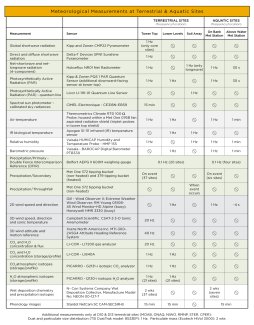
Measurements made at meteorological stations
Measurements made at meteorological stations

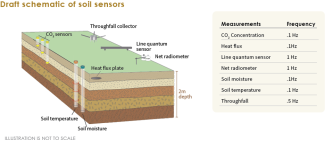
Schematic layout of a sensor-based soil plot. Note that some sensors are only present in a subset of soil plots.

Schematic layout of a sensor-based soil plot. Note that some sensors are only present in a subset of soil plots.

NSF NEON, Operated by Battelle

Follow Us:

Join Our Newsletter

Get updates on events, opportunities, and how NEON is being used today.

Subscribe Now

Footer

  • About Us
  • Contact Us
  • Terms & Conditions
  • Careers
  • Code of Conduct

Copyright © Battelle, 2026

The National Ecological Observatory Network is a major facility fully funded by the U.S. National Science Foundation.

Any opinions, findings and conclusions or recommendations expressed in this material do not necessarily reflect the views of the U.S. National Science Foundation.