NSF NEON, Operated by Battelle

Main navigation

  • About
    • NEON Overview
      • Vision and Management
      • Spatial and Temporal Design
      • History
    • About the NEON Biorepository
      • ASU NEON Biorepository Staff
      • Contact the NEON Biorepository
    • Observatory Blog
    • Newsletters
    • Staff
    • FAQ
    • User Accounts
    • Contact Us

    About

  • Data
    • Data Portal
      • Data Availability Charts
      • API & GraphQL
      • Prototype Data
      • Externally Hosted Data
    • Data Collection Methods
      • Airborne Observation Platform (AOP)
      • Instrument System (IS)
        • Instrumented Collection Types
        • Aquatic Instrument System (AIS)
        • Terrestrial Instrument System (TIS)
      • Observational System (OS)
        • Observation Types
        • Observational Sampling Design
        • Sampling Schedules
        • Taxonomic Lists Used by Field Staff
        • Optimizing the Observational Sampling Designs
      • Protocols & Standardized Methods
    • Getting Started with NEON Data
      • neonUtilities for R and Python
      • Learning Hub
      • Code Hub
    • Using Data
      • Data Formats and Conventions
      • Released, Provisional, and Revised Data
      • Data Product Bundles
      • Usage Policies
      • Acknowledging and Citing NEON
      • Publishing Research Outputs
    • Data Notifications
    • NEON Data Management
      • Data Availability
      • Data Processing
      • Data Quality

    Data

  • Samples & Specimens
    • NEON Biorepository Sample Portal at ASU
    • About Samples
      • Sample Types
      • Sample Repositories
      • Megapit and Distributed Initial Characterization Soil Archives
    • Finding and Accessing Sample Data
      • Species Checklists
      • Sample Explorer - Relationships and Data
      • Biorepository API
    • Requesting and Using Samples
      • Requesting Samples from the NEON Biorepository
      • Request Megapit and Initial Characterization Soil
      • Sample Use Guidelines
      • Sample Use Policy
      • Acknowledging and Citing the NEON Biorepository

    Samples & Specimens

  • Field Sites
    • Field Site Map and Info
    • Spatial Data Layers & Maps

    Field Sites

  • Resources
    • Getting Started with NEON Data
    • Research Support Services
      • Field Site Coordination
      • Letters of Support
      • Permits and Permissions
      • AOP Flight Campaigns
      • Research Support FAQs
      • Research Support Projects
    • Code Hub
      • neonUtilities for R and Python
      • Code Resources Guidelines
      • Code Resources Submission
      • NEON's GitHub Organization Homepage
    • Learning Hub
      • Tutorials
      • Workshops & Courses
      • Science Videos
      • Teaching Modules
    • Science Seminars and Data Skills Webinars
    • Document Library
    • Funding Opportunities

    Resources

  • Impact
    • Research Highlights
    • Papers & Publications
    • NEON in the News

    Impact

  • Get Involved
    • Upcoming Events
    • Past Events
    • Research and Collaborations
      • Environmental Data Science Innovation and Inclusion Lab
      • Collaboration with DOE BER User Facilities and Programs
      • EFI-NEON Ecological Forecasting Challenge
      • NEON Great Lakes User Group
      • NCAR-NEON-Community Collaborations
      • Sage Grande Testbed
    • Advisory Groups
      • Science, Technology & Education Advisory Committee (STEAC)
      • Innovation Advisory Committee (IAC)
      • Technical Working Groups (TWG)
    • NEON Ambassador Program
      • Exploring NEON-Derived Data Products Workshop Series
    • Partnerships
    • Community Engagement
    • Work Opportunities

    Get Involved

  • My Account
  • Search

Search

About

  • NEON Overview
  • About the NEON Biorepository
  • Observatory Blog
  • Newsletters
  • Staff
  • FAQ
  • User Accounts
  • Contact Us

Breadcrumb

  1. About
  2. Observatory Blog

Observatory Blog

Collage of people featured in blogs
Category

Getting to Know the NEON Domains: The Taiga

January 3, 2020

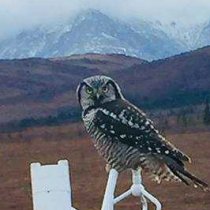
Cold winters, remote locations and plenty of mosquitos—welcome to the Taiga (Domain 19), the largest of the NEON program's ecoclimate Domains.

Owl at a field site in Domain 19, Taiga

Battelle Names Paula Mabee as Chief Scientist and Observatory Director for National Ecological Observatory Network

December 12, 2019

Paula Mabee, the Nolop Distinguished Professor in the Department of Biology at the University of South Dakota, has been selected as the Chief Scientist and Observatory Director of the National Ecological Observatory Network (NEON).

Paula Mabee
Research Highlight

Looking for Missing Carbon in the Forest Canopy

December 11, 2019

Kyla Dahlin and her team are using Airborne Remote Sensing data from five NEON sites to develop detailed 3D maps of forest structure. Their work, which was funded by the National Science Foundation (NSF), could provide new insights into the carbon storage potential of forests.

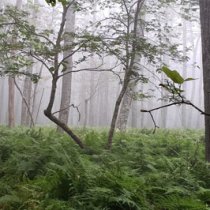
Trees at MLBS
Research Highlight

Studying Relationships Between Forest Structure and Bird Biodiversity

December 6, 2019

Land use changes and habitat loss have resulted in an overall loss of biodiversity across much of the country. Luis Carrasco, a post-doctoral fellow at NIMBioS, is leveraging NEON data to better understand the relationships between vegetation structure and density and bird biodiversity in forested ecosystems.

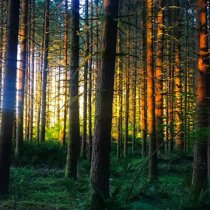
Sunlight through the trees at the ABBY field site
Research Highlight

How a Tree’s Life can Change an Ecosystem: Plant Phenology, Gypsy Moths, and Heat Accumulation

November 20, 2019

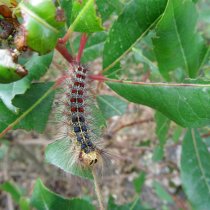
Imagine walking through the deciduous forests in Massachusetts early one spring, a gentle rain falling down on you. Taking a closer look, you now see thousands of hairy caterpillars in the trees.

Gypsy moth caterpillar eating leaves

Looking for fieldwork experience in ecology? Work for NEON

November 14, 2019

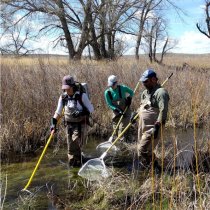
It's that time again. Each year, NEON hires hundreds of temporary field scientists to assist our full-time field operations staff with observational sampling.

Technicians electrofishing
Research Highlight

Introducing Adlafia neoniana: A New Species Named for NEON

November 7, 2019

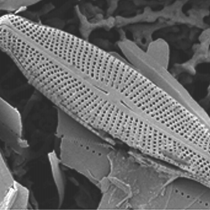
Adlafia neoniana (Naviculaceae) may be tiny, but it's got a big name to live up to. It's the first new species to be discovered on a NEON field site and named after the NEON program. So what is this newly discovered organism? A single-celled aquatic alga with a cell wall made of silica, known as a diatom.

Adlafia neoniana

A Remote Sensing Partnership Made in Paradise

November 1, 2019

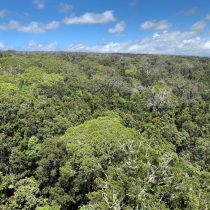
A new partnership with the Arizona State University Global Airborne Observatory (ASU-GAO) will make more frequent airborne observations possible of NEON's Hawaii field site in the Pu`u Maka`ala Natural Area Reserve. The GAO team completed their first flyover of PUUM in January 2019, and these data are now available.

View of the canopy from the PUUM tower
Research Highlight

Understanding the Drivers of Community Assembly

October 29, 2019

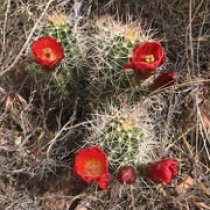
The exact composition of each local community is influenced by variables that include evolutionary history, current environmental conditions, and interspecies competition or codependence. A new study led by Will Pearse of Utah State University is using NEON data to quantify the roles of these different variables in the assembly of ecological communities.

Cactus in the field

Calling Ecology Nerds and Data Wizards: NEON Science Summit

October 3, 2019

On October 15-17, more than 150 ecologists, earth scientists, data analysts and programmers will descend on Boulder, CO for the NEON Science Summit . While the "unconference" is sold out, those interested in exploring ideas for using NEON data can still participate remotely.

NEONscience summit 2019

Going Out on a Limb with a New Canopy Sampling Method

September 27, 2019

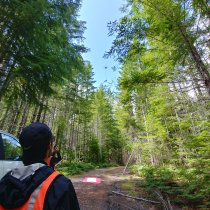
Collecting leaf (foliar) samples from the top of the forest canopy can be difficult and dangerous work. But NEON field teams may soon have an easier way to snip samples with the help of a drone equipped with a robotic sampling device. In July, the Pacific Northwest team tested drone technology from DeLeaves to collect foliar canopy samples at NEON’s terrestrial field site in the Wind River Experimental Forest (WREF), Washington.

Drone takes off into the trees at WREF
Spotlight

Citizen Scientists Extend Beetle Research at Yellowstone

September 20, 2019

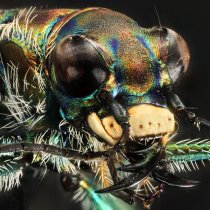
What can a ground beetle tell us about the environment? Quite a lot! This diverse and ubiquitous family of insects provides a window into environmental health and change. Erik Oberg, a biologist at Yellowstone National Park, is leading an ambitious beetle-biodiversity initiative on the Northern Range of the park.

White Tiger Beetle, Cicindelahae morrhagica
Research Highlight

Digging Up the Dirt on Soil Organic Matter

September 6, 2019

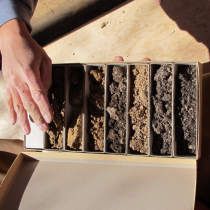
How are ecosystems across the continent changing over time? What are the relationships between ecosystem composition and soil organic matter? And how are soil composition and carbon storage potential likely to change in the future? The answers lie under our feet.

Soil Samples
Research Highlight

Students Test Ecology Concepts With NEON Data

July 17, 2019

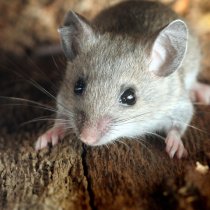
It's one thing to read about ecological concepts in a textbook. It's another to see them revealed by real-world data. Students at Ball State University recently explored key ecological concepts using data from the NEON program.

Mouse
Research Highlight

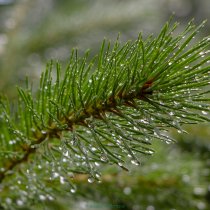
What's All This Dew Doing? Maybe More Than You Think

July 10, 2019

A new study led by François Ritter, a Ph.D. candidate at the University of Illinois–Chicago Department of Earth and Environmental Sciences, provides important insights into the frequency of dew formation across the U.S.

Dew on tree branch
Research Highlight

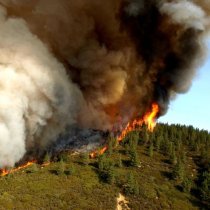
Answering Burning Questions About Wildfire Fuel and Emissions

May 15, 2019

A new study funded through the National Science Foundation (NSF) Rapid Response to Funding (RAPID) Grant program attempts to answer critical questions about the correlations between biomass burned from wildfires and the emitted quantities of trace gases and aerosols.

Wildfire on ridge

Next Steps - Maximizing the Potential of NEON: A Message from Gene Kelly

May 8, 2019

Hello again. Over the last few months I have been back at NEON working/consulting with Battelle and the staff here in Boulder, Colorado as the observatory moves into full operations. So I am once again back on the “Inside Looking Out.”

Eugene Kelly

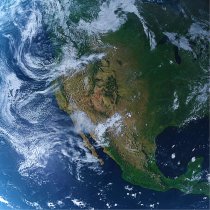
How can we better predict life in the Earth system? Linking the geosciences and ecology

May 2, 2019

Attendees of a recent NSF-sponsored joint NCAR and NEON workshop, Predicting life in the Earth system – linking the geosciences and ecology identify some tangible synergies and paths forward to advance the capability of Earth system prediction to include terrestrial ecosystems and biological resources.

North America from space

Getting to Know the NEON Domains: Atlantic Neotropical

April 26, 2019

The first year of full operations in Puerto Rico was a rough one. Just as the field sites were coming online for the first time, Hurricane Maria dealt the island a devastating blow. Now, NEON is helping researchers monitor the aftereffects as well as other changes in this vibrant and fascinating domain.

DFIR at GUAN

Getting to Know the NEON Domains: The Tundra

March 18, 2019

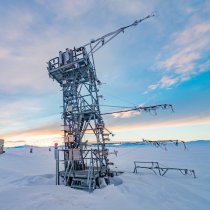
Remote locations. Brutally cold winters. Short summers with 24-hour sunlight. Our Tundra field sites have some of the most challenging field conditions among our NEON locations—and some of the most spectacular scenery and wildlife.

Flux tower in the snow at TOOL
Spotlight

Gathering Moss (and Other Bryophytes) in the Sierra Nevada

February 13, 2019

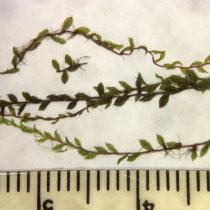
Dr. Paul Siri Wilson is shining a light on some understudied members of California's ecosystems: bryophytes. He and his students are creating a new ebook and sponsoring open microscope days to bring awareness to the mosses, liverworts and other non-vascular plants that most people take for granted in the landscape.

Bryum pseudotriquetrum

NEON’s Airborne Remote Sensing Flight Season Announced for 2019

January 29, 2019

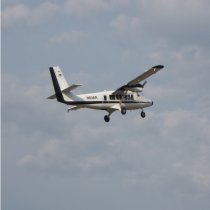
Thinking about planning a ground sampling project in coordination with one of our airborne remote sensing surveys? The 2019 NEON flight campaign plans have been announced. The season will run from March to October, covering fifteen NEON domains and including 35 terrestrial sites and 21 aquatic sites.

AIO twin otter over a NEON field site

Check it Out: NEON Biorepository is Open for Business

January 16, 2019

Need a bulk order of ground beetles? How about some frozen soil samples? Or a selection of well-preserved small mammal specimens? Now, you can check out these and dozens of other biological sample types from the NEON Biorepository.

Nico Franz from the NEON Biorepository and ASU
Research Highlight

Calibrating Remote Sensing Data with Field Observations in the East River Watershed

December 12, 2018

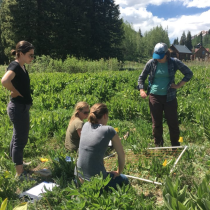
To build better models of watershed processes and calibrate remote sensing data with observations on the ground, a diverse team of researchers spent two weeks this summer gathering soil and vegetation data from hundreds of individual sites within the East River watershed near Crested Butte, CO.

Field ecologists from the Rocky Mountain Biological Station collecting data

The Power of Networked Science

November 9, 2018

Several long-term national and international science networks such as the Long-Term Ecological Research Network (LTER), the Critical Zone Observatory (CZO), AmeriFlux and GLEON are driving a deeper understanding of environmental processes and systems. But how can these networks complement and reinforce each other? And how does the NEON project fit in among these established networks?

Sharon Collinge

Tick Talk: Tracking Tick-Borne Diseases Across the Continent

October 31, 2018

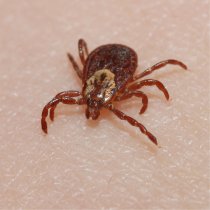
If you've been out walking in the woods or tall grasses this summer, you may have brought home an unwelcome passenger on your clothes or person. Ticks—and the diseases they carry—are on the move throughout much of the United States.

Tick

New Hampshire Senator Shaheen Learns About the Value of NSF’s NEON

October 24, 2018

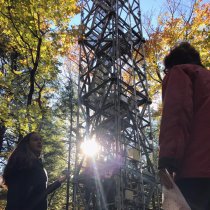
On October 19, U.S. Senator Jeanne Shaheen (NH-D), Ranking Member of the Senator Appropriations Commerce, Science, and Justice Subcommittee, visited NEON’s Bartlett Experimental Forest field site to learn firsthand about the long-term, continental-scale and open access data collection program.

People visiting the flux tower at BART

Synergies between NEON and the LTER Community

October 18, 2018

In early October, hundreds of scientists from the National Science Foundation’s LTER Network gathered together in Asilomar, CA for their All Scientists Meeting, which takes place once every three years. This year several scientists from NEON were invited.

Submerged aquatic plants at D10 ARIK (photo by Stephanie Parker)

Ecology Moving Forward: Thoughts on the 2018 Ecological Society of America Annual Meeting

September 26, 2018

What does the future of ecological research look like? And where does the NEON project fit in? I had the opportunity to reflect on these questions in depth at the recent annual meeting of the Ecological Society of America.

Sharon Collinge
Spotlight

Girl Scout Project Sparks an Interest in Ecology and NEON

September 18, 2018

It's never too early to get kids interested in ecology—and Girl Scouts may provide the perfect opportunity. A troop of 6th graders is tackling important issues in habitat preservation and ecosystem change through a Girl Scout Journey focused on animals, ecology and NEON.

Be on flower

Pagination

  • First page
  • Previous page
  • Page 1
  • Page 2
  • Page 3
  • Page 4
  • Page 5
  • Page 6
  • Current page 7
  • Page 8
  • Page 9
  • Page 10
  • Page 11
  • Page 12
  • Page 13
  • Next page
  • Last page
NSF NEON, Operated by Battelle

Follow Us:

Join Our Newsletter

Get updates on events, opportunities, and how NEON is being used today.

Subscribe Now

Footer

  • About Us
  • Contact Us
  • Terms & Conditions
  • Careers
  • Code of Conduct

Copyright © Battelle, 2026

The National Ecological Observatory Network is a major facility fully funded by the U.S. National Science Foundation.

Any opinions, findings and conclusions or recommendations expressed in this material do not necessarily reflect the views of the U.S. National Science Foundation.