

NSF NEON, Operated by Battelle

Main navigation

    • About Overview
    • NEON Overview
    • About the NEON Biorepository
    • Observatory Blog
    • Newsletters
    • Staff
    • FAQ
    • User Accounts
    • Contact Us
    • Data Overview
    • Data Portal
    • Data Availability Charts
    • API & GraphQL
    • Prototype Data
    • Data Collection Methods
    • Getting Started with NEON Data
    • Using Data
    • Data Notifications
    • NEON Data Management
    • Samples & Specimens Overview
    • NEON Biorepository Sample Portal at ASU
    • About NEON Samples
    • Sample Types
    • Finding and Accessing Sample Data
    • Species Checklists
    • Requesting and Using Samples
    • Requesting Samples from the NEON Biorepository
    • Sample Use Guidelines
    • Acknowledging and Citing the NEON Biorepository
    • Field Sites Overview
    • Field Site Map and Info
    • Spatial Data Layers & Maps
    • Resources Overview
    • Getting Started with NEON Data
    • Research Support Services
    • Code Hub
    • Learning Hub
    • Science Seminars and Data Skills Webinars
    • Document Library
    • Funding Opportunities
    • Impact Overview
    • Research Highlights
    • Papers & Publications
    • NEON in the News
    • Get Involved Overview
    • Upcoming Events
    • Past Events
    • Research and Collaborations
    • Advisory Groups
    • NEON Ambassador Program
    • Partnerships
    • Community Engagement
    • Work Opportunities

Search

Resources

  • Getting Started with NEON Data
  • Research Support Services
  • Code Hub
  • Learning Hub
  • Science Seminars and Data Skills Webinars
  • Document Library
  • Funding Opportunities

Breadcrumb

  1. Resources
  2. Learning Hub

Learning Hub

Image
Data Skills Banner

Data and Science Skills

Increase your understanding of ecological processes and change at large spatial and temporal scales with NEON. In addition to data, we offer educational resources that include online tutorials to gain the data skills needed to work with NEON data, teaching modules and materials for professors to use in graduate and undergraduate classrooms, and short, insightful videos about a wide variety of science topics.
Science Videos

Check out all our videos on our YouTube channel: NEONScience.

See our videos
Image
digging up soil thumbnail

Tutorials

Looking to improve your NEON data skills using specific tools like R or Python? Check out our free online tutorials designed to help you improve your data science research methods. These self-paced tutorials are designed for you to use as standalone help on a single topic or as a series to learn new techniques.
View our tutorials
Image
Code tunnel

Teaching Modules

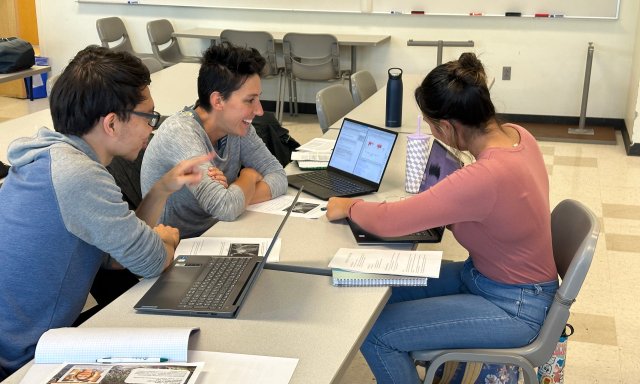
NEON's Teaching Modules make it easy to use NEON data in your classroom. Each module includes lesson outlines, curated datasets, and data skills activities to teach essential ecological concepts with accompanying data skills. Teaching modules are cross-listed on QUBES Hub.
View our teaching modules
Students work with NEON data

Workshops and Courses

NEON-hosted workshops and courses are designed to support the growth of new skills needed to access, manage, visualize, analyze, interpret, and generally work with NEON data.
Learn about workshops
NEON workshop

Code Hub

NEON data are often complex; working with data can be simplified using software or code. We maintain a Code Hub to get you started, including the neonUtilities packages in R and Python, and also links to code contributed by members of the community.

Visit the Code Hub
NSF NEON, Operated by Battelle

Follow Us:

Join Our Newsletter

Get updates on events, opportunities, and how NEON is being used today.

Subscribe Now

Footer

  • About Us
  • Contact Us
  • Terms & Conditions
  • Careers
  • Code of Conduct

Copyright © Battelle, 2026

The National Ecological Observatory Network is a major facility fully funded by the U.S. National Science Foundation.

Any opinions, findings and conclusions or recommendations expressed in this material do not necessarily reflect the views of the U.S. National Science Foundation.