NSF NEON, Operated by Battelle

Main navigation

  • About
    • NEON Overview
      • Vision and Management
      • Spatial and Temporal Design
      • History
    • About the NEON Biorepository
      • ASU Biorepository Staff
      • Contact the NEON Biorepository
    • Observatory Blog
    • Newsletters
    • Staff
    • FAQ
    • Contact Us

    About

  • Data
    • Data Portal
      • Data Availability Charts
      • API & GraphQL
      • Prototype Data
      • Externally Hosted Data
    • Data Collection Methods
      • Airborne Observation Platform (AOP)
      • Instrument System (IS)
        • Instrumented Collection Types
        • Aquatic Instrument System (AIS)
        • Terrestrial Instrument System (TIS)
      • Observational System (OS)
        • Observation Types
        • Observational Sampling Design
        • Sampling Schedules
        • Taxonomic Lists Used by Field Staff
        • Optimizing the Observational Sampling Designs
      • Protocols & Standardized Methods
    • Getting Started with NEON Data
      • neonUtilities for R and Python
      • Learning Hub
      • Code Hub
    • Using Data
      • Data Formats and Conventions
      • Released, Provisional, and Revised Data
      • Data Product Bundles
      • Usage Policies
      • Acknowledging and Citing NEON
      • Publishing Research Outputs
    • Data Notifications
    • NEON Data Management
      • Data Availability
      • Data Processing
      • Data Quality

    Data

  • Samples & Specimens
    • Biorepository Sample Portal at ASU
    • About Samples
      • Sample Types
      • Sample Repositories
      • Megapit and Distributed Initial Characterization Soil Archives
    • Finding and Accessing Sample Data
      • Species Checklists
      • Sample Explorer - Relationships and Data
      • Biorepository API
    • Requesting and Using Samples
      • Loans & Archival Requests
      • Usage Policies

    Samples & Specimens

  • Field Sites
    • Field Site Map and Info
    • Spatial Layers & Printable Maps

    Field Sites

  • Resources
    • Getting Started with NEON Data
    • Research Support Services
      • Field Site Coordination
      • Letters of Support
      • Mobile Deployment Platforms
      • Permits and Permissions
      • AOP Flight Campaigns
      • Research Support FAQs
      • Research Support Projects
    • Code Hub
      • neonUtilities for R and Python
      • Code Resources Guidelines
      • Code Resources Submission
      • NEON's GitHub Organization Homepage
    • Learning Hub
      • Tutorials
      • Workshops & Courses
      • Science Videos
      • Teaching Modules
    • Science Seminars and Data Skills Webinars
    • Document Library
    • Funding Opportunities

    Resources

  • Impact
    • Research Highlights
    • Papers & Publications
    • NEON in the News

    Impact

  • Get Involved
    • Upcoming Events
    • Research and Collaborations
      • Environmental Data Science Innovation and Inclusion Lab
      • Collaboration with DOE BER User Facilities and Programs
      • EFI-NEON Ecological Forecasting Challenge
      • NEON Great Lakes User Group
      • NCAR-NEON-Community Collaborations
    • Advisory Groups
      • Science, Technology & Education Advisory Committee
      • Technical Working Groups
    • NEON Ambassador Program
      • Exploring NEON-Derived Data Products Workshop Series
    • Partnerships
    • Community Engagement
    • Work Opportunities

    Get Involved

  • My Account
  • Search

Search

About

  • NEON Overview
  • About the NEON Biorepository
  • Observatory Blog
  • Newsletters
  • Staff
  • FAQ
  • Contact Us

Breadcrumb

  1. About
  2. Observatory Blog
  3. NEON Remembers Jianwu (Jim) Tang

Spotlight

NEON Remembers Jianwu (Jim) Tang

January 19, 2023
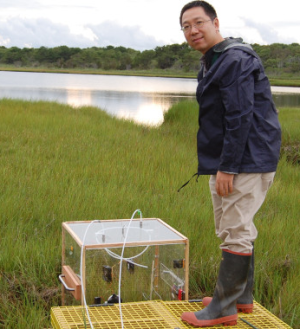
Tang thumbnail

We are deeply saddened by the passing of Dr. Jianwu (Jim) Tang this January. He was a respected senior scientist at the Marine Biological Laboratory, Ecosystems Center (University of Chicago), Woods Hole, Massachusetts. Tang was a creative thinker who always had ideas on how to push our scientific understanding forward. He had a natural ability to discuss complex science and to enthusiastically engage those around him, whether it be an elementary school student or expert. He possessed a gentle spirit and listened to and respected everyone around him. Tang was always eager to help in any way he could, and he saw the value in collaborations from individual research projects, to networks, to the global context.
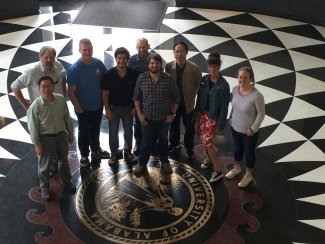
team meeting 2015

The original team that worked on the NEON soil block dry-downs. Photo taken at a meeting at the University of Alabama in April 2015. Jianwu Tang pictured front left.

We want to honor and remember Jianwu by recognizing some of his contributions to the National Ecological Observatory Network. He…

  • led working groups that envisioned the original NEON design and scientific concepts.
  • was a leader in characterizing NEON soils across the continental U.S., water release curves through the soil profile, and (novel) diffusivity constants as a function of soil water for >60 sites that span the U.S. and 12 soil orders.
  • initiated early discussions among Integrated Land Ecosystem-Atmosphere Processes Study (iLEAPS), Cooperation EU/US (CoopEUS), and the World Meteorological Organization (WMO) on the scientific interoperability of data.
  • led the first discussions on extending NEON- and Long Term Ecological Research (LTER)-like approaches to observe the coastal biogeochemistry and ecology.
  • was an active community member that acted as a liaison between NEON efforts and those of Fluxnet, AmeriFlux, LTER, and the emergent coastal biogeochemistry communities.
  • envisioned a global ecological observatory by federating the data from all the large-scale (continental) ecological networks and facilities to advance macrosystem ecology, and by training and mentoring new cohorts of scientists that will tackle unknown ecological issues that will challenge our future societies. This effort is ongoing today in the Global Ecosystem Research Infrastructure (GERI) initiative that Tang was instrumental in creating.
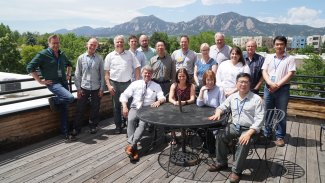
Participants in the GERI Governance Workshop, Boulder Colorado, June 2019

Participants in the GERI Governance Workshop, Boulder Colorado, June 2019. Standing (from left to right): S. Zacharias (Helmholz UFZ), M. Mirtl (Helmholz UFZ), W. Kutsch (ICOS ERIC), M. Grant (U Queensland), G. Feig (U Pretoria), J. Tang (Marine Biological Lab), B. Ruddell (Northern Arizona U), J. Bäck (U Finland), H. Loescher (Battelle), M. Genazzio (Battelle), J. Pauw (South Africa NRF), L. Zhang (CAS). Sitting (from left to right): M. Hawkins (U.S. NSF, GSO Representative (Observer)), C. Schaedel (Northern Arizona U), B. Morris (U Queensland), and X. Yu (CAS). Present but not pictured: D. Hudnut (Grok Consulting).

Jianwu Tang's character exemplified the best attributes found in the human spirit and continues to be a yard stick by which others should aspire to. We will miss you, and rest in peace.


By Hank Loescher
Director of Strategic Development, Battelle – Environment and Infrastructure
 

Share

Related Posts:

Unlocking the Secrets of Soil Microbial Metabolites

February 2, 2026

Petri dishes of bacteria cultures

Discontinuation of Select NEON Data Products

January 29, 2026

Modification of Select NEON Data Products

January 29, 2026

NSF NEON, Operated by Battelle

Follow Us:

Join Our Newsletter

Get updates on events, opportunities, and how NEON is being used today.

Subscribe Now

Footer

  • About Us
  • Contact Us
  • Terms & Conditions
  • Careers
  • Code of Conduct

Copyright © Battelle, 2026

The National Ecological Observatory Network is a major facility fully funded by the U.S. National Science Foundation.

Any opinions, findings and conclusions or recommendations expressed in this material do not necessarily reflect the views of the U.S. National Science Foundation.