
NSF NEON, Operated by Battelle

Main navigation

  • About
    • NEON Overview
      • Vision and Management
      • Spatial and Temporal Design
      • History
    • About the NEON Biorepository
      • ASU Biorepository Staff
      • Contact the NEON Biorepository
    • Observatory Blog
    • Newsletters
    • Staff
    • FAQ
    • Contact Us

    About

  • Data
    • Data Portal
      • Data Availability Charts
      • API & GraphQL
      • Prototype Data
      • Externally Hosted Data
    • Data Collection Methods
      • Airborne Observation Platform (AOP)
      • Instrument System (IS)
        • Instrumented Collection Types
        • Aquatic Instrument System (AIS)
        • Terrestrial Instrument System (TIS)
      • Observational System (OS)
        • Observation Types
        • Observational Sampling Design
        • Sampling Schedules
        • Taxonomic Lists Used by Field Staff
        • Optimizing the Observational Sampling Designs
      • Protocols & Standardized Methods
    • Getting Started with NEON Data
      • neonUtilities for R and Python
      • Learning Hub
      • Code Hub
    • Using Data
      • Data Formats and Conventions
      • Released, Provisional, and Revised Data
      • Data Product Bundles
      • Usage Policies
      • Acknowledging and Citing NEON
      • Publishing Research Outputs
    • Data Notifications
    • NEON Data Management
      • Data Availability
      • Data Processing
      • Data Quality

    Data

  • Samples & Specimens
    • Biorepository Sample Portal at ASU
    • About Samples
      • Sample Types
      • Sample Repositories
      • Megapit and Distributed Initial Characterization Soil Archives
    • Finding and Accessing Sample Data
      • Species Checklists
      • Sample Explorer - Relationships and Data
      • Biorepository API
    • Requesting and Using Samples
      • Loans & Archival Requests
      • Usage Policies

    Samples & Specimens

  • Field Sites
    • Field Site Map and Info
    • Spatial Layers & Printable Maps

    Field Sites

  • Resources
    • Getting Started with NEON Data
    • Research Support Services
      • Field Site Coordination
      • Letters of Support
      • Mobile Deployment Platforms
      • Permits and Permissions
      • AOP Flight Campaigns
      • Research Support FAQs
      • Research Support Projects
    • Code Hub
      • neonUtilities for R and Python
      • Code Resources Guidelines
      • Code Resources Submission
      • NEON's GitHub Organization Homepage
    • Learning Hub
      • Tutorials
      • Workshops & Courses
      • Science Videos
      • Teaching Modules
    • Science Seminars and Data Skills Webinars
    • Document Library
    • Funding Opportunities

    Resources

  • Impact
    • Research Highlights
    • Papers & Publications
    • NEON in the News

    Impact

  • Get Involved
    • Upcoming Events
    • Research and Collaborations
      • Environmental Data Science Innovation and Inclusion Lab
      • Collaboration with DOE BER User Facilities and Programs
      • EFI-NEON Ecological Forecasting Challenge
      • NEON Great Lakes User Group
      • NCAR-NEON-Community Collaborations
    • Advisory Groups
      • Science, Technology & Education Advisory Committee
      • Technical Working Groups
    • NEON Ambassador Program
      • Exploring NEON-Derived Data Products Workshop Series
    • Partnerships
    • Community Engagement
    • Work Opportunities

    Get Involved

  • My Account
  • Search

Search

Field Sites

  • Field Site Map and Info
  • Spatial Layers & Printable Maps

Breadcrumb

  1. Field Sites
  2. Jornada Experimental Range NEON

Field Site

Jornada Experimental Range NEON / JORN

brown circle white drop icon

Gradient Terrestrial, NM, D14: Desert Southwest
About Field Sites

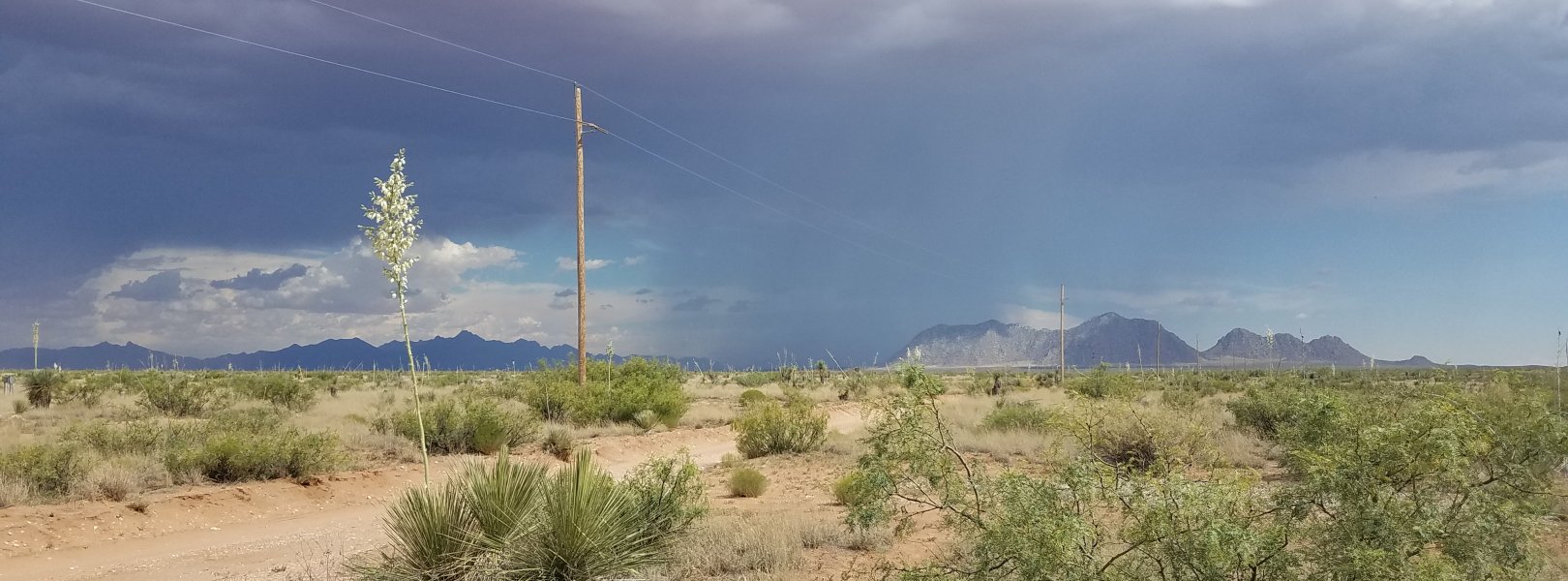
The Jornada LTER (JORN) terrestrial NEON field site is located about 40 km (24.9 mi.) from Las Cruces, New Mexico in the northern Chihuahuan Desert, the largest desert in North America. NEON samples approximately 45.7 km2 (11,293 acres) on the Jornada Experimental Range, which is managed by the USDA and New Mexico State University. NEON research at this site happens alongside two other ecological monitoring groups: the National Science Foundation’s Long Term Ecological Research (LTER) network, and the USDA Agricultural Research Service. The region is dominated by arid grasslands and desert shrubs. JORN is encompassed within NEON's Desert Southwest Domain (D14). D14 has one other terrestrial field site and one aquatic field site. JORN is not colocated with an aquatic site. [2] [3]

Climate

The Jornada Experimental Range has a desert climate. It is very sunny with very little humidity, making for extreme differences in day and night temperatures. Summers are very hot and winters that are relatively mild. Freezing temperatures can be common in winter. The little precipitation that occurs in this region does so in either gentle winter rains from December to February, or in intense convective thunderstorms during the summer monsoon from July to September. The mean annual temperature is 15.7°C (60°F), and the mean annual precipitation is 271.2 mm (10.7 in.). [1]

Geology

The geology at Jornada is characteristic of the Upper Santa Fe Group, which contains clastic sediments and other unconsolidated material. [10]

Soils

Soils at Jornada are typical of desert soils. All have low organic content with little to no organic horizon, have a high lime content, and have a caliche layer at the water percolation depth that prevents root penetration by plants. The soils are very sandy and little difference is seen in the content of surface soils when compared to subsoils. Many soils at the site are part of the subgroup Typic Petrocalcids. [1]

Hydrology

The Jornada site is located on a closed plain with no external outlet for water drainage. Because of this, water sometimes accumulates on the surface of the playas. [12]

Vegetation

Vegetation cover at Jornada is dominated by desert scrub and grassland. Large upland areas that were formerly dominated by perennial grasses, including black grama (Bouteloua eriopoda) and mesa drop seed (Sporobolus flexuosus), have been replaced by desert shrubland species, in particular creosote bush (Larrea tridentata) and honey mesquite (Prosopis glandulosa). [2]

Fauna

The Jornada site is home to many spectacular desert-adapted animals including badgers (Taxidea taxus) and banner tailed kangaroo rats (Dipodomys spectabilis). One of the most striking species is the oryx (Oryx gazelle gazelle). 95 of these large antelope were introduced to the nearby San Andres Wildlife refuge from 1969 to 1977 for the purposes of hunting. Native to the arid regions of Southern Africa, these aggressive antelope compete with native bighorn and deer for forage and potentially harbor disease that can devastate the native ungulate population. [1] [5]

Past Land Management and Use

At the end of the 19th century, rangelands across the arid West were in serious decline. This led to the establishment of several long-term agricultural research sites to study how to best manage livestock on arid grasslands. Built from the scattered holdings of a private land owner, Charles T. Turney, the Jornada Experimental Range was established by Presidential Executive Order in 1912 specifically to study the long-term effects of grazing in arid grasslands. In the late 1980s and early 1990s, data collected at the Jornada Experimental Range was instrumental in showing how desertification and woody shrub encroachment occurs. Scientists found that when arid grasslands are replaced with arid shrublands, a positive feedback cascade of nutrient loss and hydrological changes occurs, creating more disturbed, heterogeneous landscapes that encourage further encroachment by woody shrubs. [1]

Current Land Management and Use

Currently hosted by the USDA Agricultural Research Service in partnership with New Mexico State University, the Jornada Experimental Range’s research goals have broadened from an animal management focus to include large scale ecosystem services. Scientists at the Jornada study important ecosystem functions of the desert, such as dust movement and reseeding of native vegetation. Bordering the Jornada Experimental Range is the White Sands Missile Range where the United States military extensively tests new weapons. Within the borders of the White Sands Missile Range is the San Andres National Wildlife Refuge, designated an important bird area by the Audubon Society. It is one of the few places in the Chihuahuan Desert that has not been grazed in the last 50 years and has one of the only riparian areas in a vast desert spread between the Rio Grande and the Sacramento Mountains, making it an important stop for migrating birds. The site is also designated an UNESCO biosphere reserve. [1] [7] [8] [9]

NEON Site Establishment

Plot establishment for JORN began May 2015 with sampling commencing by September 2015. Construction on the tower began in 2013 and TIS sampling was able to begin by August 2014. [1]

Additional Resources

[1] https://jornada.nmsu.edu

[2] Terrestrial Observation System (TOS) Site Characterization Report: Domain 14. NEON.DOC.003897vA

[3] Havstad, K. M. (2011). ARS Long-Term Agro-Ecosystem Research Network Response to Request for Information Candidate Site: Jornada Experimental Range, Dona Ana County, New Mexico.

[4] Rango, A., Havstad, K., & Estell, R. (2011). The Utilization of Historical Data and Geospatial Technology Advances at the Jornada Experimental Range to Support Western America Ranching Culture. Remote Sensing

[5] U.S. Department of Interior Fish and Wildlife Service. (2007). Environmental Assessment/Assessment of Effect Opening for Hunting of Exotic Oryx San Andres National Wildlife Refuge

[6] UDSA-ARS: https://www.ars.usda.gov/plains-area/las-cruces-nm/range-management-res…

[7] UNESCO: http://www.unesco.org/mabdb/br/brdir/directory/biores.asp?mode=all&code…

[8] White Sands Missile Test Area: https://www.wsmr.army.mil/Pages/home.aspx

[9] Audubon Society Important Bird Area: https://www.audubon.org/important-bird-areas/san-andres-national-wildli…

[10] U.S. Geological Survey, 2005, Mineral Resources Data System: U.S. Geological Survey, Reston, Virginia. https://mrdata.usgs.gov/mrds/

[11] Four-wing Salt Bush: https://www.fs.fed.us/wildflowers/plant-of-the-week/atriplex_canescens…

[12] Gibbens, R. P. (1981). The Jornada Experimental Biosphere Reserve.

[13] PRISM Climate Group, Oregon State University, http://prism.oregonstate.edu, created 4 Feb 2004.

Field Site Information

Latitude/Longitude

32.590694, -106.84254

Geodetic Datum

WGS84

Location

Doña Ana County
NM, US

Elevation

Mean: 1324m
Minimum: 1316m
Maximum: 1333m

Mean Annual Temperature

15.7°C

Dominant Wind Direction

SW

Mean Canopy Height

0.4m

Dominant NLCD Classes

Shrub/Scrub

Colocated Research

Jornada Basin LTER
Jornada Experimental Range LTAR
UNESCO Jornada Biosphere Reserve
Critical Zone Exploration Network
Ameriflux
NOAA U.S. Climate Reference Network

Field Operations Office

2115 East Valencia Rd, Suite 131
Tucson, AZ 85706

Research Access

If your proposed research requires access to field sites where NEON is present, we can help.

Request Access

Observation Types

Remote Sensing

Remote sensing surveys of this field site collect lidar, spectrometer and high-resolution RGB camera data.

Meteorological Measurements

This site has a flux/meteorological tower that is 8 m (26 ft) tall with four measurement levels. The tower top extends above the vegetation canopy to allow sensors mounted at the top and along the tower to capture the full profile of atmospheric conditions from the top of the vegetation canopy to the ground. The tower collects physical and chemical properties of atmosphere-related processes, such as humidity, wind, and net ecosystem gas exchange. Precipitation data are collected by a tipping bucket at the top of the tower and a series of throughfalls located in the soil array.

Phenocams

One phenocam is attached to the top and the bottom of the tower. Here we show the images from the most recent hour. The full collection of images can be viewed on the Phenocam Gallery - click on either of the images below.

Tower top

NEON.D14.JORN.DP1.10033

Tower bottom

NEON.D14.JORN.DP1.10042

Soil Sensor Measurements

This site has five soil plots placed in an array within the airshed of the flux tower. Photosynthetically Active Radiation (PAR) at soil surface, soil heat flux, solar radiation, and throughfall are measured at the soil surface in each soil plot. Soil moisture, soil temperature, and CO2 concentration are measured at multiple depths in each soil plot.

Observational Sampling

At terrestrial sites, field ecologists observe birds and plants, and sample ground beetles, mosquitoes, small mammals, soil microbes, and ticks. Lab analyses are carried out to provide further data on DNA sequences, pathogens, soils, sediments, and biogeochemistry. Learn more about terrestrial observations or explore this site's data products.


Field Site Data

Site

Site Host

Jornada Experimental Range

Site URL

https://jornada.nmsu.edu/

Site Access Details

JORN encourages research activities that do not conflict with on-going activities. Please apply directly with site host and USDA for a site research permit. All requests are reviewed for impacts to cultural resources, endangered species and other research activities.

Operations Office

NEON Field Operations Office

Domain 14 Support Facility

NEON Field Operations Address

2115 East Valencia Rd, Suite 131
Tucson, AZ 85706

NEON Field Operations Phone

520.999.3518

Location

Latitude

32.590694

Longitude

-106.84254

Geodetic Datum

WGS84

UTM Northing

3607409.16m

UTM Easting

327074.62m

UTM Zone

13N

County

Doña Ana

State

NM

Country

US

Mean Elevation

1324m

Minimum Elevation

1316m

Maximum Elevation

1333m

Terrestrial Sampling Boundary Area

45.75km^2

Climate

Mean Annual Temperature

15.7°C

Mean Annual Precipitation

271mm

Dominant Wind Direction

SW

Vegetation

Mean Canopy Height

0.4m

Dominant NLCD Classes

Shrub/Scrub

Average number of green days

260

Average first greenness increase date

80 DOY

Average peak green date

185 DOY

Average first greenness decrease date

245 DOY

Average minimum greenness date

340 DOY

Tower

Tower Height

8m

Number of Tower Levels

4

Soils

Megapit Soil Family

Coarse-loamy - mixed - superactive - thermic Typic Petrocalcids

Soil Subgroup

Typic Petrocalcids


Gallery

  • Photos
  • Videos

No Video


Related Field Sites

Other Domain D14 Field Sites

brown square white mountain icon Santa Rita Experimental Range NEON
Core Terrestrial
blue square white drop icon Sycamore Creek NEON
Core Aquatic
NSF NEON, Operated by Battelle

Follow Us:

Join Our Newsletter

Get updates on events, opportunities, and how NEON is being used today.

Subscribe Now

Footer

  • About Us
  • Contact Us
  • Terms & Conditions
  • Careers
  • Code of Conduct

Copyright © Battelle, 2026

The National Ecological Observatory Network is a major facility fully funded by the U.S. National Science Foundation.

Any opinions, findings and conclusions or recommendations expressed in this material do not necessarily reflect the views of the U.S. National Science Foundation.