
NSF NEON, Operated by Battelle

Main navigation

  • About
    • NEON Overview
      • Vision and Management
      • Spatial and Temporal Design
      • History
    • About the NEON Biorepository
      • ASU Biorepository Staff
      • Contact the NEON Biorepository
    • Observatory Blog
    • Newsletters
    • Staff
    • FAQ
    • Contact Us

    About

  • Data
    • Data Portal
      • Data Availability Charts
      • API & GraphQL
      • Prototype Data
      • Externally Hosted Data
    • Data Collection Methods
      • Airborne Observation Platform (AOP)
      • Instrument System (IS)
        • Instrumented Collection Types
        • Aquatic Instrument System (AIS)
        • Terrestrial Instrument System (TIS)
      • Observational System (OS)
        • Observation Types
        • Observational Sampling Design
        • Sampling Schedules
        • Taxonomic Lists Used by Field Staff
        • Optimizing the Observational Sampling Designs
      • Protocols & Standardized Methods
    • Getting Started with NEON Data
      • neonUtilities for R and Python
      • Learning Hub
      • Code Hub
    • Using Data
      • Data Formats and Conventions
      • Released, Provisional, and Revised Data
      • Data Product Bundles
      • Usage Policies
      • Acknowledging and Citing NEON
      • Publishing Research Outputs
    • Data Notifications
    • NEON Data Management
      • Data Availability
      • Data Processing
      • Data Quality

    Data

  • Samples & Specimens
    • Biorepository Sample Portal at ASU
    • About Samples
      • Sample Types
      • Sample Repositories
      • Megapit and Distributed Initial Characterization Soil Archives
    • Finding and Accessing Sample Data
      • Species Checklists
      • Sample Explorer - Relationships and Data
      • Biorepository API
    • Requesting and Using Samples
      • Loans & Archival Requests
      • Usage Policies

    Samples & Specimens

  • Field Sites
    • Field Site Map and Info
    • Spatial Layers & Printable Maps

    Field Sites

  • Resources
    • Getting Started with NEON Data
    • Research Support Services
      • Field Site Coordination
      • Letters of Support
      • Mobile Deployment Platforms
      • Permits and Permissions
      • AOP Flight Campaigns
      • Research Support FAQs
      • Research Support Projects
    • Code Hub
      • neonUtilities for R and Python
      • Code Resources Guidelines
      • Code Resources Submission
      • NEON's GitHub Organization Homepage
    • Learning Hub
      • Tutorials
      • Workshops & Courses
      • Science Videos
      • Teaching Modules
    • Science Seminars and Data Skills Webinars
    • Document Library
    • Funding Opportunities

    Resources

  • Impact
    • Research Highlights
    • Papers & Publications
    • NEON in the News

    Impact

  • Get Involved
    • Upcoming Events
    • Research and Collaborations
      • Environmental Data Science Innovation and Inclusion Lab
      • Collaboration with DOE BER User Facilities and Programs
      • EFI-NEON Ecological Forecasting Challenge
      • NEON Great Lakes User Group
      • NCAR-NEON-Community Collaborations
    • Advisory Groups
      • Science, Technology & Education Advisory Committee
      • Technical Working Groups
    • NEON Ambassador Program
      • Exploring NEON-Derived Data Products Workshop Series
    • Partnerships
    • Community Engagement
    • Work Opportunities

    Get Involved

  • My Account
  • Search

Search

Field Sites

  • Field Site Map and Info
  • Spatial Layers & Printable Maps

Breadcrumb

  1. Field Sites
  2. Río Yahuecas NEON

Field Site

Río Yahuecas NEON / GUIL

blue circle white drop icon

Gradient Aquatic, PR, D04: Atlantic Neotropical
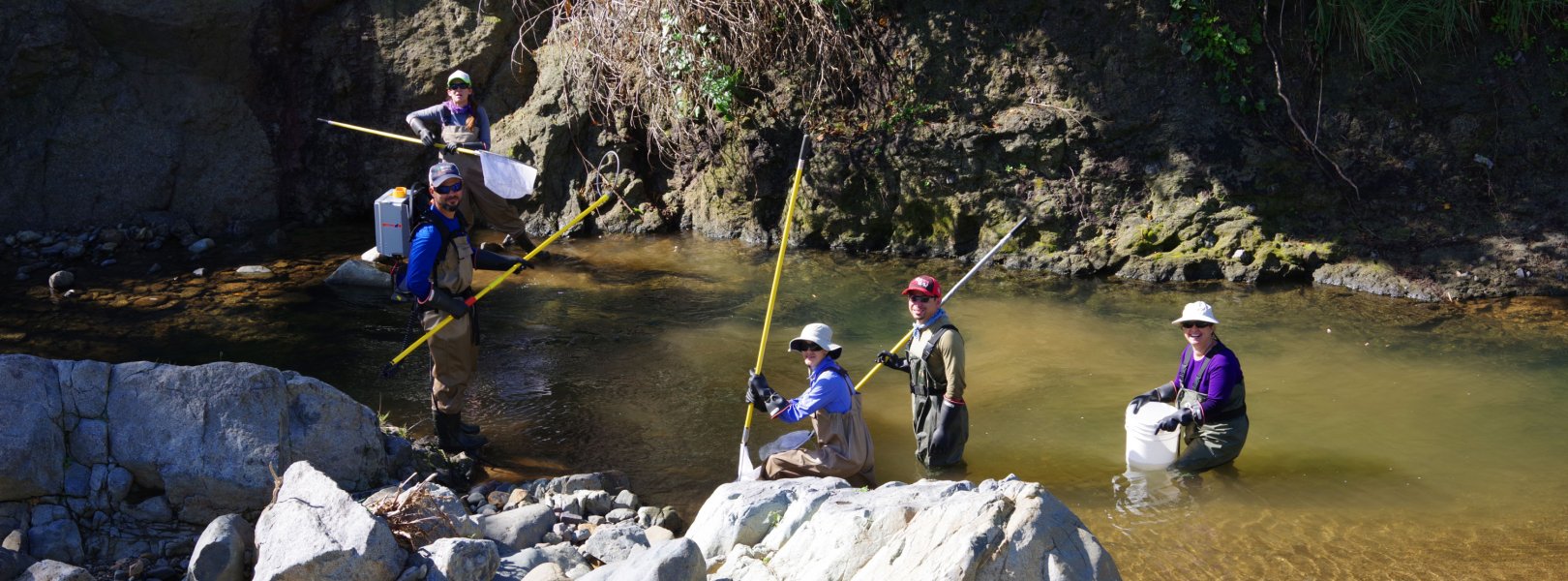
Fish sampling at GUIL

About Field Sites

Río Yahuecas (GUIL) is an aquatic NEON field site located in the central-western mountainous area of Puerto Rico. This site was formerly named Río Guilarte. Río Yahuecas site is a 2nd order, wadeable stream with a watershed of 9.5 km2 (2350 acres), comprised of agricultural lands and subtropical moist/wet forest. The NEON sampling reach of Río Yahuecas is located in a montane area with steep slopes, though large boulders stabilize the channel within the municipality of Adjuntas. Access to sensors and sampling locations in the reach of Río Yahuecas are located within the surrounding land, which is an agricultural research station owned and operated by the University of Puerto Rico – Mayaguez Campus. This location is part of the NEON Atlantic Neotropical Domain (D04), which includes the island of Puerto Rico and the southern tip of Florida. The Domain includes two terrestrial field sites and one additional aquatic field site. [1] [2]

Climate

The average annual precipitation is 1900 mm (75 in.) and the average annual temperature is 25°C (77°F). Overall, the climate in Río Yahuecas is a tropical-humid climate with a neutral pH, high precipitation levels, short photoperiods, and mild temperatures. [7][10]

Geology

Río Yahuecas is part of the Anon Formation, which consists of interbedded andesite (volcanic) breccia, rhyodacite, sandstone, and siltstone. [2] [9]

Soils

The river lithology is mainly of the Anon formation: interbedded andesite or volcanic breccia, rhyodacite, and sandstone or siltstone of the Upper Eocene. Río Yahuecas substrate consists of a heterogeneous mixture of cobble, pebble and sand and large boulders are a dominant feature of the stream’s substrate regime. [1] [5]

Hydrology

Río Yahuecas's watershed is comprised of agricultural lands and subtropical moist/wet forest. The flow regime in Río Yahuecas is typical of Puerto Rican streams draining rainforest catchments; characteristic discharge exhibits a strong seasonal pattern with low flows during the mid- to late- dry season (December through March) and high base flow discharge during the annual wet period (May through November). Extreme high flow events may ensue because of tropical storms or hurricanes, which typically occur between June and December. This NEON site’s reach is located in a montane area with steep slopes, though large boulders stabilize the channel and several large, slow-moving pools. Aside from large boulders, Río Yahuecas substrate consists of a heterogeneous mixture of cobble, pebble, and sand. [1]

Vegetation

Riparian vegetation along Río Yahuecas consists of tall grasses, shrubs, citrus trees and, in some places, a very narrow (~50 m) band of trees. The canopy at this wadeable stream is relatively open and sensor locations may be accessed from the facility roads easily. Vegetation within the Experimental Station consists crops grown for research in the central mountainous area of the Island. [1] [3]

Fauna

There is a variety of aquatic fauna within Río Yahuecas which include fish, amphibians, reptiles and macroinvertebrates, among others. Within the NEON site, a new species of diatom (Adlafia neoniana) was recently described, and has now been identified by researchers at the CUPE site as well. Species of fish include Poecilia reticulata, Xiphophorus hellerii, Xiphophorus variatus, and Gambusia affinis. None of them are native to the region and their food sources are mainly insects. Within the site, there are three endangered species, the Puerto Rican boa (Epicrates inornatus) and two birds, the Puerto Rican parrot (Amazona vittata) and the Puerto Rican sharp-shinned hawk (Accipiter striatus venator). [4] [5] [6]

Past Land Management and Use

The Association of Sugar Producers established the Adjuntas Agricultural Station, where Río Yahuecas is located, in 1910. In 1914, it became part of the Commonwealth of Puerto Rico, and in 1933 was transferred to the University of Puerto Rico – Mayaguez Campus, which remains in management. The Adjuntas Agricultural Experimental Station was originally located on the Finca Llinas in Castañer and in 1963 was relocated to its present location. [3] [7]

Current Land Management and Use

This experimental station has around 184 plots of land that are used to cultivate coffee, citrus, bananas, ornamentals, hydroponic vegetables, and exotic fruit. The station is used by the University’s Faculty of Agricultural Sciences and by graduate students to carry out their thesis research and is the only agricultural experimental station in the central-western mountainous area of Puerto Rico. The research carried out in this substation is focused mainly on areas related to planting, fertilization, harvesting, varieties, pest and disease control, machinery, and economic studies of the main crops in that area. It is also home to a collection of coffee and citrus germplasm unique in its class and in the Caribbean. [3] [7]

NEON Site Establishment

Establishment of the site GUIL began in January 2015 alongside a site characterization survey performed by the AQU team. A dry run of selected protocols at that site began in June 2015 and the site transitioned to full operations in September 2016. The aquatic instrumentation system came online in May 2018. [1]

Additional Resources

[1] NEON.DOC.001648vC - D04 AQUATIC INSTRUMENT SYSTEM (AIS)


[2] SanClements, M., Lee, R.H., Ayres, E.D., Goodman, K., Jones, M., Durden, D., Thibault, K., Zulueta, R., Roberti, J., Lunch, C., & Gallo, A. (2020) Collaborating with NEON, BioScience 70 (2), 107-107, https://doi.org/10.1093/biosci/biaa005

[3] 2016. Designación de la Reserva Agrícola de la Estación Experimental Agrícola del Recinto Universitario de Mayagüez de la Universidad de Puerto Rico

[4] USFWS Caribbean Ecological Services Field Office. (2020). List of threatened and endangered species.

[5]Ciugulea I.,Burroughs S., Defrancesco C., Spitale D., Charles D.F., Lange-Bertalot H., & Cantonati M. (2019). Adlafia neoniana (Naviculaceae), new diatom species from forest streams in Puerto Rico. Plant Ecology and Evolutions. 152(2). Pp.378-384.Jensen B.,Parker S.M. Harrison N.,Monahan D. and Viggiano M. 2018. Fish Community of Hurricanes Irma and Maria on Puerto Rico Stream. Researchgate.URL.

[6] 2019. Estacion Experimental Adjuntas. Universidad de Puerto Rico. URL: https://www.uprm.edu/eea/subestaciones/adjuntas/

[7] Camacho Lopez Y.,Kolterman D.A., Velez-Gavilan J.,Chinea-Rivera J.D.Wessel-Beaver L.,Cafaro M.J. (2017). Ecological Studies of the Tree Fern Alsophila Amitae D.S.Conant (Cyatheaceae) in the Cloud Forest of Puerto Rico. Universidad de Puerto Rico.

[8] Estado Libre Asociado de Puerto Rico Departamento de Recursos Naturales y Ambientales. (2008). Bosques de Puerto Rico: Bosque Estatal de Guilarte. P-035. Available at http://drna.pr.gov/wp-content/uploads/2015/04/El-Bosque-Estatal-de-Guil…

[9] U.S. Geological Survey, 2005, Mineral Resources Data System: U.S. Geological Survey, Reston, Virginia. https://mrdata.usgs.gov/mrds/ [10] PRISM Climate Group, Oregon State University, http://prism.oregonstate.edu, created 4 Feb 2004.

Field Site Information

Latitude/Longitude

18.17406, -66.79868

Geodetic Datum

WGS84

Location

Adjuntas Municipio County
PR, US

Elevation

Mean: 551m

Dominant NLCD Classes

Evergreen Forest, Grassland/Herbaceous

Colocated Research

University of Puerto Rico - Rico Mayaguez, Estacion Experimental Agricola Adjuntas

Field Operations Office

45 Carr Ochoa
Guánica, Puerto Rico 00653

Research Access

If your proposed research requires access to field sites where NEON is present, we can help.

Request Access

Observation Types

Remote Sensing

Remote sensing surveys of this field site collect lidar, spectrometer and high-resolution RGB camera data.

Meteorological Measurements

This site has a meteorological station located in the riparian area. The met station is outfitted with a subset of the same sensors used at terrestrial sites. Measurements include wind speed and direction, air temperature, barometric pressure, relative humidity, shortwave radiation, and PAR.

Phenocams

A phenocam is pointed toward the land-water interface of the site. Here we show the images from the most recent hour. The full collection of images can be viewed on the Phenocam Gallery - click on the image below.

NEON.D04.GUIL.DP1.20002


Field Site Data

Site

Site Host

Puerto Rico Department of Natural and Environmental Resources

Site URL

https://www.drna.pr.gov/

Site Access Details

If proposed work will be in the water (not just on the banks) Puerto Rico Department of Natural and Environmental Resources (DNER), request for scientific research, " Solicitud para proposito cientifico". Application is in Spanish but can be filled in using English if needed. It is recommended not to use Google translator to generate English to Spanish text (adds confusion). Also, projects should highlight the differences from NEON or the importance of PI project sampling process or lab analysis (page 2 section C). If PIs do not clearly illustrate those differences it is more likely the DNER will reject the application. It is recommended that researchers submit a request to access this area at least 6 months in advance of any planned work dates. Requesting permission to access this area includes multiple steps and well-planned coordination. Each request is evaluated by the site host.

Site Host

University of Puerto Rico Mayaguez

Site URL

https://www.uprm.edu/eea/subestaciones/

Site Access Details

The site host encourages research at this site; however, all requests are evaluated on a case-by-case basis. It is recommended that researchers submit a request to access this area at least 6 months in advance of any planned work dates. Due to the high density of research taking place in this area, it is critical to coordinate with the site host to ensure there are no conflicts with ongoing research.

Operations Office

NEON Field Operations Office

Domain 04 Support Facility

NEON Field Operations Address

45 Carr Ochoa
Guánica, Puerto Rico 00653

NEON Field Operations Phone

787.821.1214

Location

Latitude

18.17406

Longitude

-66.79868

Geodetic Datum

WGS84

UTM Northing

2010843.81m

UTM Easting

732872.19m

UTM Zone

19N

County

Adjuntas Municipio

State

PR

Country

US

Mean Elevation

551m

Vegetation

Dominant NLCD Classes

Evergreen Forest, Grassland/Herbaceous

Watershed

USGS HUC

h21010003

Watershed Name

Culebrinas-Guanajibo

Geology

USGS Geology Unit

Tkal

USGS Geology Name

Lago Garzas-Anon Formations Interbedded

USGS Lithologic Constituents

Dark-red, non-pillowed andesite lava flows and volcanic breccia irregularly interbedded with hornblende-dacite-rhyodacite lava flows, sandstone-siltstone, and tuff characteristic of the Anon Formation,

USGS Geology Age

Upper Eocene (?) to Upper Campanian


Gallery

  • Photos
  • Videos

No Video


Related Field Sites

Other Domain D04 Field Sites

brown square white mountain icon Guánica Forest NEON
Core Terrestrial
brown circle white drop icon Lajas Experimental Station NEON
Gradient Terrestrial
blue square white drop icon Río Cupeyes NEON
Core Aquatic

Other Field Sites in PR

brown square white mountain icon Guánica Forest NEON
Core Terrestrial
brown circle white drop icon Lajas Experimental Station NEON
Gradient Terrestrial
blue square white drop icon Río Cupeyes NEON
Core Aquatic
NSF NEON, Operated by Battelle

Follow Us:

Join Our Newsletter

Get updates on events, opportunities, and how NEON is being used today.

Subscribe Now

Footer

  • About Us
  • Contact Us
  • Terms & Conditions
  • Careers
  • Code of Conduct

Copyright © Battelle, 2026

The National Ecological Observatory Network is a major facility fully funded by the U.S. National Science Foundation.

Any opinions, findings and conclusions or recommendations expressed in this material do not necessarily reflect the views of the U.S. National Science Foundation.