NSF NEON, Operated by Battelle

Main navigation

  • About
    • NEON Overview
      • Vision and Management
      • Spatial and Temporal Design
      • History
    • About the NEON Biorepository
      • ASU Biorepository Staff
      • Contact the NEON Biorepository
    • Observatory Blog
    • Newsletters
    • Staff
    • FAQ
    • Contact Us

    About

  • Data
    • Data Portal
      • Data Availability Charts
      • API & GraphQL
      • Prototype Data
      • Externally Hosted Data
    • Data Collection Methods
      • Airborne Observation Platform (AOP)
      • Instrument System (IS)
        • Instrumented Collection Types
        • Aquatic Instrument System (AIS)
        • Terrestrial Instrument System (TIS)
      • Observational System (OS)
        • Observation Types
        • Observational Sampling Design
        • Sampling Schedules
        • Taxonomic Lists Used by Field Staff
        • Optimizing the Observational Sampling Designs
      • Protocols & Standardized Methods
    • Getting Started with NEON Data
      • neonUtilities for R and Python
      • Learning Hub
      • Code Hub
    • Using Data
      • Data Formats and Conventions
      • Released, Provisional, and Revised Data
      • Data Product Bundles
      • Usage Policies
      • Acknowledging and Citing NEON
      • Publishing Research Outputs
    • Data Notifications
    • NEON Data Management
      • Data Availability
      • Data Processing
      • Data Quality

    Data

  • Samples & Specimens
    • Biorepository Sample Portal at ASU
    • About Samples
      • Sample Types
      • Sample Repositories
      • Megapit and Distributed Initial Characterization Soil Archives
    • Finding and Accessing Sample Data
      • Species Checklists
      • Sample Explorer - Relationships and Data
      • Biorepository API
    • Requesting and Using Samples
      • Loans & Archival Requests
      • Usage Policies

    Samples & Specimens

  • Field Sites
    • Field Site Map and Info
    • Spatial Layers & Printable Maps

    Field Sites

  • Resources
    • Getting Started with NEON Data
    • Research Support Services
      • Field Site Coordination
      • Letters of Support
      • Mobile Deployment Platforms
      • Permits and Permissions
      • AOP Flight Campaigns
      • Research Support FAQs
      • Research Support Projects
    • Code Hub
      • neonUtilities for R and Python
      • Code Resources Guidelines
      • Code Resources Submission
      • NEON's GitHub Organization Homepage
    • Learning Hub
      • Tutorials
      • Workshops & Courses
      • Science Videos
      • Teaching Modules
    • Science Seminars and Data Skills Webinars
    • Document Library
    • Funding Opportunities

    Resources

  • Impact
    • Research Highlights
    • Papers & Publications
    • NEON in the News

    Impact

  • Get Involved
    • Upcoming Events
    • Research and Collaborations
      • Environmental Data Science Innovation and Inclusion Lab
      • Collaboration with DOE BER User Facilities and Programs
      • EFI-NEON Ecological Forecasting Challenge
      • NEON Great Lakes User Group
      • NCAR-NEON-Community Collaborations
    • Advisory Groups
      • Science, Technology & Education Advisory Committee
      • Technical Working Groups
    • NEON Ambassador Program
      • Exploring NEON-Derived Data Products Workshop Series
    • Partnerships
    • Community Engagement
    • Work Opportunities

    Get Involved

  • My Account
  • Search

Search

Breadcrumb

  1. Data Collection Methods
  2. Soils
  3. Soil Descriptions
  4. Healy NEON (HEAL) Soil Descriptions

Healy NEON (HEAL) Soil Descriptions

Distributed Soils Reports

Pedon Descriptions

Pit‐level observations and field measurements reported using the standard NRCS format. They contain volume estimates for coarse fragments > 20 mm where applicable.

Download

Site Level Plot Summary

A narrative summary that places the sampled soil pedons in the broader context of soils and geomorphology for the entire NEON site.

Download

Megapit Images

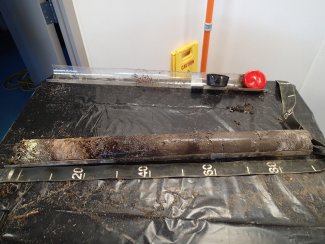
soil profile

D19 HEAL megapit soil profile 0-89 cm
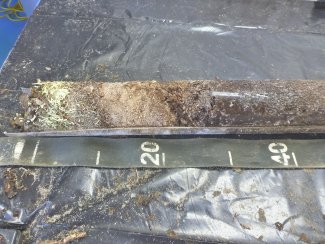
soil profile

D19 HEAL megapit soil profile 0-45 cm
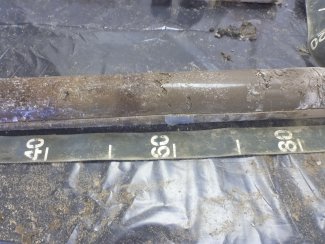
soil profile

D19 HEAL megapit soil profile 35-83 cm
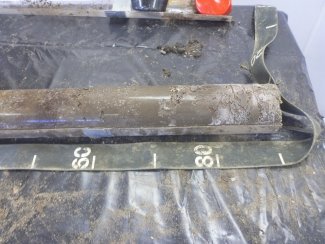
soil profile

D19 HEAL megapit soil profile 43-89 cm

Download All Images

Megapit Pedon Description

Print Date Feb 4 2019
Description Date Nov 8 2015
Describer S. Castillo
Site ID S2016AK068001_MP
Pedon ID S2016AK068001_MP
Lab Source ID KSSL
Lab Pedon # 17N0530
Soil Name as Described/Sampled Typic Histoturbels
Pedon Purpose research site
Geomorphic Setting plain
Description origin NASIS
State Alaska
MLRA 228 -- Interior Alaska Mountains
Soil Survey Area AK228 -- Interior Alaska Mountains
1-FAI -- Fairbanks, Alaska
Std Latitude 63.8798000
Std Longitude -149.2153900
Parent Material organic material over loess and/or slope alluvium
Description database KSSL
Diagnostic Features histic epipedon 0 to 31 cm.
cryoturbation 31 to 84 cm.
reduced matrix 31 to 84 cm.
permafrost 50 to 84 cm.
Cont. Site ID S2016AK068001_MP
Drainage Class poorly
Horizon Details

Oi--0 to 9 centimeters (0.0 to 3.5 inches); peat; clear smooth boundary. Lab sample # 17N02721

Oe--9 to 22 centimeters (3.5 to 8.7 inches); mucky peat; clear smooth boundary. Lab sample # 17N02722

Oa--22 to 31 centimeters (8.7 to 12.2 inches); muck; clear irregular boundary. Lab sample # 17N02723

A/Cjj--31 to 50 centimeters (12.2 to 19.7 inches); silt loam, muck; abrupt wavy boundary. Lab sample # 17N02724

Cjjf--50 to 84 centimeters (19.7 to 33.1 inches); slightly decomposed plant material; . Lab sample # 17N02725

Credits: This megapit soil pedon description was generously created by USDA Natural Resource Conservation Service staff, with particular thanks to Larry West, Jon Hempel, and numerous field staff.

NSF NEON, Operated by Battelle

Follow Us:

Join Our Newsletter

Get updates on events, opportunities, and how NEON is being used today.

Subscribe Now

Footer

  • About Us
  • Contact Us
  • Terms & Conditions
  • Careers
  • Code of Conduct

Copyright © Battelle, 2026

The National Ecological Observatory Network is a major facility fully funded by the U.S. National Science Foundation.

Any opinions, findings and conclusions or recommendations expressed in this material do not necessarily reflect the views of the U.S. National Science Foundation.