
NSF NEON, Operated by Battelle

Main navigation

  • About
    • NEON Overview
      • Vision and Management
      • Spatial and Temporal Design
      • History
    • About the NEON Biorepository
      • ASU Biorepository Staff
      • Contact the NEON Biorepository
    • Observatory Blog
    • Newsletters
    • Staff
    • FAQ
    • Contact Us

    About

  • Data
    • Data Portal
      • Data Availability Charts
      • API & GraphQL
      • Prototype Data
      • Externally Hosted Data
    • Data Collection Methods
      • Airborne Observation Platform (AOP)
      • Instrument System (IS)
        • Instrumented Collection Types
        • Aquatic Instrument System (AIS)
        • Terrestrial Instrument System (TIS)
      • Observational System (OS)
        • Observation Types
        • Observational Sampling Design
        • Sampling Schedules
        • Taxonomic Lists Used by Field Staff
        • Optimizing the Observational Sampling Designs
      • Protocols & Standardized Methods
    • Getting Started with NEON Data
      • neonUtilities for R and Python
      • Learning Hub
      • Code Hub
    • Using Data
      • Data Formats and Conventions
      • Released, Provisional, and Revised Data
      • Data Product Bundles
      • Usage Policies
      • Acknowledging and Citing NEON
      • Publishing Research Outputs
    • Data Notifications
    • NEON Data Management
      • Data Availability
      • Data Processing
      • Data Quality

    Data

  • Samples & Specimens
    • Biorepository Sample Portal at ASU
    • About Samples
      • Sample Types
      • Sample Repositories
      • Megapit and Distributed Initial Characterization Soil Archives
    • Finding and Accessing Sample Data
      • Species Checklists
      • Sample Explorer - Relationships and Data
      • Biorepository API
    • Requesting and Using Samples
      • Loans & Archival Requests
      • Usage Policies

    Samples & Specimens

  • Field Sites
    • Field Site Map and Info
    • Spatial Layers & Printable Maps

    Field Sites

  • Resources
    • Getting Started with NEON Data
    • Research Support Services
      • Field Site Coordination
      • Letters of Support
      • Mobile Deployment Platforms
      • Permits and Permissions
      • AOP Flight Campaigns
      • Research Support FAQs
      • Research Support Projects
    • Code Hub
      • neonUtilities for R and Python
      • Code Resources Guidelines
      • Code Resources Submission
      • NEON's GitHub Organization Homepage
    • Learning Hub
      • Tutorials
      • Workshops & Courses
      • Science Videos
      • Teaching Modules
    • Science Seminars and Data Skills Webinars
    • Document Library
    • Funding Opportunities

    Resources

  • Impact
    • Research Highlights
    • Papers & Publications
    • NEON in the News

    Impact

  • Get Involved
    • Upcoming Events
    • Research and Collaborations
      • Environmental Data Science Innovation and Inclusion Lab
      • Collaboration with DOE BER User Facilities and Programs
      • EFI-NEON Ecological Forecasting Challenge
      • NEON Great Lakes User Group
      • NCAR-NEON-Community Collaborations
    • Advisory Groups
      • Science, Technology & Education Advisory Committee
      • Technical Working Groups
    • NEON Ambassador Program
      • Exploring NEON-Derived Data Products Workshop Series
    • Partnerships
    • Community Engagement
    • Work Opportunities

    Get Involved

  • My Account
  • Search

Search

About

  • NEON Overview
  • About the NEON Biorepository
  • Observatory Blog
  • Newsletters
  • Staff
  • FAQ
  • Contact Us

Breadcrumb

  1. About
  2. Observatory Blog
  3. Got spatio-temporal data skillz? Join NEON’s data skills hackathon

Got spatio-temporal data skillz? Join NEON’s data skills hackathon

June 12, 2015
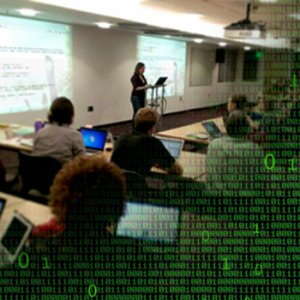
Data Carpentry Workshop

The National Ecological Observatory Network (NEON) is hosting a 3-day lesson-building hackathon to develop a suite of NEON/ Data Carpentry data tutorials and corresponding assessment instruments. The tutorials and assessment instruments will be used to teach fundamental big data skills needed to work efficiently with large spatio-temporal data using open tools, such as R, Python and postgres SQL.

Apply now (deadline: Aug 17, 2015 midnight MST). Learn more here. 

A hackathon to develop spatio-temporal data tutorials

The goal of the hackathon is to develop lessons that teach methods for working with spatio-temporal data. The group will identify teaching needs and address technological gaps by building tutorials and supporting materials. Materials developed during this hackathon will be openly licensed under Creative Commons and may be taught in multi-day NEON/ Data Carpentry workshops, adapted for classroom use and repurposed for self-paced online tutorials. Topics to be developed may include:

  • Automating big data workflows to increase efficiency
  • Use of data formats such as HDF5 that support large, heterogeneous data
  • Working with metadata to support automated workflows
  • Key tools, libraries and concepts needed to automate NEON data and spatial data workflows in platforms like Rstats and python
  • Tools and methods for big data visualization

Assembling scientists, educators and developers

The NEON hackathon will assemble a diverse and interdisciplinary group of scientists, educators and developers with various levels of data analysis, visualization and management experience and expertise, including applicants with expertise in bioinformatics. The organizing committee includes:

  • Leah Wasser, NEON
  • Tracy Teal, Data Carpentry
  • Mike Smorul, SESYNC
  • Jason Williams, Cyverse

The advantage of big data skills for science

NEON is a continental-scale observatory network that provides standardized, integrated, high-quality ecological data to support ecological understanding and forecasting. However, working with spatio-temporal NEON data requires a unique set of skills that are not typically taught in science curricula. Advantages of data skill training include:

  • Learning to work with spatio-temporal datasets that contribute to large-scale ecological research and understanding
  • Efficient and automated research workflows
  • Improved accuracy of analysis conclusions
Share

Related Posts:

Battelle NEON at AGU 2025

November 24, 2025

AGU logo

Version 1.2.0 of neonutilities Python package released

October 29, 2025

Resolved: Bug affecting neonUtilities in latest RStudio version on Windows

October 3, 2025

NSF NEON, Operated by Battelle

Follow Us:

Join Our Newsletter

Get updates on events, opportunities, and how NEON is being used today.

Subscribe Now

Footer

  • About Us
  • Contact Us
  • Terms & Conditions
  • Careers
  • Code of Conduct

Copyright © Battelle, 2026

The National Ecological Observatory Network is a major facility fully funded by the U.S. National Science Foundation.

Any opinions, findings and conclusions or recommendations expressed in this material do not necessarily reflect the views of the U.S. National Science Foundation.