NSF NEON, Operated by Battelle

Main navigation

  • About
    • NEON Overview
      • Vision and Management
      • Spatial and Temporal Design
      • History
    • About the NEON Biorepository
      • ASU Biorepository Staff
      • Contact the NEON Biorepository
    • Observatory Blog
    • Newsletters
    • Staff
    • FAQ
    • Contact Us

    About

  • Data
    • Data Portal
      • Data Availability Charts
      • API & GraphQL
      • Prototype Data
      • Externally Hosted Data
    • Data Collection Methods
      • Airborne Observation Platform (AOP)
      • Instrument System (IS)
        • Instrumented Collection Types
        • Aquatic Instrument System (AIS)
        • Terrestrial Instrument System (TIS)
      • Observational System (OS)
        • Observation Types
        • Observational Sampling Design
        • Sampling Schedules
        • Taxonomic Lists Used by Field Staff
        • Optimizing the Observational Sampling Designs
      • Protocols & Standardized Methods
    • Getting Started with NEON Data
      • neonUtilities for R and Python
      • Learning Hub
      • Code Hub
    • Using Data
      • Data Formats and Conventions
      • Released, Provisional, and Revised Data
      • Data Product Bundles
      • Usage Policies
      • Acknowledging and Citing NEON
      • Publishing Research Outputs
    • Data Notifications
    • NEON Data Management
      • Data Availability
      • Data Processing
      • Data Quality

    Data

  • Samples & Specimens
    • Biorepository Sample Portal at ASU
    • About Samples
      • Sample Types
      • Sample Repositories
      • Megapit and Distributed Initial Characterization Soil Archives
    • Finding and Accessing Sample Data
      • Species Checklists
      • Sample Explorer - Relationships and Data
      • Biorepository API
    • Requesting and Using Samples
      • Loans & Archival Requests
      • Usage Policies

    Samples & Specimens

  • Field Sites
    • Field Site Map and Info
    • Spatial Layers & Printable Maps

    Field Sites

  • Resources
    • Getting Started with NEON Data
    • Research Support Services
      • Field Site Coordination
      • Letters of Support
      • Mobile Deployment Platforms
      • Permits and Permissions
      • AOP Flight Campaigns
      • Research Support FAQs
      • Research Support Projects
    • Code Hub
      • neonUtilities for R and Python
      • Code Resources Guidelines
      • Code Resources Submission
      • NEON's GitHub Organization Homepage
    • Learning Hub
      • Tutorials
      • Workshops & Courses
      • Science Videos
      • Teaching Modules
    • Science Seminars and Data Skills Webinars
    • Document Library
    • Funding Opportunities

    Resources

  • Impact
    • Research Highlights
    • Papers & Publications
    • NEON in the News

    Impact

  • Get Involved
    • Upcoming Events
    • Research and Collaborations
      • Environmental Data Science Innovation and Inclusion Lab
      • Collaboration with DOE BER User Facilities and Programs
      • EFI-NEON Ecological Forecasting Challenge
      • NEON Great Lakes User Group
      • NCAR-NEON-Community Collaborations
    • Advisory Groups
      • Science, Technology & Education Advisory Committee
      • Technical Working Groups
    • NEON Ambassador Program
      • Exploring NEON-Derived Data Products Workshop Series
    • Partnerships
    • Community Engagement
    • Work Opportunities

    Get Involved

  • My Account
  • Search

Search

Impact

  • Research Highlights
  • Papers & Publications
  • NEON in the News

Breadcrumb

  1. Impact
  2. Research Highlights

Research Highlights

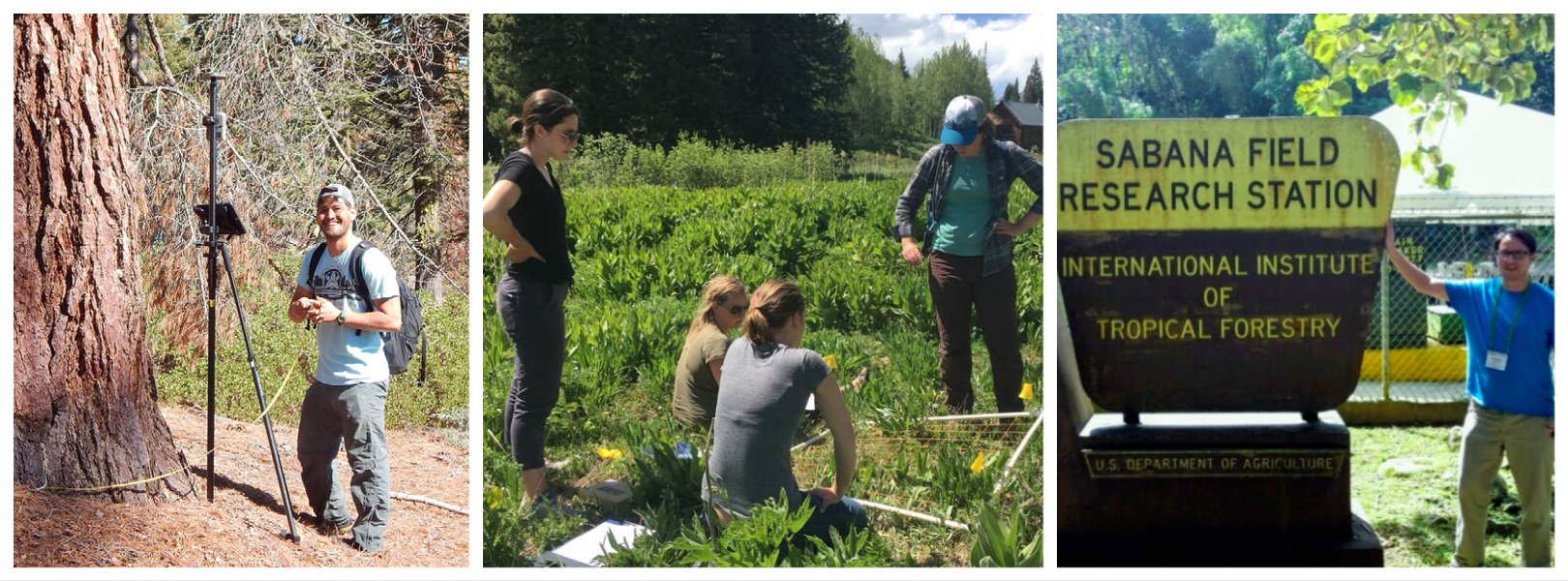
Outside researchers collecting data at NEON field sites

Explore these stories that describe how our user community have made new, exciting discoveries about how our natural systems function.

Do you have a recent paper that uses NEON data, samples, or other resources? Let NEON know - we will promote it!
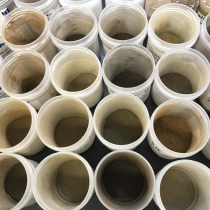
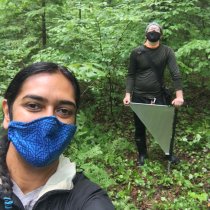
Publication Promotion Form

Research Highlight

Getting More Dirt on Soil Organic Matter

October 21, 2020

A new study published in Nature Geoscience uses soil from NEON field sites across the continent to look for insights into how ecosystem variables impact the formation and composition of SOM.

Research Highlight

The Answers (to Fungal Spore Dispersal) Are Blowing in the Wind

September 2, 2020

Arbuscular mycorrhizal (AM) fungi are found in nearly every ecosystem, quietly helping plants absorb nutrients from the soil. Dr. Bala Chaudhary wants to build a better model of how these vital ecosystem players disperse across the continent. She is using NEON’s Assignable Assets program to examine the role of aerial dispersal in AM fungal movement.

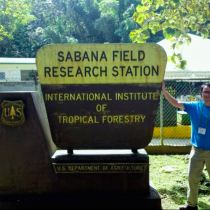
Bala Chaudhary, 2020 AA installation tour
Research Highlight

What Can a Hurricane Tell Us About Soil Health Metrics?

August 26, 2020

Dr. Zachary Kayler, an assistant professor in the Department of Soil and Water Systems at the University of Idaho, used NEON soil samples to test the ability of a widely-used soil health metric to detect changes from an extreme weather event - Hurricane Maria - in Puerto Rico.

Research Highlight

Mapping the Aftermath of a Hurricane

July 15, 2020

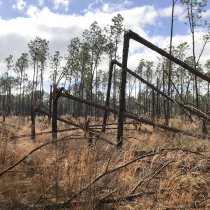
Jeffery Cannon, a Forest Management Scientist at The Jones Center, is using remote sensing data from the NEON program to understand how longleaf pine forests are impacted by and recover from major weather events. He and his colleagues will use the results to develop tools to help forest managers plan restoration and conservation efforts.

Broken trees at The Jones Center
Research Highlight

What’s That Tree? This Neural Net Can Tell You

June 17, 2020

Andrew Fricker, used remote sensing data from the NEON Airborne Observation Platform to train a neural net to classify tree species in a Sierra Nevada forest. He and his coauthors describe their approach in Remote Sensing: “A Convolutional Neural Network Classifier Identifies Tree Species in Mixed-Conifer Forest from Hyperspectral Imagery.”

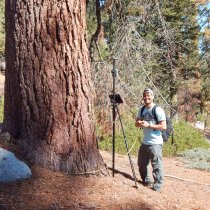
Andrew Fricker trained a Convolution Neural Network (CNN) to identify trees at TEAK
Research Highlight

Examining the Drivers of Forest Productivity

June 11, 2020

Chris Gough, an associate professor of biology at Virginia Commonwealth University (VCU), is using data from the NEON program to explore relationships between forest structure, biodiversity, and other characteristics and their ability to sequester carbon. His collaborative work with PIs from the University of Connecticut and Purdue University was recently published in Ecology: “High Rates of Primary Production in Structurally Complex Forests."

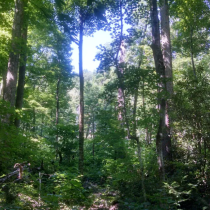
Cove forests of Great Smoky Mountains National Park
Research Highlight

Modeling the Spread of Ticks—And the Diseases They Carry

May 27, 2020

Understanding why tick populations are increasing, and why some species are spreading into new geographic areas, is of critical importance to public health. In a recent study, researchers used NEON data to develop a model of tick population dynamics at the Ordway Swisher Biological Station field site.

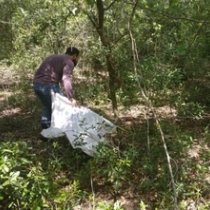
Field technician conducting a tick drag amongst trees
Research Highlight

Mapping Tree Mortality in the Pacific Southwest

May 20, 2020

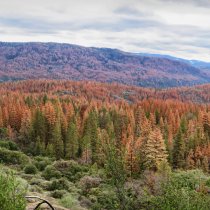
A team led by NEON scientists David Hulslander and Jessica Bolis has developed a method to map tree mortality with an unprecedented level of detail using hyperspectral remote sensing data from the NEON Airborne Observational Platform and a novel imaging algorithm.

Canopy at the terrestrial SOAP site
Research Highlight

A Big Idea for Small Mammal Diversity Modeling

February 10, 2020

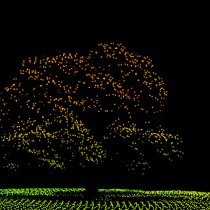
A new modeling approach could allow researchers to use remote sensing lidar data to predict small mammal biodiversity based on the structure of vegetation in an area. The study was led by Sarah Schooler, now a Ph.D. candidate at State University of New York (SUNY)–Syracuse, and Harold Zald of the Humboldt State University Department of Forestry and Wildland Resources. Lidar Prediction of Small Mammal Diversity in Wisconsin, published in Remote Sensing, explores how measurements of vegetation structure created with lidar data could be used to predict the diversity of small mammal communities.

Sarah Schooler, SUNY graduate student
Research Highlight

Mapping Patterns of Biodiversity

January 9, 2020

Dr. Phoebe Zarnetske, an Assistant Professor in the Department of Integrative Biology at Michigan State University (MSU), is using data from the NEON sites to investigate patterns in biodiversity and species traits across the continent. Her goal is to better understand the drivers that influence species distributions and community assembly.

Annie Smith and Phoebe Zarnetske
Research Highlight

Looking for Missing Carbon in the Forest Canopy

December 11, 2019

Kyla Dahlin and her team are using Airborne Remote Sensing data from five NEON sites to develop detailed 3D maps of forest structure. Their work, which was funded by the National Science Foundation (NSF), could provide new insights into the carbon storage potential of forests.

Trees at MLBS
Research Highlight

Studying Relationships Between Forest Structure and Bird Biodiversity

December 6, 2019

Land use changes and habitat loss have resulted in an overall loss of biodiversity across much of the country. Luis Carrasco, a post-doctoral fellow at NIMBioS, is leveraging NEON data to better understand the relationships between vegetation structure and density and bird biodiversity in forested ecosystems.

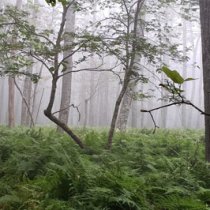
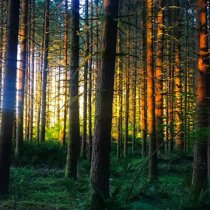
Sunlight through the trees at the ABBY field site
Research Highlight

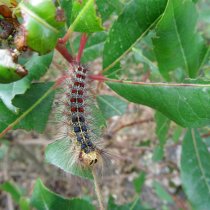
How a Tree’s Life can Change an Ecosystem: Plant Phenology, Gypsy Moths, and Heat Accumulation

November 20, 2019

Imagine walking through the deciduous forests in Massachusetts early one spring, a gentle rain falling down on you. Taking a closer look, you now see thousands of hairy caterpillars in the trees.

Gypsy moth caterpillar eating leaves
Research Highlight

Introducing Adlafia neoniana: A New Species Named for NEON

November 7, 2019

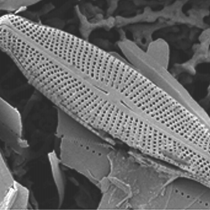
Adlafia neoniana (Naviculaceae) may be tiny, but it's got a big name to live up to. It's the first new species to be discovered on a NEON field site and named after the NEON program. So what is this newly discovered organism? A single-celled aquatic alga with a cell wall made of silica, known as a diatom.

Adlafia neoniana
Research Highlight

Understanding the Drivers of Community Assembly

October 29, 2019

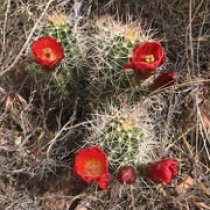
The exact composition of each local community is influenced by variables that include evolutionary history, current environmental conditions, and interspecies competition or codependence. A new study led by Will Pearse of Utah State University is using NEON data to quantify the roles of these different variables in the assembly of ecological communities.

Cactus in the field
Research Highlight

Digging Up the Dirt on Soil Organic Matter

September 6, 2019

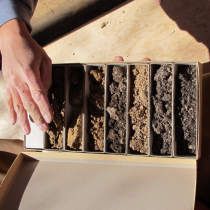
How are ecosystems across the continent changing over time? What are the relationships between ecosystem composition and soil organic matter? And how are soil composition and carbon storage potential likely to change in the future? The answers lie under our feet.

Soil Samples
Research Highlight

Students Test Ecology Concepts With NEON Data

July 17, 2019

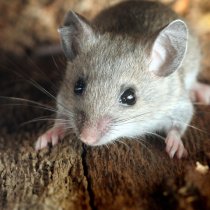
It's one thing to read about ecological concepts in a textbook. It's another to see them revealed by real-world data. Students at Ball State University recently explored key ecological concepts using data from the NEON program.

Mouse
Research Highlight

What's All This Dew Doing? Maybe More Than You Think

July 10, 2019

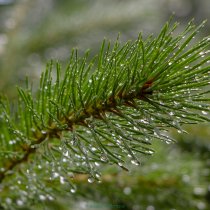
A new study led by François Ritter, a Ph.D. candidate at the University of Illinois–Chicago Department of Earth and Environmental Sciences, provides important insights into the frequency of dew formation across the U.S.

Dew on tree branch
Research Highlight

Answering Burning Questions About Wildfire Fuel and Emissions

May 15, 2019

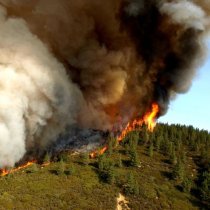
A new study funded through the National Science Foundation (NSF) Rapid Response to Funding (RAPID) Grant program attempts to answer critical questions about the correlations between biomass burned from wildfires and the emitted quantities of trace gases and aerosols.

Wildfire on ridge
Research Highlight

Calibrating Remote Sensing Data with Field Observations in the East River Watershed

December 12, 2018

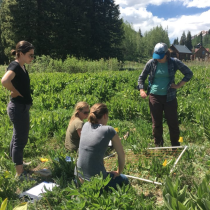
To build better models of watershed processes and calibrate remote sensing data with observations on the ground, a diverse team of researchers spent two weeks this summer gathering soil and vegetation data from hundreds of individual sites within the East River watershed near Crested Butte, CO.

Field ecologists from the Rocky Mountain Biological Station collecting data
Research Highlight

NEON Remote Sensing Flights Over Crested Butte Gather Data for LBNL Watershed Study

August 16, 2018

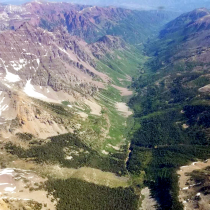
A study led by Lawrence Berkley National Laboratory (LBNL) has used the NEON assignable assets program to gather airborne remote sensing data near Crested Butte, Colorado. They will use the data to study plant community distributions and canopy biochemistry to shed light on watershed systems.

AOP photo of landscape in Crested Butte Colorado
Research Highlight

Remote Sensing Data Science Challenge Yields Positive Results

July 2, 2018

The NEON project is producing a vast treasure trove of open access airborne remote sensing data. Can computer algorithms help ecologists make sense of it all? A team of ecologists and data scientists at the University of Florida thought so. To accelerate the process, they initiated a data science challenge.

Pagination

  • First page
  • Previous page
  • Page 1
  • Current page 2
NSF NEON, Operated by Battelle

Follow Us:

Join Our Newsletter

Get updates on events, opportunities, and how NEON is being used today.

Subscribe Now

Footer

  • About Us
  • Contact Us
  • Terms & Conditions
  • Careers
  • Code of Conduct

Copyright © Battelle, 2026

The National Ecological Observatory Network is a major facility fully funded by the U.S. National Science Foundation.

Any opinions, findings and conclusions or recommendations expressed in this material do not necessarily reflect the views of the U.S. National Science Foundation.