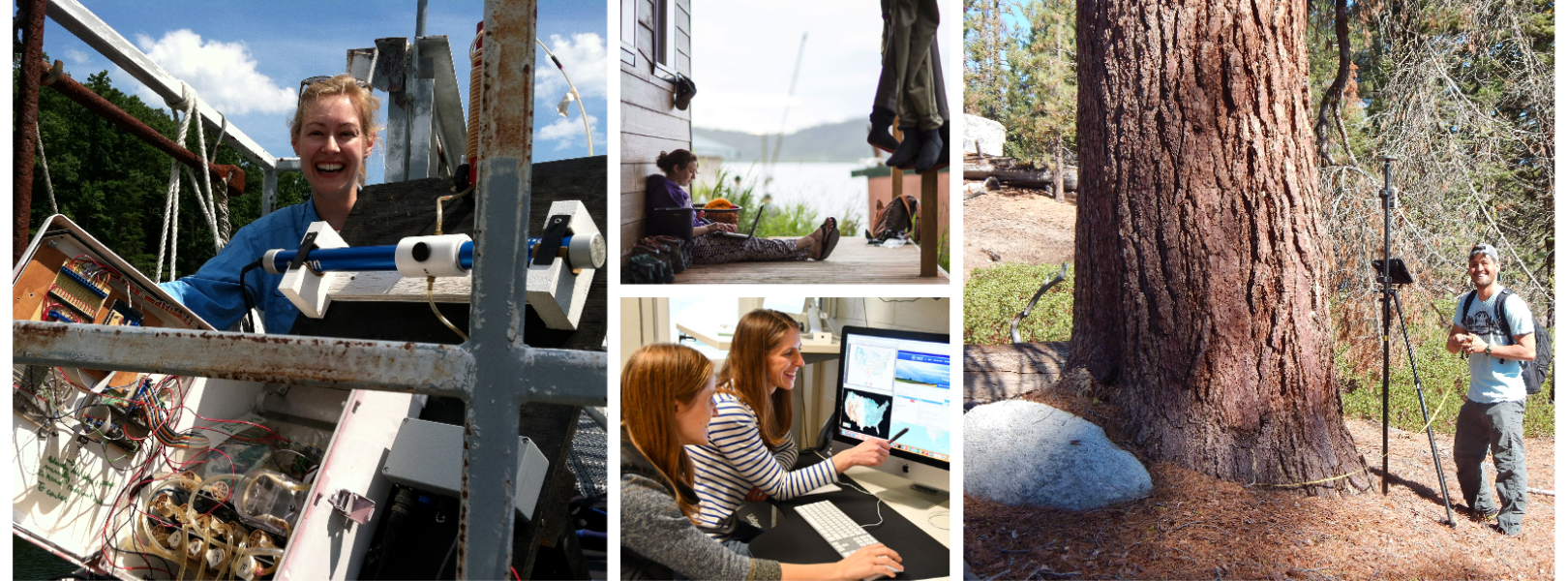
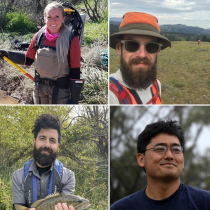
In July, the NEON Ambassadors convened a virtual workshop focusing on NEON derived data products. Participants are now working on a summary paper to outline best practices in creating, validating, and using derived data products. It's one more way the NEON Ambassadors are helping to make NEON data more usable and understandable for the wider research community.
Can water quality be forecast just like the weather? For Dr. Quinn Thomas, that is the ultimate goal. He and fellow researchers tested a model for forecasting lake temperatures at six NEON lake sites. Their results were recently published in Frontiers in Ecology and the Environment. Thomas is also the Principal Investigator for the EFI-RCN NEON Forecasting Challenge, which seeks to create a community of ecological forecasters using NEON data to test forecasting models.
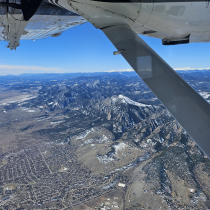
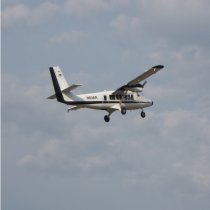
2023 marks the 10th anniversary of operations for NEON's Airborne Observation Platform (AOP)! The effort that goes into making the flight schedules, calibrating the instrument payloads, making sure everything goes smoothly, and collecting high-quality data requires a dedicated team. The AOP team consists of many moving parts and a myriad of brilliant staff. Meet some more of the team here!
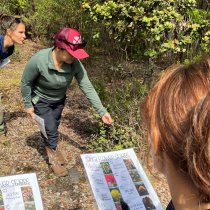
A unique and endangered ecosystem is nestled in the midst of the city of Oak Ridge, Tennessee. The Oak Ridge Barrens (The Barrens) is home to some of the few remaining pockets of natural prairie left in the state. Tennessee Citizens for Wilderness Planning (TCWP) wanted to perform a scientific inventory of the species composition in the cedar barrens. Margaret Cumberland, ecologist at NEON's Appalachians and Cumberland Plateau Domain (D07), facilitated an AGU-TEX community project to make this happen.
The 2023 EFI Unconference, hosted by the Ecological Forecasting Initiative Research Coordination Network (EFI RCN) and supported by the National Science Foundation, brought together 45 passionate individuals at the National Ecological Observatory Network (NEON) headquarters in Boulder, Colorado on June 21-23, 2023. The group fostered a unique environment for participants to exchange knowledge, generate new approaches, and advance the field of ecological forecasting.
A recent paper in the Journal of Ecology explores correlations between tree species composition, fungal communities, and the relative abundance of different types of carbon in soil at seven NEON eastern forested field sites. Understanding these complex relationships could help researchers build better models of the carbon cycle in forested terrestrial ecosystems.
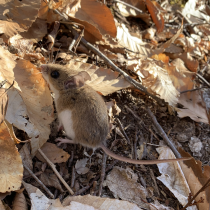
Dr. Lynn 'Marty' Martin and Dr. John Orrock are investigating the complex interactions between ticks, mice, and their habitats through a NEON Assignable Assets project. Their work could help illuminate how habitat quality and the behavioral choices of wild mice influence the spread of a dangerous pathogen.
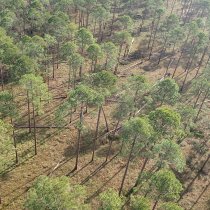
Nestled within the heart of Georgia's longleaf pine ecosystem, the Jones Center at Ichauway serves as a prime example of the crucial partnerships between NEON and its site hosts. NEON staff ecologist Rhea Esposito recently interviewed Senior Research Associate Scott Taylor about the relationship between NEON and the Jones Center.
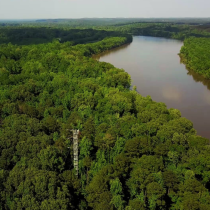
From the conifers of the northern boreal forest to the ʻōhiʻa groves of Hawai'i, there are many different types of forests represented among the NEON field sites. Many of our aquatic sites also run through riparian forests. Altogether, these sites showcase the diversity of forests across the North American continent.
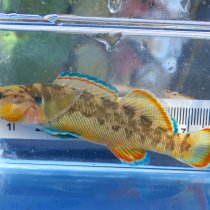
How did the recent hurricanes in Puerto Rico impact the average body size of freshwater fish found in Puerto Rican rivers? Saniei and Crispo used data on fish body size from the two aquatic sites in the Atlantic Neotropical Domain (D04): CUPE and GUIL. They compared the data from before and after the hurricanes for four freshwater species.
Our field staff at D20 do an amazing job engaging with the local communities, especially with STEM educators, students, and the next generation of ecologists. Here are just a few highlights from a unique Domain.
AGU's Thriving Earth Exchange Program (AGU-TEX) has welcomed a new group of Community Science Fellows in partnership with NEON! This cohort is comprised of field staff across 4 of NEON's Domains. Beginning in this year, they will be conducting community outreach, and ultimately working with AGU-TEX to launch collaborative, co-developed community science projects that produce on-the-ground impact through application of NEON's data and resources.
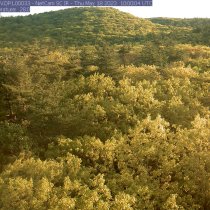
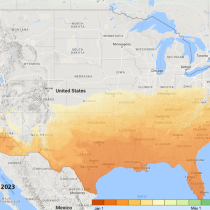
It's Phenology Week at the National Phenology Network! USA-NPN tracks the status of spring each year with maps generated by data from citizen scientists via Nature's Notebook along with data from scientific organizations like the NEON program. Signs of spring progress are also seen across our field site phenocams!
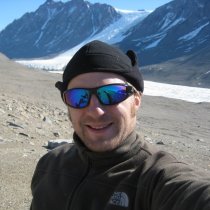
Battelle Senior Ecologist Eric Sokol with the NEON Program works with the McMurdo Dry Valleys Long Term Ecological Research (MCM LTER) Project to gather and produce ecological data and resources, in one of the most remote locations in the world.
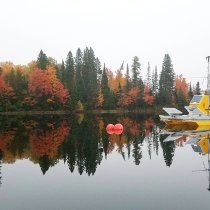
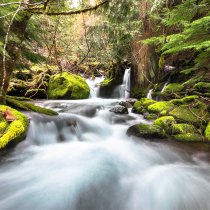
The NEON program supports 34 aquatic field sites, including lakes, wadeable streams, and non-wadeable rivers. These sites—many of them colocated with NEON terrestrial field sites—provide a deluge of data for ecologists interested in aquatic ecology and limnology.
The National Center of Atmospheric Research (NCAR), NEON, and CI Compass have worked to bring about the NCAR-NEON-Community Collaborations. Their efforts now link atmospheric and ecological science communities to begin seeking meaningful data together.
We are deeply saddened by the passing of Dr. Jianwu (Jim) Tang this January. He was a respected senior scientist at the Marine Biological Laboratory, Ecosystems Center (University of Chicago), Woods Hole, Massachusetts, who made many contributions to making NEON what it is today.
When researchers come together, good things happen—especially when they have access to open data. The connections made at the 2019 NEON Science Summit led to a number of new studies and published papers. Now, we're looking forward to the 2023 ESIIL Innovation Summit - applications to attend the Summit are due January 22!
Blue oaks are a keystone species in the woodlands of central California; however, temperature change and land management practices have threatened populations in many areas. NEON's Sokaina Alkhafaji partnered with the Sierra Foothill Conservancy and the University of California Cooperative Extension to develop blue oak monitoring protocols that could be used by landowners and conservation organizations across the state.
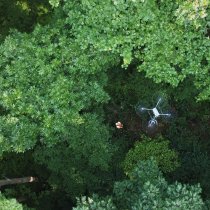
Treetop leaf sampling at forested NEON field sites just got a whole lot easier. We've added a new tool to our kit: an unmanned aerial vehicle (UAV), or drone. Drone-based foliar sampling has been added as an official NEON protocol for forested sites. The UAV will also be available for use in the Assignable Assets program.
In this 7th Domain Digest, hear from two Domains about their collaborations with student programs designed to give the next generation of scientists experience with hands-on ecology.
Battelle NEON is working with Google Public Sector to leverage the speed and power of Google Cloud's artificial intelligence (AI) and machine learning (ML) capabilities to accelerate discovery and get ecological data into the hands of scientists, educators, and decision makers.
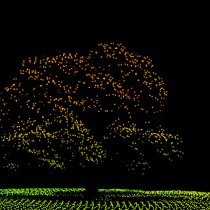
A new paper in Journal of Animal Ecology uses NEON lidar data plus observational data to explore relationships between animal species richness and various local and regional variables. The goal? To determine which variables have the best predictive power for species richness at different scales.
A recent study published in Global Ecology and Biogeography explores how lidar and hyperspectral remote sensing data could be fused to improve estimates of plant biodiversity in temperate forests.
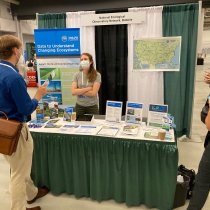
This summer, more than 3500 ecologists gathered in Montréal for the 2022 ESA/CSEE joint meeting. We were thrilled to participate and have the opportunity to meet NEON data users (and prospective data users) face to face - here are some highlights!
Dozens of individuals and teams have participated in the Ecological Forecasting Initiative Research Coordination Network (EFI-RCN)’s NEON Ecological Forecasting Challenge, which challenges people to create ecological forecasts using data from the NEON program. Educators across the country are using the Challenge with their undergraduate and graduate students.