Science Summits Spur Innovation and Collaboration
January 18, 2023

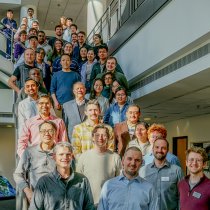
When researchers come together, good things happen—especially when they have access to open data. The 2019 NEON Science Summit, hosted by the University of Colorado – Boulder's Earth Lab, brought together NEON data users from across the country, including early-career scientists and grad students. The connections made at the Science Summit led to a number of new studies and published papers, a few of which are highlighted below.
Now, we're looking forward to the 2023 ESIIL Innovation Summit, which will be held in Boulder May 23-25. Applications to attend the Innovation Summit are due January 22, 2023, so if you find yourself inspired by the stories below, apply now!
Looking Back: Research from the NEON Science Summit
The first NEON Science Summit was hosted by Earth Lab in 2019. The "unconference" attracted nearly 170 researchers for a loosely structured meeting driven by participant interests and priorities. Working groups and workshops covered a range of topics centered around different ways to use NEON data to answer questions in ecology. The meeting resulted in dozens of innovative ideas for using NEON data and a number of new papers, some by authors who first connected at the Summit. Here are a few we've featured on the NEON blog.
Answering Critical Questions in Invasion Ecology
Dr. Nathan Gill, an assistant professor of Natural Resources Management at Texas Tech University, is primarily interested in fire ecology but joined a breakout group focused on biological invasions at the Science Summit. These connections ultimately led to a year-and-a-half-long collaboration between breakout group members. The resulting paper, "Six central questions about biological invasions to which NEON data science is poised to contribute," was published in Ecosphere in September 2021. The paper highlights the ways in which NEON data can help illuminate the drivers and mechanisms behind biological invasions and their impact on native ecosystems.
Automating Biodiversity Surveys
Automated instruments—including visual and acoustical sensors—have tremendous potential for the collection of biodiversity data. Dr. Justin Kitzes, an assistant professor of Biological Sciences at the University of Pittsburgh, led a working group on automation at the NEON Science Summit. Kitzes and other working group participants published their findings in Ecosphere in November 2021: "Expanding NEON biodiversity surveys with new instrumentation and machine learning approaches". The paper explores the utility of a variety of sensor types—including acoustic recorders, camera traps, sonar, and remote imaging technologies—for capturing biodiversity data at NEON field sites.
A New R Package for Microbial Data
Clara Qin, a Ph.D. candidate at the University of California – Santa Cruz (UCSC), led the development of the neonMicrobeR package, which automates much of the work of downloading, processing, and assembling microbial data from NEON terrestrial field sites. The project stemmed from a working group at the NEON Science Summit attended by her advisor, Dr. Kai Zhu. He explained, "The main users of the NEON microbial data are ecologists, not bioinformatics specialists who know a lot about gene sequencing and working with large sets of genetic data. We needed to make the data work not only for specialists but also for general ecologists." Qin, Zhu, and others published a paper describing the creation and validation of the R package in Ecosphere in November 2021: "From DNA sequences to microbial ecology: Wrangling NEON soil microbe data with the neonMicrobe R package."
Insights into Fire Ecology and Forest Recovery
Dr. Jennifer Balch, a fire ecologist at the University of Colorado Boulder, used data from the NEON Airborne Observation Platform (AOP) and other remote sensing platforms to examine landscapes at various stages of fire recovery alongside undisturbed landscapes. The results shed light on how forests recover and the impact of wildfire on the carbon storage potential of a landscape. Balch, the Director of UC-Boulder's Earth Lab (and now Director of ESIIL), also led the development of the 2019 NEON Science Summit. She shared her experiences at the Summit in an editorial published by ESA. Earth Lab has created a series of tutorials and courses to help earth and environmental scientists and students build skills in data analytics.
Building Connections for Data Collaboration
The NEON Science Summit helped to cement established connections and form new bonds in the science community that are continuing to bear fruit today. One example is through the Environmental Data Initiative (EDI)—a collaboration focused on creating tools, templates, and standards that will make it easier to synthesize data from the NEON program, the Long Term Ecological Research Network (LTER), and other networks and organizations. EDI and NEON are collaborating around several key goals: 1) building a diverse and inclusive community of data users; 2) developing best practices and standards for data users; and 3) improving data discoverability and interoperability.
Looking Ahead: The 2023 ESIIL Innovation Summit
We're excited to see new collaborations form at another upcoming event: the 2023 ESIIL Innovation Summit. The Innovation Summit, to be held May 23-25 in Boulder, will include 2.5 days of breakout sessions and plenary talks, with plenty of opportunities for networking and discussion. Attendance is by application only; applications are due January 22.
The Environmental Data Science Innovation and Inclusion Lab (ESIIL) is an NSF-funded data synthesis center led by the University of Colorado – Boulder. Collaborators include CyVerse, an NSF-funded program at the University of Arizona, and the University of Oslo, along with UC Boulder-led programs Earth Lab and CIRES. ESIIL's mission is to enable transformative environmental science by leveraging environmental data and emerging analytic methods. The ESIIL research community is dedicated to collaboration, data science education and training, building collaborative cyberinfrastructure, and supporting diversity and inclusion.
ESIIL's focus on data science makes it a natural partner for the NEON program. NEON offers a wealth of open ecology data along with tools and resources for researchers. We are looking forward to participating in the 2023 Innovation Summit and seeing new and experienced NEON data users come together. We can't wait to see what new ideas and papers come out of it!