Research Highlight
Data in Action: Soil Microbes and Atmospheric Hydrogen
April 1, 2026
What’s the question? As hydrogen becomes a potential clean energy source, scientists want to know what happens when small amounts leak directly into the atmosphere. Can soil microbes absorb that hydrogen, and could they help limit its environmental impact?
The big picture: Hydrogen is gaining attention as a low-carbon fuel. But if hydrogen production and use expand, some gas will inevitably escape into the atmosphere. Soil microbes naturally consume hydrogen, but scientists don’t yet know whether they can keep up with higher levels from a growing hydrogen energy sector. Understanding how ecosystems process hydrogen will help scientists improve models of atmospheric chemistry, air quality and climate.
NEON resources used:
- Field research conducted at the Santa Rita Experimental Range NEON (SRER) site in Arizona
- Access to NEON site infrastructure, including power and climate-controlled instrument shelters
- Long-term environmental data from NEON (including soil and atmospheric flux measurements) to provide historical context for new measurements
- Collaboration with NEON staff through the NEON Research Support Services (NRSS) program
Researcher(s): Dr. Laura Meredith (Associate Professor, University of Arizona); Dr. Robert Bordelon (Postdoctoral researcher); Dr. Juliana Gil-Loaiza (Research scientist); Dr. Jane Fudyma (NSF BIO Postdoctoral fellow)
What they did and what they learned
The NSF-funded University of Arizona research team worked with NEON’s NRSS for support in investigating how soil microbes absorb hydrogen from the atmosphere and how that process might change if hydrogen levels increase in the future.
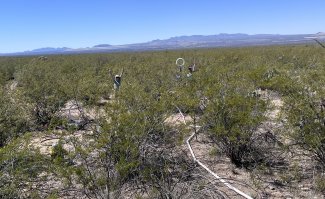
Dr. Jane Fudyma, Dr. Juliana Gil-Loaiza, and Dr. Robert Bordelon running Teflon tubing through protective conduit to the automated chambers for soil H2 fluxes. Photo courtesy of Dr. Laura Meredith.
At the NEON Santa Rita Experimental Range (SRER) site in southern Arizona, the researchers installed automated soil chambers that measure gases moving between soil and the atmosphere. The system tracks natural hydrogen levels while also running experiments that expose soil microbes to slightly elevated hydrogen concentrations. By monitoring how microbial communities respond, the team hopes to determine whether microbes can adapt and increase their ability to consume hydrogen over time.
The project also compares ecosystems with very different moisture conditions. Hydrogen uptake by microbes is thought to depend strongly on soil moisture. The Santa Rita site represents a dry desert environment with seasonal monsoon rainfall, while a future phase of the project will move the instruments to a wetter ecosystem in the southeastern United States.
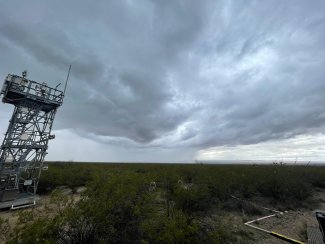
Automated chambers for soil H2 fluxes operating amongst creosote bushes near the Santa Rita Experimental Range NEON flux tower on a rainy day in southern Arizona. Photo courtesy of Dr. Robert Bordelon.
These measurements will help scientists develop better models of the global hydrogen cycle. Currently, soil uptake is one of the largest uncertainties in understanding how hydrogen moves through the atmosphere.
Because the team’s instruments collect data continuously, the researchers will generate one of the most detailed datasets yet on microbial hydrogen uptake in natural ecosystems. These data will help scientists estimate how soils interact with hydrogen emissions from energy systems and how ecosystems might respond if hydrogen becomes a major fuel source.
“Having access to a data-rich NEON site—with infrastructure, long-term measurements and knowledgeable staff—makes research like this possible in ways that would be very difficult otherwise.” – Robert Bordelon, Postdoctoral Researcher, University of Arizona
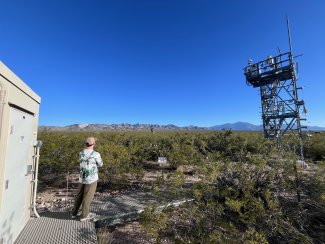
Dr. Robert Bordelon looking out at the Santa Rita Experimental Range NEON flux tower from the instrument hut, where H2 gas analyzers are installed and connected to eight external automated chambers for soil H2 fluxes. Photo courtesy of Dr. Laura Meredith.
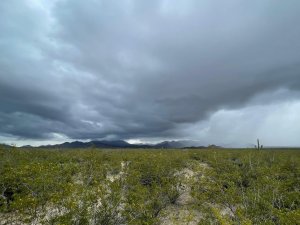
Preview image, at top: Creosote bushes and saguaro cacti near the Santa Rita Experimental Range NEON flux tower. Photo courtesy of Dr. Robert Bordelon.