NSF NEON, Operated by Battelle

Main navigation

  • About
    • NEON Overview
      • Vision and Management
      • Spatial and Temporal Design
      • History
    • About the NEON Biorepository
      • ASU NEON Biorepository Staff
      • Contact the NEON Biorepository
    • Observatory Blog
    • Newsletters
    • Staff
    • FAQ
    • User Accounts
    • Contact Us

    About

  • Data
    • Data Portal
      • Data Availability Charts
      • API & GraphQL
      • Prototype Data
      • Externally Hosted Data
    • Data Collection Methods
      • Airborne Observation Platform (AOP)
      • Instrument System (IS)
        • Instrumented Collection Types
        • Aquatic Instrument System (AIS)
        • Terrestrial Instrument System (TIS)
      • Observational System (OS)
        • Observation Types
        • Observational Sampling Design
        • Sampling Schedules
        • Taxonomic Lists Used by Field Staff
        • Optimizing the Observational Sampling Designs
      • Protocols & Standardized Methods
    • Getting Started with NEON Data
      • neonUtilities for R and Python
      • Learning Hub
      • Code Hub
    • Using Data
      • Data Formats and Conventions
      • Released, Provisional, and Revised Data
      • Data Product Bundles
      • Usage Policies
      • Acknowledging and Citing NEON
      • Publishing Research Outputs
    • Data Notifications
    • NEON Data Management
      • Data Availability
      • Data Processing
      • Data Quality

    Data

  • Samples & Specimens
    • NEON Biorepository Sample Portal at ASU
    • About Samples
      • Sample Types
      • Sample Repositories
      • Megapit and Distributed Initial Characterization Soil Archives
    • Finding and Accessing Sample Data
      • Species Checklists
      • Sample Explorer - Relationships and Data
      • Biorepository API
    • Requesting and Using Samples
      • Requesting Samples from the NEON Biorepository
      • Request Megapit and Initial Characterization Soil
      • Sample Use Guidelines
      • Sample Use Policy
      • Acknowledging and Citing the NEON Biorepository

    Samples & Specimens

  • Field Sites
    • Field Site Map and Info
    • Spatial Data Layers & Maps

    Field Sites

  • Resources
    • Getting Started with NEON Data
    • Research Support Services
      • Field Site Coordination
      • Letters of Support
      • Permits and Permissions
      • AOP Flight Campaigns
      • Research Support FAQs
      • Research Support Projects
    • Code Hub
      • neonUtilities for R and Python
      • Code Resources Guidelines
      • Code Resources Submission
      • NEON's GitHub Organization Homepage
    • Learning Hub
      • Tutorials
      • Workshops & Courses
      • Science Videos
      • Teaching Modules
    • Science Seminars and Data Skills Webinars
    • Document Library
    • Funding Opportunities

    Resources

  • Impact
    • Research Highlights
    • Papers & Publications
    • NEON in the News

    Impact

  • Get Involved
    • Upcoming Events
    • Past Events
    • Research and Collaborations
      • Environmental Data Science Innovation and Inclusion Lab
      • Collaboration with DOE BER User Facilities and Programs
      • EFI-NEON Ecological Forecasting Challenge
      • NEON Great Lakes User Group
      • NCAR-NEON-Community Collaborations
      • Sage Grande Testbed
    • Advisory Groups
      • Science, Technology & Education Advisory Committee (STEAC)
      • Innovation Advisory Committee (IAC)
      • Technical Working Groups (TWG)
    • NEON Ambassador Program
      • Exploring NEON-Derived Data Products Workshop Series
    • Partnerships
    • Community Engagement
    • Work Opportunities

    Get Involved

  • My Account
  • Search

Search

About

  • NEON Overview
  • About the NEON Biorepository
  • Observatory Blog
  • Newsletters
  • Staff
  • FAQ
  • User Accounts
  • Contact Us

Breadcrumb

  1. About
  2. Observatory Blog

Observatory Blog

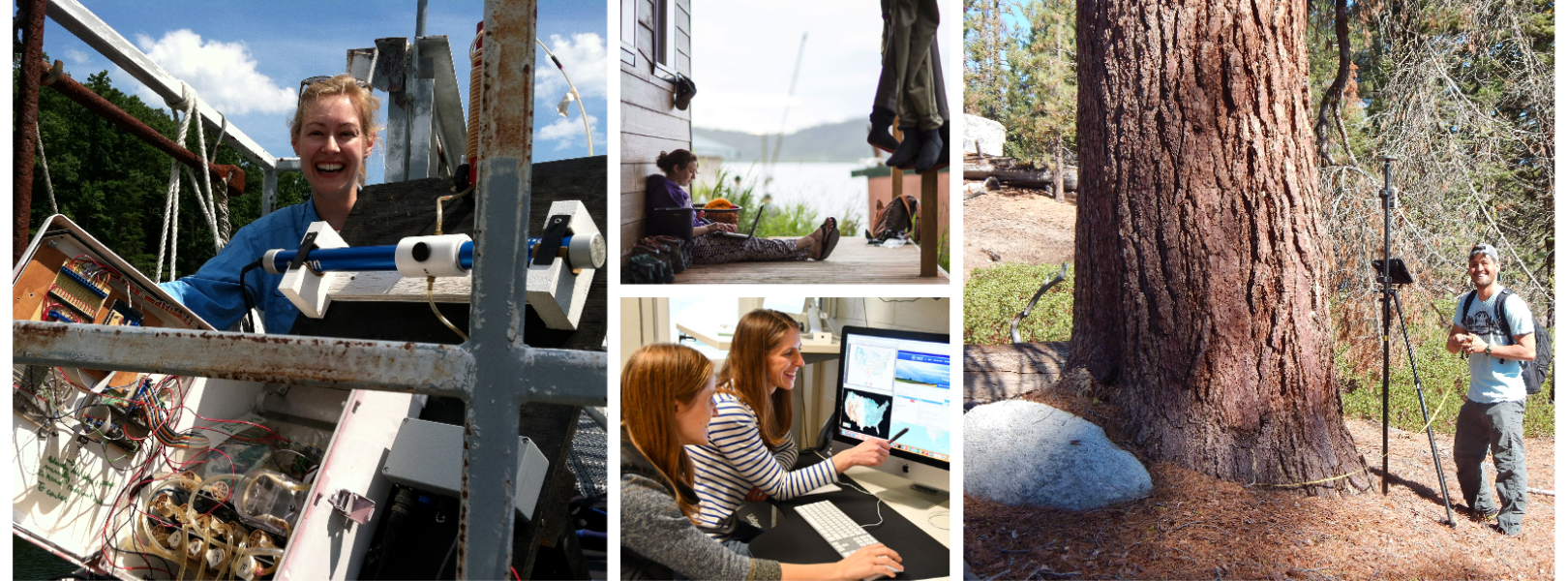
Collage of people featured in blogs
Category

Interns Summer in Review, Part 4: So, what do YOU do?

October 17, 2014

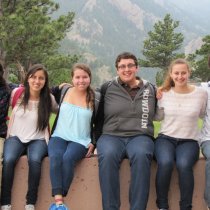
After spending time together in NEON’s summer internship program, Ariel Kaluzhny (a computer science student) and Maddy Ball (an environmental science major) learned a lot about their NEON projects, explored a good bit of Colorado and became great friends.

2014 Interns Ariel Kaluzhney and Madeleine Ball

Interns Summer in Review, Part 3: What's an Imaging Science student doing at NEON?

September 29, 2014

NEON is quite the unexpected place for an Imaging Science student to do an internship. NEON is all about Ecology, so where am I supposed to fit in here?

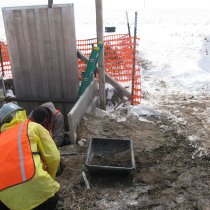
Soil pit at STER

Interns Summer in Review, Part 2: Sharing Across Cultures

September 24, 2014

I come from Bogotá, Colombia where I study Environmental Engineering and Industrial Engineering at the Universidad de los Andes. You might ask, “What’s a student from Colombia doing here?”

Stephanie Cortes Terrestrial Ecology & Tower Instrumentation Intern

Interns Summer in Review, Part 1: From the University to the Field

September 8, 2014

During the 2013 spring semester, I registered for the Surveying for Engineers class at my college. The class was not required for my Environmental Science major, which caused my advisor to question why I would want to take it.

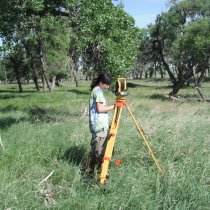
Field technician doing total station monitoring

NEON presents its first higher education video

July 18, 2014

NEON is excited to present its first video in a series of multimedia resources. The Story of LiDAR Data provides a general overview of LiDAR data and highlights how LiDAR data is used to measure structural characteristics of trees.

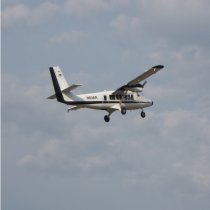
AIO twin otter over a NEON field site

Celebrating PODS packed full of sensor equipment

June 30, 2014

NEON staff celebrate a major accomplishment as four PODs full of sensor equipment ship off to Blandy (D2), Disney (D3), Jones (D3) and Jornada (D14) this week, which marks the beginning of phase three sensor installation for those sites.

Group photo of NEON HQ staff

Summer Internship Program Kicks Off

June 18, 2014

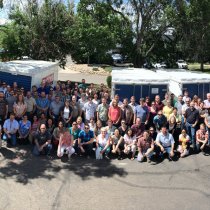
NEON is pleased to welcome its second cohort of summer interns! This year, seven interns join NEON mentor teams to analyze preliminary AOP, aquatic, and terrestrial data, code algorithms to automate image and data processing, and explore citizen science data for early trends. It promises to be an exciting summer.

2014 NEON interns at Mesa Lab

Spring Training in Florida

May 21, 2014

When you pull up nutrient data for soil cores from across the United States, remember this: They were collected by our hardy and conscientious field technicians.

NEON Hosts Congressman Jared Polis on Earth Day

April 24, 2014

Congressman Jared Polis toured NEON headquarters, heard short presentations and participated in a town hall discussion with NEON staff on Earth Day, April 22, 2014.

Jared Polis Views LiDAR data on a site tour

Dear future NEON data users: Thanks for your input!

March 7, 2014

We want to know what you, future users of NEON data, are looking for when you search for and download data.

North American Soils Analysis Yields New Research Guidelines and Continental-Scale Patterns

February 5, 2014

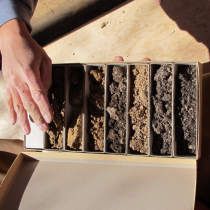
Just as most of an iceberg stays hidden under the surface of the ocean, many of the most important ecosystem processes happen underfoot. Soil properties, processes and organisms play key roles in everything from climate change to crop growth to clean water and natural disasters.

Soil Samples

In LiDAR magazine this month: remote sensing multi-tasking

January 30, 2014

The latest issue of LiDAR magazine features NEON's remote sensing data collection program.

From field notebooks to rack servers

November 15, 2013

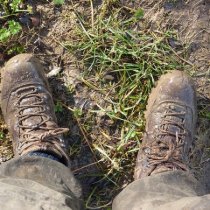
Ecology as a science comes from a tradition of what I like to call "nerdy explorers."

Field technician with muddy boots

Underground biomass: Getting to the root of it

October 29, 2013

One of NEON's goals is to monitor carbon cycling at all its terrestrial sites. Gaining an enhanced understanding of the movement of carbon between the atmosphere, vegetation, and soils may help us better understand and predict ecosystem responses to changing conditions like increased carbon emissions from fossil fuel burning.

Soil pit

NEON Scientist Honored by German Meteorological Society

October 8, 2013

NEON scientist Dr. Stefan Metzger received the 2013 Young Scientist Award from the German Meteorological Society at the DACH conference of German, Austrian and Swiss meteorologists in Innsbruck, Austria, on September 3. The award is presented every three years for outstanding developments and achievements across all fields of meteorology.

Photo of Stefan Metzger, as seen in article "Featured Expert: Dr. Stefan Metzger"

Joint European-U.S. Observatory Planning Continues at NEON

October 2, 2013

The second annual COOPEUS (COOPeration EU and U.S.) strategic planning meeting was held at NEON last week in order to continue the development of joint harmonization and interoperability between partner observatories in the U.S. and Europe.

NEON Signs MOU With CzechGlobe

September 27, 2013

Members of CzechGlobe visited NEON Headquarters in September to sign the MOU and conduct further planning.

Learning is a two-way street

September 9, 2013

Internship programs are all about learning – learning your discipline; learning about work environments and careers; about time management and teamwork; about yourself.

Ecologically-Friendly Construction at a Continental Scale

September 1, 2013

One key requirement for NEON site construction is that construction activities have zero impact on the surrounding ecosystem – because any disturbance interferes with NEON’s ability to capture a true baseline for U.S. ecology.

Citizen Science Then and Now

August 19, 2013

In the latest issue of American Scientist, NEON Citizen Science Director Sandra Henderson and Chicago Botanic Garden Senior Scientist Kayri Havens describe the evolution of the six-year-old NEON citizen science program Project Budburst and tie it back to its historic roots in the observations recorded by naturalists and amateur scientists of centuries past.
citizen science

A field day for interns

July 17, 2013

Seeing how much planning and constant attention (sampling) must go in to the construction and operation of a single site, not even a single domain

NEON Collaborates with EcoSIS Team on New Spectral Data Resource

July 15, 2013

A team of researchers led by Phil Townsend at the University of Wisconsin recently received NASA funding to prototype a new public repository for

NEON and ICOS Sign Interoperability and Collaboration Agreement

July 8, 2013

NEON and the Integrated Carbon Observing System ( ICOS) Ecosystem Thematic Center (ETC) signed a memorandum of understanding in mid-June 2013. This

NEON and NASA Team up at the Frontier of Remote Sensing in Ecology

June 21, 2013

The NEON Airborne Observation Platform ( AOP) team and a crowd of researchers from several different U.S. institutions joined forces in the Sierra

NSF Releases Video on NEON/CSU Wildfire Study

June 10, 2013

One year after the devastating High Park Fire, the National Science Foundation has released a video documenting the first round of airborne and ground

Life in the Pits

June 10, 2013

by Derek Smith and Josh Roberti Two Associate Scientists at NEON reflect upon finding themselves in a seven foot deep hole. Josh: As a meteorology

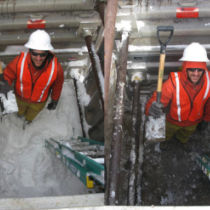
Field technician in snow pIt

NEON and TERN Sign Interoperability and Collaboration Agreement

May 24, 2013

NEON and the Terrestrial Ecosystem Research Network (TERN) signed a memorandum of understanding in mid-May 2013. The MOU is a written agreement to

An engineer and a scientist walks into a lab ...

April 17, 2013

By Janae Csavina My job as the Quality Assurance/Quality Control Scientist in the Calibration, Validation and Audit Laboratory (CVAL) at the NEON

Janae Csavina manages the Calibration, Validation and Audit Laboratory (CVAL) for the NEON project

Health diagnostics for the planet

April 2, 2013

A couple of weeks ago, my wife took our daughter to the doctor. After he had heard the symptoms my daughter had been experiencing, the doctor

Groundwork in the snow for measurements in the wind

March 21, 2013

It was January 2013 in Toolik, Alaska, about 160 miles north of the Arctic Circle, and the temperature was minus 35 degrees Fahrenheit. Jeff Taylor

Pagination

  • First page
  • Previous page
  • Page 1
  • Page 2
  • Page 3
  • Page 4
  • Page 5
  • Page 6
  • Page 7
  • Page 8
  • Page 9
  • Page 10
  • Current page 11
  • Page 12
  • Page 13
  • Next page
  • Last page
NSF NEON, Operated by Battelle

Follow Us:

Join Our Newsletter

Get updates on events, opportunities, and how NEON is being used today.

Subscribe Now

Footer

  • About Us
  • Contact Us
  • Terms & Conditions
  • Careers
  • Code of Conduct

Copyright © Battelle, 2026

The National Ecological Observatory Network is a major facility fully funded by the U.S. National Science Foundation.

Any opinions, findings and conclusions or recommendations expressed in this material do not necessarily reflect the views of the U.S. National Science Foundation.