
NSF NEON, Operated by Battelle

Main navigation

    • About Overview
    • NEON Overview
    • About the NEON Biorepository
    • Observatory Blog
    • Newsletter
    • Staff
    • FAQ
    • User Accounts
    • Contact Us
    • Data Overview
    • Data Portal
    • Data Availability Charts
    • API & GraphQL
    • Prototype Data
    • Data Collection Methods
    • Getting Started with NEON Data
    • Using Data
    • Data Notifications
    • NEON Data Management
    • Samples & Specimens Overview
    • NEON Biorepository Sample Portal at ASU
    • About NEON Samples
    • Sample Types
    • Finding and Accessing Sample Data
    • Species Checklists
    • Requesting and Using Samples
    • Acknowledging and Citing the NEON Biorepository
    • Biorepository Research Projects
    • Field Sites Overview
    • Field Site Map and Info
    • Spatial Data Layers & Maps
    • Resources Overview
    • Getting Started with NEON Data
    • Research Support Services
    • Code Hub
    • Learning Hub
    • Science Seminars and Data Skills Webinars
    • Document Library
    • Funding Opportunities
    • Impact Overview
    • Research Highlights
    • Papers & Publications
    • NEON in the News
    • Get Involved Overview
    • Upcoming Events
    • Past Events
    • Research and Collaborations
    • Advisory Groups
    • NEON Ambassador Program
    • Partnerships
    • Community Engagement
    • Work Opportunities

Search

About

  • NEON Overview
  • About the NEON Biorepository
  • Observatory Blog
  • Newsletter
  • Staff
  • FAQ
  • User Accounts
  • Contact Us

Breadcrumb

  1. About
  2. Observatory Blog
  3. Boots on the ground for NEON Member Institution Representatives

Boots on the ground for NEON Member Institution Representatives

October 23, 2014
By Wendy Gram

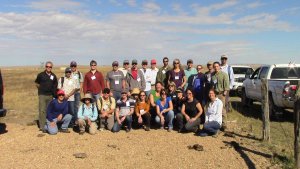
NEON Member Institution representatives learned about NEON data collection first-hand this week during a visit the Central Plains Experimental Range (CPER), the Domain 10 core site. This site tour was part of the 2014 NEON Membership Meeting, held October 21-22 in Boulder, CO at NEON Headquarters.
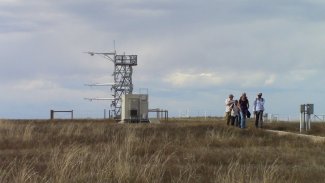
People walking away from a flux tower

People walking away from a flux tower

A group of 20 participants toured the CPER site for roughly 90 minutes, interacting with the Domain 10/13 field staff. The NEON tower parcel at CPER was split into four groups highlighting a few NEON data collection techniques, including:

- The NEON tower overview presentation by Bernice Hwang and Hank Loescher
- Plant phenology, mosquito abundance, diversity and infectious disease presented by Hannah Schratel
- Productivity and biodiversity presented by Kevin Barrett
- Small mammal ecology presented by Craig Emerson 

The main theme for the visit was "How can I integrate these techniques/protocols/sites into my own work? How can I use all of this NEON data?"

The tour ended with a delicious white chicken chili lunch provided by Honey's Highway Café of Nunn, CO and presentations by Melinda Smith, the CSU SGSRIC director, Justin Derner, NEON's USDA site host and regional Climate Hub lead, and Hank Loescher. The topic of integration came up over and over again with participants clearly interested in getting their hands on NEON products as soon as possible.

Seminar with NCAR at NEON headquarters

During day 2 of the meeting, more than 30 scientists participated in a workshop titled Scaling Ecological Processes, organized by co-chairs Michael Dietze (Boston University) and David Moore (University of Arizona), and led by Michael Dietze.  The workshop focused on fostering cross-fertilization across sub-disciplines, flushing out key theoretical questions, and identifying useful analytical tools (statistical & process-based) for addressing questions of scale using NEON data.  A combination of “lightning slide” presentations (5 minutes long) and targeted discussions created a lively exchange of ideas and many opportunities for future projects.

Share

NSF NEON, Operated by Battelle

Follow Us:

Join Our Newsletter

Get updates on events, opportunities, and how NEON is being used today.

Subscribe Now

Footer

  • About Us
  • Contact Us
  • Terms & Conditions
  • Careers
  • Code of Conduct

Copyright © Battelle, 2026

The National Ecological Observatory Network is a major facility fully funded by the U.S. National Science Foundation.

Any opinions, findings and conclusions or recommendations expressed in this material do not necessarily reflect the views of the U.S. National Science Foundation.