
NSF NEON, Operated by Battelle

Main navigation

  • About
    • NEON Overview
      • Vision and Management
      • Spatial and Temporal Design
      • History
    • About the NEON Biorepository
      • ASU Biorepository Staff
      • Contact the NEON Biorepository
    • Observatory Blog
    • Newsletters
    • Staff
    • FAQ
    • Contact Us

    About

  • Data
    • Data Portal
      • Data Availability Charts
      • API & GraphQL
      • Prototype Data
      • Externally Hosted Data
    • Data Collection Methods
      • Airborne Observation Platform (AOP)
      • Instrument System (IS)
        • Instrumented Collection Types
        • Aquatic Instrument System (AIS)
        • Terrestrial Instrument System (TIS)
      • Observational System (OS)
        • Observation Types
        • Observational Sampling Design
        • Sampling Schedules
        • Taxonomic Lists Used by Field Staff
        • Optimizing the Observational Sampling Designs
      • Protocols & Standardized Methods
    • Getting Started with NEON Data
      • neonUtilities for R and Python
      • Learning Hub
      • Code Hub
    • Using Data
      • Data Formats and Conventions
      • Released, Provisional, and Revised Data
      • Data Product Bundles
      • Usage Policies
      • Acknowledging and Citing NEON
      • Publishing Research Outputs
    • Data Notifications
    • NEON Data Management
      • Data Availability
      • Data Processing
      • Data Quality

    Data

  • Samples & Specimens
    • Biorepository Sample Portal at ASU
    • About Samples
      • Sample Types
      • Sample Repositories
      • Megapit and Distributed Initial Characterization Soil Archives
    • Finding and Accessing Sample Data
      • Species Checklists
      • Sample Explorer - Relationships and Data
      • Biorepository API
    • Requesting and Using Samples
      • Loans & Archival Requests
      • Usage Policies

    Samples & Specimens

  • Field Sites
    • Field Site Map and Info
    • Spatial Layers & Printable Maps

    Field Sites

  • Resources
    • Getting Started with NEON Data
    • Research Support Services
      • Field Site Coordination
      • Letters of Support
      • Mobile Deployment Platforms
      • Permits and Permissions
      • AOP Flight Campaigns
      • Research Support FAQs
      • Research Support Projects
    • Code Hub
      • neonUtilities for R and Python
      • Code Resources Guidelines
      • Code Resources Submission
      • NEON's GitHub Organization Homepage
    • Learning Hub
      • Tutorials
      • Workshops & Courses
      • Science Videos
      • Teaching Modules
    • Science Seminars and Data Skills Webinars
    • Document Library
    • Funding Opportunities

    Resources

  • Impact
    • Research Highlights
    • Papers & Publications
    • NEON in the News

    Impact

  • Get Involved
    • Upcoming Events
    • Research and Collaborations
      • Environmental Data Science Innovation and Inclusion Lab
      • Collaboration with DOE BER User Facilities and Programs
      • EFI-NEON Ecological Forecasting Challenge
      • NEON Great Lakes User Group
      • NCAR-NEON-Community Collaborations
    • Advisory Groups
      • Science, Technology & Education Advisory Committee
      • Technical Working Groups
    • NEON Ambassador Program
      • Exploring NEON-Derived Data Products Workshop Series
    • Partnerships
    • Community Engagement
    • Work Opportunities

    Get Involved

  • My Account
  • Search

Search

About

  • NEON Overview
  • About the NEON Biorepository
  • Observatory Blog
  • Newsletters
  • Staff
  • FAQ
  • Contact Us

Breadcrumb

  1. About
  2. Observatory Blog
  3. Dear future NEON data users: Thanks for your input!

Dear future NEON data users: Thanks for your input!

March 7, 2014
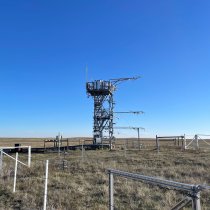
While we’ve released some preliminary data from newly constructed field sites, our data portal is a work in progress. We want to know what you, future users of NEON data, are looking for when you search for and download data. 

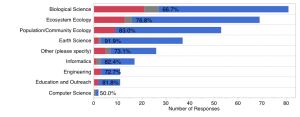
We’ve hired a usability firm here in Boulder near headquarters to help us systematically collect your feedback so we can use it to help make our data portal great.  Back in December 2013, we asked people who came to our booth at the annual meeting of the American Geophysical Union to complete a survey about their interactions with external data sets (data they didn’t collect themselves but they use in their work). We also sent out the survey via email and social media and asked our staff to forward the survey link to their data-downloading friends and colleagues. Almost 400 of you responded and gave us a ton of great input. As we promised back in December 2013, here are some highlights from the initial survey results: Most of you who responded to the survey:

  • are familiar with NEON (79%)
  • have primarily biological, ecological or earth science expertise (78%)
  • use or reference external data (77%)
  • are academics (faculty or students, 66%) or non-University researchers (14%)

We reached a broad range of potential data users. Great! Some of the things we learned or affirmed about your interactions with external data sets:

  • You like to use a map or a list of locations to filter available data sets by the locations in which the data were collected.
  • To figure out whether a dataset is going to be useful to you, you tend to want to:
    • read documentation,
    • download the data and explore it,
    • or see examples of the data.
  • Some of the first things you look for with a new external data set are:
    • what the data measure,
    • where the data were collected,
    • and how the data were collected.
  • In past experiences with external data sets, you have been notably irritated with:
    • missing or inadequate metadata,
    • obscure or proprietary data formats,
    • overly large or slow downloads,
    • and an inability to selectively download data by time period, location, or other filtering parameters.

We get it. You want to know what you’re getting before you commit to downloading it.

  • The tools you are most likely to use to analyze data are:
    • Excel (62%)
    • R (57%)
    • Matlab (26%)
    • Python (23%)
    • SAS (19%)
  • Most of you (73%) who use external data end up returning to the original data source at least once to update your data with more recent or corrected data sets.

We should make it easy for you to import NEON data into Excel and R, and to stay on top of updates to the NEON data sets that you download.

Based on the initial results, our usability firm has created data portal prototypes and deployed them in two rounds of interviews with volunteers from among the survey respondents. There’ll be more opportunities in the near future to participate in data portal testing and contribute feedback. Stay tuned! We’re looking forward to hearing from you and working with you.
Share

Related Posts:

Unlocking the Secrets of Soil Microbial Metabolites

February 2, 2026

Petri dishes of bacteria cultures

Discontinuation of Select NEON Data Products

January 29, 2026

Modification of Select NEON Data Products

January 29, 2026

NSF NEON, Operated by Battelle

Follow Us:

Join Our Newsletter

Get updates on events, opportunities, and how NEON is being used today.

Subscribe Now

Footer

  • About Us
  • Contact Us
  • Terms & Conditions
  • Careers
  • Code of Conduct

Copyright © Battelle, 2026

The National Ecological Observatory Network is a major facility fully funded by the U.S. National Science Foundation.

Any opinions, findings and conclusions or recommendations expressed in this material do not necessarily reflect the views of the U.S. National Science Foundation.