
Terrestrial Organisms
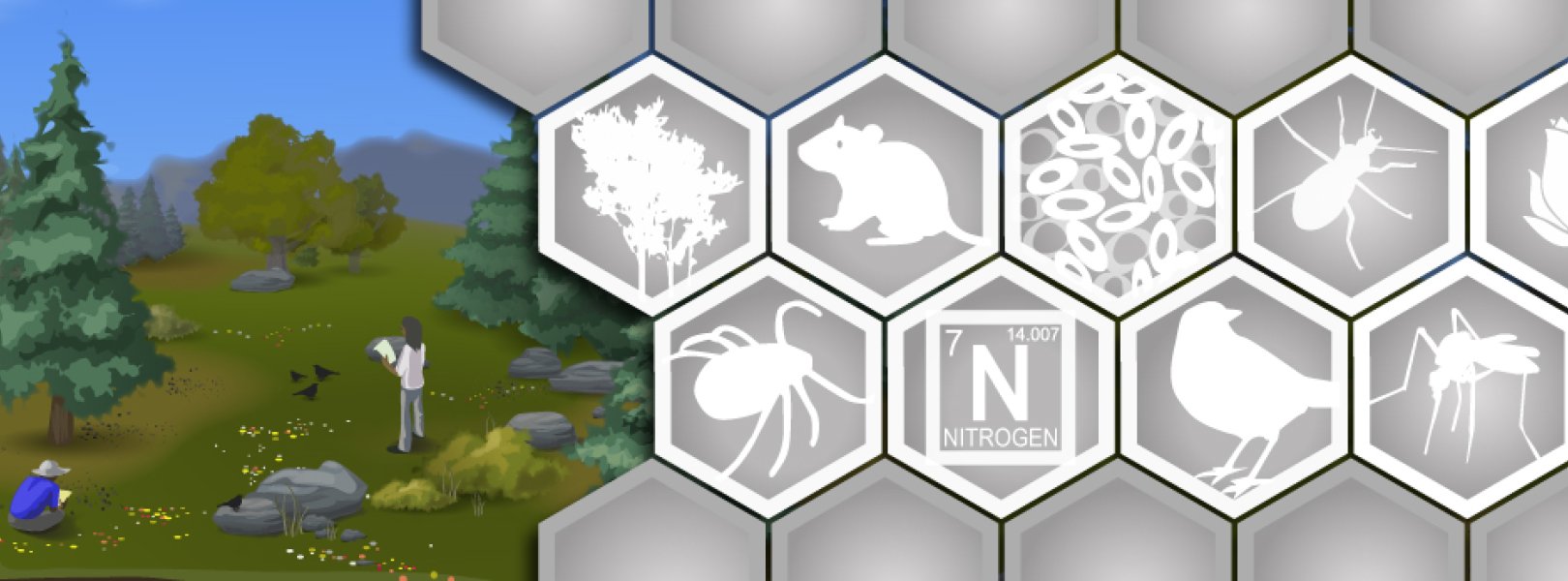
NEON collects data that characterize a suite of terrestrial plants, animals, and microbes at terrestrial field sites across the United States. NEON's field technicians regularly sample and observe organisms at field sites, using a robust sampling design, to capture the long-term dynamics of key data including species abundance; biomass and density; community composition and diversity; phenology of plants and mosquitoes; organism size and other trait data; leaf area index; sunlit foliage chemical composition; biomass and chemistry of roots and litterfall; and coarse downed wood volume and bulk density.
NEON organismal sampling focuses on sentinel taxa, which are sensitive organisms that indicate the health of an ecosystem and provide data relevant to public health. Changes in community dynamics of sentinel taxa affect ecological processes, such as ecosystem structure and function and disease transmission rates. NEON sentinel taxa selection criteria include: 1) wide geographical distribution for standardized sampling; 2) varied life histories, including lifespan and reproductive rates, that affect the rates of response to drivers such as climate change; 3) phylogenetic diversity; and 4) relevance to infectious disease ecology.
Observed Organisms
Breeding Landbirds
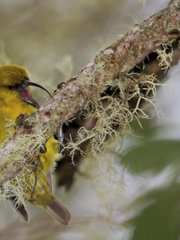
NEON collects observations of birds at terrestrial field sites to capture interannual variation in avian abundance, diversity, and distribution. The sampling protocol is focused on breeding landbirds, including songbirds and other diurnal birds that that reside in or migrate through terrestrial habitats, however, all bird species observed are recorded in the data. Bird observations are collected using the point count method.
Ground Beetles
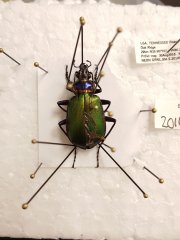
Ground beetles are an important family of invertebrates known to strongly influence food web structure, often as key predators or prey species. Ground beetles are found in every NEON Domain, are easy to sample, and changes in their numbers can indicate significant changes in the local ecological community.
Plants
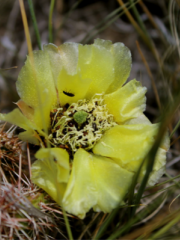
NEON collects terrestrial plant measurements and observations at all terrestrial sites to capture spatial variation and trends over time in plant abundance, diversity, biomass, productivity, phenology, and biogeochemical traits. In addition, information on terrestrial plants in riparian zones along NEON aquatic field sites are collected using a rapid habitat assessment.
Small Mammals
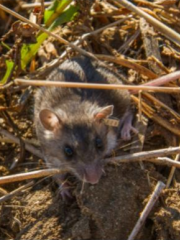
NEON conducts field sampling of small mammals such as rats, mice and voles at most terrestrial field sites (excluding the sites in Hawaii and Puerto Rico). Captured small mammals are identified to species and assessed for sex, age and reproductive condition, and tagged as needed. Traits are measured such as weight and hind foot length, and a suite of biological samples are collected for DNA sequencing and rodent-borne pathogen analyses.
Mosquitoes
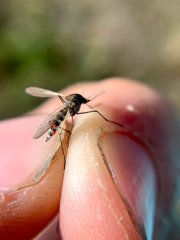
NEON samples mosquito populations at terrestrial field sites to characterize patterns of abundance, diversity, phenology, and pathogen status. Mosquitos are collected using Center for Disease Control (CDC) CO2 light traps, then sent to professional taxonomists for identification to species and sex (when possible). A subset of identified mosquitoes are tested for infection by pathogens and some mosquitoes are set aside for DNA barcode analysis.
Soil Microbes
At terrestrial field sites, soil cores are collected for microbial analysis to determine the overall composition and abundance of microbial communities. Soil cores are separated into organic vs mineral horizons and subsampled for analysis of microbial biomass, microbe community composition, microbe group abundance, microbe metagenome sequence, and microbe marker gene sequences.

Ticks
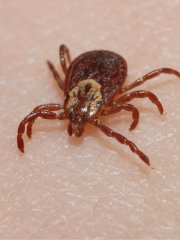
NEON samples tick populations to characterize patterns of abundance, diversity, and pathogen status. Ticks are collected using drag cloths, then counted and categorized by species, sex and life stage. A subset of collected tick nymphs are sent to an external facility where they are tested for tick-borne pathogens.
Spatial Design
Within-site sampling design at terrestrial sites uses a spatially-balanced framework to assign sampling locations. Many of the specific locations (plots) involved in Terrestrial Observational Sampling (TOS) are collocated with each other and with environmental sensors (i.e., within the footprint of the flux tower) to allow comparison of different data streams. To generate site-level observations and to integrate plot-level data with NEON tower data, TOS sampling occurs primarily within two different plot types, Distributed and Tower. Distributed Plots are established to describe organisms and processes at the scale of the site, and are allocated according to a stratified-random and spatially balanced design in an effort to collect data from locations distributed throughout the dominant NLCD vegetation types. Tower plots are established within and adjacent to the NEON tower footprint in order to detect linkages between observations and flux tower measurements. The number of TOS sampling locations is optimized to describe local patterns and detect change over time.
Temporal Design
The timing and frequency of terrestrial observations vary depending on the measurement type. Processes that are expected to change quickly are sampled more frequently than those with slow rates of change. Many measurement types have an explicit phenological component and the timing of biological events is of interest. For this reason, phenology of plants, mosquitos, and ticks are monitored using frequent intra-annual observations.
Measurements are designed to occur during specific biophysical periods, such as when temperatures increase above a certain threshold to indicate the transition from dormant to growing season, or during the peak period of greenness or biomass production. In addition, field ecologists are asked to monitor on-the-ground conditions to ensure these target conditions are met during scheduled sampling periods. If they are not, bouts are either rescheduled, or temporal deviations from target sampling conditions are documented in the data.
Using NEON to Solve Key Questions in Terrestrial Organismal Research
NEON collection methods are selected and evaluated by the ecological community to provide standardized data sets across terrestrial field sites that are compatible with existing historical data and/or data collected by other large-scale networks.
Below is a selection of research questions that could be addressed with NEON Terrestrial Observation System data:
- How do breeding bird communities vary both within sites and across land use types and ecoregions?
- How are the rates of geographic spread and population change of introduced bird species affected by land use and climate change?
- How do shifting populations of mosquitoes impact distribution of infectious disease on a continental scale?
- How are mosquito populations shifting geographically as precipitation patterns change?
- How do climate-driven plant and insect resources determine the population growth, fecundity and density of small mammal populations?
- Which bioclimatic and habitat factors best predict the species composition of small mammal communities?
- How are microbial abundance and diversity related to soil chemistry, physical properties, nutrient content or carbon content?
- How are soil microbial communities impacted by the effects of human activities including agriculture and industrial pollutants?
- How are changes in plant phenology related to above-ground woody biomass production?
- Is the relative abundance of invasive species dependent on the strength of the phenological response to change drivers?
- How are tick populations changing over time? What factors are influencing the spread of tick species into new areas?
- What types of pathogens are carried by ticks in each region, and what percentage of ticks is carrying each pathogen? How are these pathogen patterns shifting over time?