Building Ties Across Disciplines and Observatory Networks to Advance Earth System Understanding
April 20, 2018
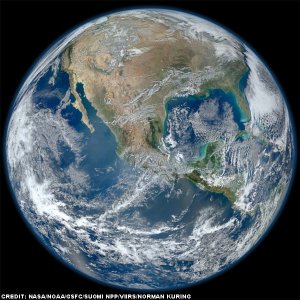
The NEON project isn't just about collecting ecological data. It's also about enabling collaboration between scientists across disciplines to explore fundamental questions about earth systems and ecological processes.
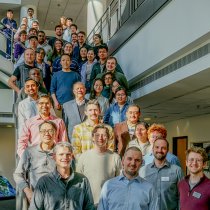
In February 2018, 55 researchers, including early career scientists and representatives of several national observation networks, came together to discuss opportunities for the organizations to work together to advance earth system understanding and modeling. The three-day workshop, "Using Observation Networks to Advance Earth System Understanding: State of the Art, Data-Model Integration, and Frontiers", was a joint project between Battelle and the Critical Zone Observatories (CZO) network, the U.S. Long Term Ecological Research Network (LTER), the International Long Term Ecological Research Network (ILTER), and the International Soil Modeling Consortium (ISMC). The goal was to find synergies that will generate new insights into how ecosystems will respond to global change and ensure that the observatory networks are interoperable and optimized to support researchers.
The workshop, which was funded in part by the National Science Foundation (NSF), drew a diverse collection of attendees across disciplines, geographic regions and career stages. Part of the NSF funding went towards sponsoring the attendance of ten early-career scientists. This is one example of how Battelle is helping early-career scientists connect with data, resources and subject matter expertise through the NEON project.
Discovering Synergies Between Ecological Observatories
All of the organizations participating in the workshop are engaged in large-scale, long-term ecological research, each with its own research focus. CZO, LTER/ILTER, and ISMC are all experimentally driven observatory networks. The NEON project collects a broad range of ecological data that can be leveraged by scientists in all of the organizations to answer their research questions.
Dr. Hank Loescher, a Battelle scientist and the Director of Strategic Development for the NEON project, served as a co-organizer for the workshop. He explains, "Bringing these organizations together is the beginning of a paradigm shift in ecology. Since the 50s and 60s, ecology has become largely siloed into individual disciplines. But to answer these large, systems-level questions, we need to bring the disciplines back together and rebuild the connections between them. NEON data represent a unique opportunity to ask scientific questions in a different way and really push the frontiers of ecological science."
The workshop grew out of previous discussions between Battelle, LTER and CZO at meetings hosted by CZO. Scientists from the organizations realized that there were many areas of overlap and potential synergies between the groups. For example, many of the field sites in the NEON network are located in areas where LTER and CZO already have been collecting data. Dr. Gene Kelly, another co-organizer and a Visiting Scientist on the NEON project from Colorado State University, says, "Each of the organizations has different strengths. LTER and CZO add an experimental element and provide historical data that can be added to the data the NEON project is collecting now."
Dr. Samantha Weintraub, a Battelle Staff Scientist on the NEON project and a conference co-organizer, says, "The different environmental research and monitoring networks have much to gain from working together. By taking full advantage of the varied disciplinary and spatio-temporal scales each brings, and collaborating more closely with modelers, we can make faster progress in tackling important research questions. For example, what controls the storage of soil organic carbon in diverse ecosystems and how will that change in the future? As an organizer of this workshop, the idea of bringing together ecologists, hydrologists, soil physicists, geologists and Earth system modelers to think about creative ways to leverage network data to solve big environmental science problems was really exciting."
Building Better Models for Earth Systems
Improving ecological modeling was a major focus of the event. The workshop was organized around four broad themes: Conceptual Models, Model Structures, Data Accessibility and Data-Model Integration. Speakers and participants shared ideas through keynote presentations, focus groups and lightning talks designed to promote connections across disciplinary and network boundaries. Some of the key themes that emerged included new insights gained from observatory network data, the need to link data and models, and efforts to make modeling tools more accessible.
The workshop was received enthusiastically by participants. Dr. Peter Groffman, the chair of the Science Council for LTER and another co-organizer for the meeting, said, "When Hank came to me to propose the workshop, it was like my birthday came early." Peter, who also serves on the NEON Science, Technology & Education Advisory Committee (STEAC), is especially excited by the progress made at the meeting towards building more accurate ecological models using data gathered from across the observation networks. "One of the questions I wanted to explore at this meeting is how we can leverage our data and models to answer the big, difficult questions in ecology. For example, questions about the carbon balance in the ecosystem. Models for the soil carbon balance emerged as a really good test case for exploring synergies between measurements and models."
Moving Forward Together to Answer Ecological Questions
The workshop is already bearing fruit: three papers are now underway as a direct result of the meeting, with plans to submit for peer review. Each of the papers explores a different aspect of earth system modeling using new approaches made possible by collaboration between the observatory networks.
There will be other follow up activities stemming from the workshop as well. Participants brainstormed ways to further build integrative user communities such as a cross-network webinar series, organization of follow-up conferences, creation of memorandums of understanding and more training courses where students get exposure to both data and models.
Much of the meeting was live-streamed, and related workshop materials are hosted online.