NSF NEON, Operated by Battelle

Main navigation

  • About
    • NEON Overview
      • Vision and Management
      • Spatial and Temporal Design
      • History
    • About the NEON Biorepository
      • ASU Biorepository Staff
      • Contact the NEON Biorepository
    • Observatory Blog
    • Newsletters
    • Staff
    • FAQ
    • Contact Us

    About

  • Data
    • Data Portal
      • Data Availability Charts
      • API & GraphQL
      • Prototype Data
      • Externally Hosted Data
    • Data Collection Methods
      • Airborne Observation Platform (AOP)
      • Instrument System (IS)
        • Instrumented Collection Types
        • Aquatic Instrument System (AIS)
        • Terrestrial Instrument System (TIS)
      • Observational System (OS)
        • Observation Types
        • Observational Sampling Design
        • Sampling Schedules
        • Taxonomic Lists Used by Field Staff
        • Optimizing the Observational Sampling Designs
      • Protocols & Standardized Methods
    • Getting Started with NEON Data
      • neonUtilities for R and Python
      • Learning Hub
      • Code Hub
    • Using Data
      • Data Formats and Conventions
      • Released, Provisional, and Revised Data
      • Data Product Bundles
      • Usage Policies
      • Acknowledging and Citing NEON
      • Publishing Research Outputs
    • Data Notifications
    • NEON Data Management
      • Data Availability
      • Data Processing
      • Data Quality

    Data

  • Samples & Specimens
    • Biorepository Sample Portal at ASU
    • About Samples
      • Sample Types
      • Sample Repositories
      • Megapit and Distributed Initial Characterization Soil Archives
    • Finding and Accessing Sample Data
      • Species Checklists
      • Sample Explorer - Relationships and Data
      • Biorepository API
    • Requesting and Using Samples
      • Loans & Archival Requests
      • Usage Policies

    Samples & Specimens

  • Field Sites
    • Field Site Map and Info
    • Spatial Layers & Printable Maps

    Field Sites

  • Resources
    • Getting Started with NEON Data
    • Research Support Services
      • Field Site Coordination
      • Letters of Support
      • Mobile Deployment Platforms
      • Permits and Permissions
      • AOP Flight Campaigns
      • Research Support FAQs
      • Research Support Projects
    • Code Hub
      • neonUtilities for R and Python
      • Code Resources Guidelines
      • Code Resources Submission
      • NEON's GitHub Organization Homepage
    • Learning Hub
      • Tutorials
      • Workshops & Courses
      • Science Videos
      • Teaching Modules
    • Science Seminars and Data Skills Webinars
    • Document Library
    • Funding Opportunities

    Resources

  • Impact
    • Research Highlights
    • Papers & Publications
    • NEON in the News

    Impact

  • Get Involved
    • Upcoming Events
    • Research and Collaborations
      • Environmental Data Science Innovation and Inclusion Lab
      • Collaboration with DOE BER User Facilities and Programs
      • EFI-NEON Ecological Forecasting Challenge
      • NEON Great Lakes User Group
      • NCAR-NEON-Community Collaborations
    • Advisory Groups
      • Science, Technology & Education Advisory Committee
      • Technical Working Groups
    • NEON Ambassador Program
      • Exploring NEON-Derived Data Products Workshop Series
    • Partnerships
    • Community Engagement
    • Work Opportunities

    Get Involved

  • My Account
  • Search

Search

About

  • NEON Overview
  • About the NEON Biorepository
  • Observatory Blog
  • Newsletters
  • Staff
  • FAQ
  • Contact Us

Breadcrumb

  1. About
  2. Observatory Blog
  3. Health diagnostics for the planet

Health diagnostics for the planet

April 2, 2013

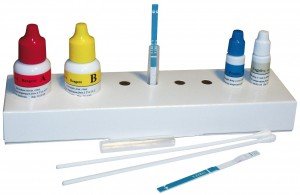
A couple of weeks ago, my wife took our daughter to the doctor. After he had heard the symptoms my daughter had been experiencing, the doctor performed a rapid strep test. Within a few minutes he had diagnosed her with strep group A infection and prescribed antibiotics (she’s feeling much better now).
“a state of complete physical, mental, and social well-being and not merely the absence of disease or infirmity.”

Is there a diagnostic exam that can actually measure all of this? Microbes may be the answer! Okay, so maybe that isn’t such a shocking statement. After all, germ theory, the discovery that some infectious diseases are caused by microorganisms, is going on 150 years old. PR-wise, humans and germs didn’t exactly get off on the right foot; bacteria generally have a bad reputation. Sure they’re nasty creatures responsible for countless deaths over the centuries and diseases ranging from tuberculosis to halitosis, but health isn’t just the “absence of disease”.

In the last few decades microbes have started to grow on us. Actually, they have always grown on us, and in us; but we are just now recognizing the benefits of having them around. Recent advances in technology have allowed us to explore the role of microbes in a number of different environments. Not only have we found that most bacteria aren’t harmful and that many are necessary for our health, but that our health is correlated with the community of microorganisms in and around us, known as the human microbiome. The correlation in some cases is so strong that the late Nobel Prize-winning Dr. Joshua Lederberg argued that the microbial community associated with us should be included as part of our genetic makeup. Others suggest that at the very least they should be considered a forgotten organ.
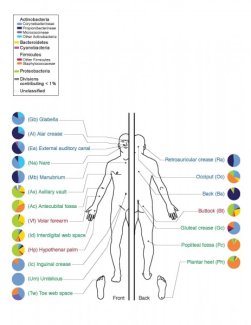
There was even a recent paper that suggested that our skin is like an ecosystem and that different parts of our skin (scalp, hands, feet, etc.) are habitats for different groups of bacteria. In fact, the bacterial community on my heel is more similar to your heel’s community than it is to the bacterial community on my own hand. Similarly, the microbiome of a healthy person is quite different than that of someone who is unhealthy (even using the World Health Organization’s definition). The conclusion from many of these recent studies is that microorganisms can tell us a lot about the health of a person. But certainly there is more, after all humans (200,000-year history) are just the latest fad in the 3,500,000,000-year history of bacteria.
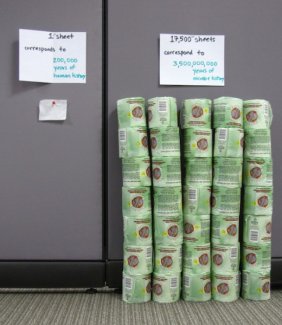
During their time on Earth, microbes have contributed to and maintained the conditions for life. Dr. James Lovelock hypothesized that living organisms and their interaction with inorganic material form a self-regulating system or a superorganism (Gaia). I know, this sounds a bit too ‘hippie-ish’ even for me, but let me run with it for a minute. If our Earth is a “super organismic system” (Dr. Lynn Margulis), can we assume that the status of microbial communities throughout this superorganism can tell us a lot about the health of our planet? We are finding that just like our skin, similar ecosystems on Earth have similar microbial communities. Different biomes, such as deserts, grasslands, and forests all have different microbial communities, but deserts all around the world (from Antarctica to the Southwest US) tend to have similar microbial communities.

Are microbes Gaia’s forgotten organ?

We at NEON are currently exploring how far we can take the concept of microbial diagnostics informing about ecosystem health. We're developing methods to examine all of the genes that are expressed by the microorganisms (metatranscriptomics) in the forest soils to explore differences in what the microbial communities are actually doing. We just got some data back from a preliminary study of different locations in Harvard Forest that have different vegetation types and levels of disturbance. Although analyses are still underway, we already have some promising results where we can distinguish red oak from successional shrubland and disturbed sites based solely on their microbiome. As NEON expands to multiple biomes throughout the US to monitor ecosystem health, we will be able to see how microbial communities change. NEON and other groups are working to learn more about Earth’s microbiome and how microbes regulate ecosystem health. It's exciting to think that NEON will have enough microbial data and information on the environment to actually map the interaction of microbial communities, environment, and plant diversity across an ecosystem.

Share

Related Posts:

Unlocking the Secrets of Soil Microbial Metabolites

February 2, 2026

Petri dishes of bacteria cultures

Discontinuation of Select NEON Data Products

January 29, 2026

Modification of Select NEON Data Products

January 29, 2026

NSF NEON, Operated by Battelle

Follow Us:

Join Our Newsletter

Get updates on events, opportunities, and how NEON is being used today.

Subscribe Now

Footer

  • About Us
  • Contact Us
  • Terms & Conditions
  • Careers
  • Code of Conduct

Copyright © Battelle, 2026

The National Ecological Observatory Network is a major facility fully funded by the U.S. National Science Foundation.

Any opinions, findings and conclusions or recommendations expressed in this material do not necessarily reflect the views of the U.S. National Science Foundation.