Spotlight
Girl Scout Project Sparks an Interest in Ecology and NEON
September 18, 2018
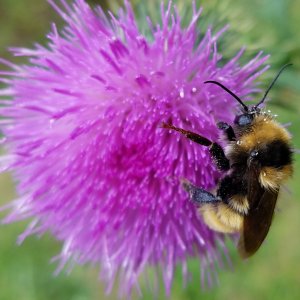
It's never too early to get kids interested in ecology—and Girl Scouts may provide the perfect opportunity. Susan Churchill's troop of 6th graders is tackling important issues in habitat preservation and ecosystem change through a Girl Scout Journey focused on animals and ecology. As part of their project, they explored some of the Colorado River data from the NEON project.
From Animal Lovers to Ecology Explorers
Troop 3382 in Boulder, Colorado supports 15 6th grade girls. Many of the girls, including Susan's daughter, have been active in Girl Scouts for several years already. Their ecology-focused Journey grew from a shared interest in animals and animal welfare. "All of the girls really love animals," Susan explains. "In past years, we've focused on things like volunteering at the Humane Society. This year, we wanted to expand on that interest and get them thinking about broader issues like habitats and habitat preservation. This is the perfect age for them to start making those connections."
Susan and her co-leader put together a series of activities with the girls to help them explore foundational concepts in ecology. The activities were part of a formal Girl Scout Journey, a series of linked educational and service-oriented projects organized around a central theme. Girl Scout Journeys are chosen by the troop and give girls broad latitude in designing projects around their interests.
Susan's older daughter discovered the NEON project while researching online ecology resources for a science fair project. Susan, who works for a company that conducts aerial surveying for environmental monitoring and other applications, immediately saw potential applications for her troop's Journey.
The girls looked at still photos taken by the NEON Airborne Observation Platforms (AOPs) to look at vegetation patterns around the Colorado River. Susan used the activity as a springboard to discuss the possible causes of environmental change and how photos can be used to monitor these changes over time. The girls also used time-lapse photos taken by Susan's company, Churchill Aviation, and made some time-lapse photos of their own from the ground using an iPhone.
The Journey included several other ecology-focused projects. The girls monitored changes in a local habitat, recording field observations in notebooks on several visits over a period of three months. They also had an introduction to hydrology and the concept of groundwater pollution using root beer floats.
Keeping Girls in STEM
Susan says that the science-focused Journeys in Girl Scouts are important to keep girls involved in science, technology, engineering and math (STEM) as they get older. "Middle school is right when we start to lose a lot of them," she says. "We want to show the girls that if they want to change the world, they need to develop science skills. When you're a kid, you can feel really powerless. Girl Scouts is all about giving them skills so they can go out and impact the world. Keeping more girls engaged in STEM is a big part of that."
While the girls' use of the NEON project data has been limited so far, Susan can see them returning to the data in different ways as the girls get older and more data become available. She also believes that NEON data could help teachers bring ecology concepts to life in the classroom. "Most kids in Colorado have studied the water cycle several times by the time they get to fourth grade. Data from the NEON project could help educators make it more interesting and up-to-date." She says K-12 students working on science fair projects could use NEON data to conduct original research, even if they do not have the time or resources to make their own observations in the field. "Scouts and science fair kids are very self motivated and have the freedom to engage with the data on a deeper level. I could see them doing some interesting things with it," she says.
The girls of Troop 3382 plan to continue their explorations of ecology as they move into middle school. Susan is excited to see the girls engaging so deeply with the science and broadening their perspectives on how humans impact the environment. "When they are in elementary school, they are really enthusiastic but also really innocent. Their understanding of helping the environment is about very literal, concrete things like picking up litter or recycling. Now, they understand these issues on a broader scale and are starting to see why science skills are needed to solve the problems in front of us."
Bringing Kids and NEON Together
Researchers and data scientists at the NEON project are putting together tools and resources to make the NEON data more accessible and understandable for everyone, including our youngest researchers. Educators and Scout leaders may be interested in the short explainer videos on the NEON Science YouTube channel. Additional resources and explanations of the available data products can be found on the NEON Data Portal.
Are you using NEON data in your K-12 classroom, Scout troop or another organization for kids? Do you have an idea for making NEON data more accessible for young scientists? We would love to hear from you! Write to us to tell us what you're doing.