Data Notification
Discontinuation of Select NEON Data Products
January 29, 2026
Each year, the National Ecological Observatory Network (NEON) conducts an annual planning process to align priorities with its budget. As the operator of the Observatory and in close coordination with the U.S. National Science Foundation (NSF), we ensure responsible stewardship of these resources. In 2026, a key priority is enhancing the capacity of the NEON Biorepository, i.e., dedicating funds to ensure the needed storage for the biological and environmental samples that are an essential resource for the research community and have significant potential for commercial users. The nation-wide array of physical samples, including microbes, are intimately linked in space and time to over 180 data products through NEON’s leading cyberinfrastructure. Together they enable new questions to be addressed and long time-scale discoveries to be made. We are proud to support this unique archive and augment the capacity for even greater use in the future.
A second priority this year is upgrading the sensors and infrastructure and associated data pipelines to enhance data quality, improve information security, and address technological obsolescence. These efforts are multi-faceted, including new hardware and software for logging sensor data, transmitting the data to the cloud, and processing the data using algorithms that are being made open to the user community as they are developed. Of note, in 2026, we are initiating the replacement of two critical sensor suites – soil temperature and moisture and weighing gauge precipitation - across the Observatory. As an indication of the magnitude of these efforts, replacing the soil temperature and moisture sensors includes >1,300 sensors in 230 soil plots at NEON’s 46 terrestrial sites. These efforts are necessary to initiate to ensure the robust collection of these critical environmental data through time.
To support these improvements, NEON is discontinuing nine of its approximately 180 data products (<5%) and modifying an additional 14 data products (<8%) across all data collection systems (i.e., airborne, instrumented, and observational systems). These decisions, in addressing both near-term and long-term program health, were made thoughtfully, with input from the NEON Science, Technology, and Education Advisory Committee and after discussion and concurrence of the NSF. When evaluating priorities, we considered several factors: the level of data product use to date, the scientific value for the user community, and the cost to continue data collection.
Here we summarize the nine data products that are discontinued and the associated rationale for their selection. Additional details about the fourteen modified data products are provided in a separate data notification, with all changes documented in the issue log for each affected data product. Please visit our FAQs and reach out with any questions.
Table 1. Summary of Discontinued Data Products (n = 9)
| Data Product Group | Data Products Impacted | Summary of rationale for discontinuation |
|---|---|---|
| Riparian vegetation at aquatic sites (2) | DP1.20191.001 - Riparian vegetation % cover DP1.20275.001 - Riparian composition and structure |
These are among the least used data products, with no publications to date. Researchers seeking riparian vegetation information can use data collected to date or leverage the ongoing Airborne Observation Platform (AOP) and PhenoCam imagery. |
| Aquatic microbes (3) | DP1.20277.001 - Benthic microbe group abundances DP1.20278.001 - Surface water microbe group abundances DP1.20138.001 - Surface water microbe cell count |
These are among the least used data products, with no publications to date. The aquatic marker gene (DP1.20282.001, DP1.20280.001) and metagenomics (DP1.20279.001, DP1.20281.001) data products will continue to be provided. Further, NEON will continue to archive frozen microbial filters in the NEON Biorepository, enabling researchers to request these samples and generate group abundance data from them as needed. |
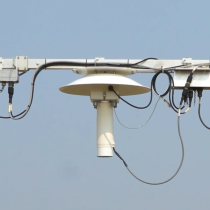
| Terrestrial instruments (2) | DP1.00010.001 - 3D wind attitude and motion reference DP1.00043.001 - Spectral sun photometer - calibrated sky radiances |
The 3D wind attitude and motion reference data were added to NEON’s sensor suite in case the 3D wind data and flux calculation required a correction for the motion of the eddy covariance measurement boom. A 2025 analysis of data collected to date demonstrated that such a correction does not significantly impact flux calculations. The data from the spectral sun photometer, which measures aerosol optical depth, provide limited value for the ecological community, as the effects of aerosols on ecosystems are captured by other NEON data products. For instance, while aerosols attenuate incident solar radiation, the actual amount of radiation reaching the surface, and thus directly influencing the ecosystem, is measured by the radiation sensors on the NEON towers (e.g., DP1.00024.001 - Photosynthetically active radiation). |
| Aquatic and terrestrial instruments (1) | DP1.00013.001 - Wet deposition chemical analysis | NEON’s sampling design has a two-week collection interval, which differs from the community standard of one week. Increasing collection frequency would require additional labor and sample analysis costs beyond what is currently budgeted. NEON’s collection methods were not well aligned with those of the National Atmospheric Deposition Program’s National Trends Network, which is where researchers commonly access this type of data, and thus limited their usefulness to the community. There are no publications to date that use the NEON wet deposition data to assess nutrient inputs to ecosystems. |
| Airborne instruments (1) | DP1.30001.001 - LiDAR slant range waveform | NEON collects both discrete and waveform lidar data; the discrete data are used to generate the well-used derived products of Ecosystem Structure (DP3.30015.001) and Elevation-Lidar (DP3.30024.001). The waveform lidar is not well used, and the expertise in the community for how to leverage it to generate ecosystem knowledge is limited. The waveform lidar carried greater potential when the discrete data were collected by NEON’s original lidar sensors, which were limited to a maximum of four point returns per pulse, whereas the current AOP discrete lidar sensors can capture up to eight points per pulse. NEON will continue collecting and storing the raw L0 waveform data but will discontinue the L0 quality checks and the processing into an L1 data product in 2026. The L0 data will be available to users upon request. |