
NSF NEON, Operated by Battelle

Main navigation

  • About
    • NEON Overview
      • Vision and Management
      • Spatial and Temporal Design
      • History
    • About the NEON Biorepository
      • ASU Biorepository Staff
      • Contact the NEON Biorepository
    • Observatory Blog
    • Newsletters
    • Staff
    • FAQ
    • Contact Us

    About

  • Data
    • Data Portal
      • Data Availability Charts
      • API & GraphQL
      • Prototype Data
      • Externally Hosted Data
    • Data Collection Methods
      • Airborne Observation Platform (AOP)
      • Instrument System (IS)
        • Instrumented Collection Types
        • Aquatic Instrument System (AIS)
        • Terrestrial Instrument System (TIS)
      • Observational System (OS)
        • Observation Types
        • Observational Sampling Design
        • Sampling Schedules
        • Taxonomic Lists Used by Field Staff
        • Optimizing the Observational Sampling Designs
      • Protocols & Standardized Methods
    • Getting Started with NEON Data
      • neonUtilities for R and Python
      • Learning Hub
      • Code Hub
    • Using Data
      • Data Formats and Conventions
      • Released, Provisional, and Revised Data
      • Data Product Bundles
      • Usage Policies
      • Acknowledging and Citing NEON
      • Publishing Research Outputs
    • Data Notifications
    • NEON Data Management
      • Data Availability
      • Data Processing
      • Data Quality

    Data

  • Samples & Specimens
    • Biorepository Sample Portal at ASU
    • About Samples
      • Sample Types
      • Sample Repositories
      • Megapit and Distributed Initial Characterization Soil Archives
    • Finding and Accessing Sample Data
      • Species Checklists
      • Sample Explorer - Relationships and Data
      • Biorepository API
    • Requesting and Using Samples
      • Loans & Archival Requests
      • Usage Policies

    Samples & Specimens

  • Field Sites
    • Field Site Map and Info
    • Spatial Layers & Printable Maps

    Field Sites

  • Resources
    • Getting Started with NEON Data
    • Research Support Services
      • Field Site Coordination
      • Letters of Support
      • Mobile Deployment Platforms
      • Permits and Permissions
      • AOP Flight Campaigns
      • Research Support FAQs
      • Research Support Projects
    • Code Hub
      • neonUtilities for R and Python
      • Code Resources Guidelines
      • Code Resources Submission
      • NEON's GitHub Organization Homepage
    • Learning Hub
      • Tutorials
      • Workshops & Courses
      • Science Videos
      • Teaching Modules
    • Science Seminars and Data Skills Webinars
    • Document Library
    • Funding Opportunities

    Resources

  • Impact
    • Research Highlights
    • Papers & Publications
    • NEON in the News

    Impact

  • Get Involved
    • Upcoming Events
    • Research and Collaborations
      • Environmental Data Science Innovation and Inclusion Lab
      • Collaboration with DOE BER User Facilities and Programs
      • EFI-NEON Ecological Forecasting Challenge
      • NEON Great Lakes User Group
      • NCAR-NEON-Community Collaborations
    • Advisory Groups
      • Science, Technology & Education Advisory Committee
      • Technical Working Groups
    • NEON Ambassador Program
      • Exploring NEON-Derived Data Products Workshop Series
    • Partnerships
    • Community Engagement
    • Work Opportunities

    Get Involved

  • My Account
  • Search

Search

About

  • NEON Overview
  • About the NEON Biorepository
  • Observatory Blog
  • Newsletters
  • Staff
  • FAQ
  • Contact Us

Breadcrumb

  1. About
  2. Observatory Blog
  3. Creating a digital menagerie

Creating a digital menagerie

June 29, 2012
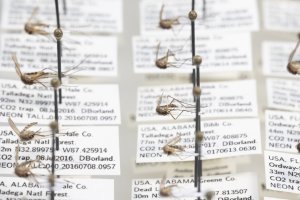
Pinned mosquito collected from a NEON mosquito trap

NEON technicians will collect and identify countless insect specimens over the lifetime of the observatory. To put it into perspective, during a short prototype collection at one site over three weeks using 20 traps, we collected close to 400 ground beetles. Now imagine 40 traps collecting insects at 60 sites for several months every year for 3 decades, not to mention the mosquito sampling that often produces several thousands of specimens from a single night of trapping! This volume of sampling will mean a tremendous amount of valuable data, but it also presents a significant challenge for maintaining accurate species IDs. How do you standardize species identifications across dozens of sites and over decades of monitoring?
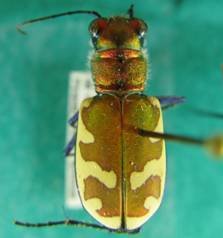
We address this issue in a recent publication that provides both preliminary data and an introduction to NEON's approach to monitoring ground beetle and mosquito biodiversity, two groups NEON is targeting.

NEON is part of a growing effort to monitor biodiversity globally (GEOBON, SAEON, TERN, EBONE
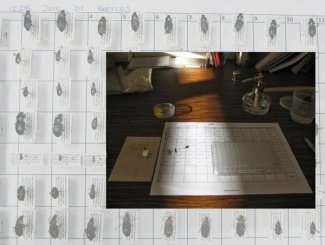
DNA barcodes [[nid:6123]] DNA barcodes are unique, species-specific DNA sequences that come from the “powerhouses” that make energy inside most every animal, plant and fungal cell – making them easy to obtain and universal to a lot of Earth’s biodiversity. DNA barcodes will help NEON to standardize species identifications across time and space, but tying those molecules to a voucher specimen that has been reliably identified by an expert morphological taxonomist is crucial to making sure we are gathering the highest quality data possible.

The specimens that we are using to build this library come from collections made during NEON prototype field campaigns as well as from museum-archived specimens up to 80 years old! All of the sequence data, photos, and other information can be publicly accessed online from the Barcode of Life Data System (BOLD). Because it is publicly available, NEON’s reference library will also serve a variety of other possible uses for many other people. Ecologists will be able to gain insights into population changes over time and in response to differing land use types. Public health surveyors will be able to skip the time-intensive and costly steps of rearing juvenile mosquitoes through to adulthood for species IDs. Citizen scientists will be able to download region-specific species lists to learn about their local fauna and the critical ecosystem services they perform. All of this from uniting molecules with morphology!

*Many similar efforts are generating DNA barcodes for a variety of life forms to answer questions ranging from conservation issues to simply understanding what exists on our planet.

Here are some examples that have also been published in PLoS ONE recently:

  • The Barcode of Life Data Portal: Bridging the Biodiversity Informatics Divide for DNA Barcoding
  • Joining Inventory by Parataxonomists with DNA Barcoding of a Large Complex Tropical Conserved Wildland in Northwestern Costa Rica
  • Barcoding a Quantified Food Web: Crypsis, Concepts, Ecology and Hypotheses
  • Pyrosequencing for Mini-Barcoding of Fresh and Old Museum Specimens
  • A DNA Barcode Library for North American Ephemeroptera: Progress and Prospects
  • Wolbachia and DNA Barcoding Insects: Patterns, Potential, and Problems

Share

Related Posts:

Discontinuation of Select NEON Data Products

January 29, 2026

Modification of Select NEON Data Products

January 29, 2026

Shortwave Radiation tables temporarily removed from Summary Weather Statistics

January 12, 2026

NSF NEON, Operated by Battelle

Follow Us:

Join Our Newsletter

Get updates on events, opportunities, and how NEON is being used today.

Subscribe Now

Footer

  • About Us
  • Contact Us
  • Terms & Conditions
  • Careers
  • Code of Conduct

Copyright © Battelle, 2026

The National Ecological Observatory Network is a major facility fully funded by the U.S. National Science Foundation.

Any opinions, findings and conclusions or recommendations expressed in this material do not necessarily reflect the views of the U.S. National Science Foundation.