NSF NEON, Operated by Battelle

Main navigation

  • About
    • NEON Overview
      • Vision and Management
      • Spatial and Temporal Design
      • History
    • About the NEON Biorepository
      • ASU Biorepository Staff
      • Contact the NEON Biorepository
    • Observatory Blog
    • Newsletters
    • Staff
    • FAQ
    • User Accounts
    • Contact Us

    About

  • Data
    • Data Portal
      • Data Availability Charts
      • API & GraphQL
      • Prototype Data
      • Externally Hosted Data
    • Data Collection Methods
      • Airborne Observation Platform (AOP)
      • Instrument System (IS)
        • Instrumented Collection Types
        • Aquatic Instrument System (AIS)
        • Terrestrial Instrument System (TIS)
      • Observational System (OS)
        • Observation Types
        • Observational Sampling Design
        • Sampling Schedules
        • Taxonomic Lists Used by Field Staff
        • Optimizing the Observational Sampling Designs
      • Protocols & Standardized Methods
    • Getting Started with NEON Data
      • neonUtilities for R and Python
      • Learning Hub
      • Code Hub
    • Using Data
      • Data Formats and Conventions
      • Released, Provisional, and Revised Data
      • Data Product Bundles
      • Usage Policies
      • Acknowledging and Citing NEON
      • Publishing Research Outputs
    • Data Notifications
    • NEON Data Management
      • Data Availability
      • Data Processing
      • Data Quality

    Data

  • Samples & Specimens
    • Biorepository Sample Portal at ASU
    • About Samples
      • Sample Types
      • Sample Repositories
      • Megapit and Distributed Initial Characterization Soil Archives
    • Finding and Accessing Sample Data
      • Species Checklists
      • Sample Explorer - Relationships and Data
      • Biorepository API
    • Requesting and Using Samples
      • Loans & Archival Requests
      • Usage Policies

    Samples & Specimens

  • Field Sites
    • Field Site Map and Info
    • Spatial Data Layers & Maps

    Field Sites

  • Resources
    • Getting Started with NEON Data
    • Research Support Services
      • Field Site Coordination
      • Letters of Support
      • Mobile Deployment Platforms
      • Permits and Permissions
      • AOP Flight Campaigns
      • Research Support FAQs
      • Research Support Projects
    • Code Hub
      • neonUtilities for R and Python
      • Code Resources Guidelines
      • Code Resources Submission
      • NEON's GitHub Organization Homepage
    • Learning Hub
      • Tutorials
      • Workshops & Courses
      • Science Videos
      • Teaching Modules
    • Science Seminars and Data Skills Webinars
    • Document Library
    • Funding Opportunities

    Resources

  • Impact
    • Research Highlights
    • Papers & Publications
    • NEON in the News

    Impact

  • Get Involved
    • Upcoming Events
    • Research and Collaborations
      • Environmental Data Science Innovation and Inclusion Lab
      • Collaboration with DOE BER User Facilities and Programs
      • EFI-NEON Ecological Forecasting Challenge
      • NEON Great Lakes User Group
      • NCAR-NEON-Community Collaborations
    • Advisory Groups
      • Science, Technology & Education Advisory Committee (STEAC)
      • Innovation Advisory Committee (IAC)
      • Technical Working Groups (TWG)
    • NEON Ambassador Program
      • Exploring NEON-Derived Data Products Workshop Series
    • Partnerships
    • Community Engagement
    • Work Opportunities

    Get Involved

  • My Account
  • Search

Search

About

  • NEON Overview
  • About the NEON Biorepository
  • Observatory Blog
  • Newsletters
  • Staff
  • FAQ
  • User Accounts
  • Contact Us

Breadcrumb

  1. About
  2. Observatory Blog
  3. Apply now for NEON’s Data Institute: Remote Sensing and Reproducible Workflows

Apply now for NEON’s Data Institute: Remote Sensing and Reproducible Workflows

February 23, 2017
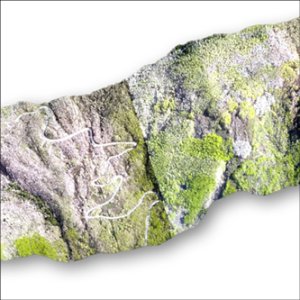
The 2017 Data Institute: Remote Sensing with Reproducible Workflows provides a unique opportunity for participants to gain hands-on experience working with open data using well-documented, reproducible methods. Participants will also gain important applied knowledge about using heterogeneous remote sensing data sources to answer spatio-temporal ecological questions. The Institute will take place at NEON headquarters in Boulder, CO from June 19-24, 2017. Applications are due by March 10, 2017.

Using remote sensing data for ecological research

Through data intensive, hands-on activities, we will cover topics including:

  • Fundamental concepts required to open, visualize and process data stored in different coordinate reference systems, and at different resolutions&spatial scales
  • The importance of thoughtful, well-documented open science workflows and methods
  • Scientific spatio-temporal applications of remote sensing data using open tools including Python
  • Using remote sensing data products with in situ data to quantify uncertainty associated with estimates of vegetation structure, composition and chemistry

A deep dive into NEON’s Airborne Observation Platform

During the course, participants will work with hyperspectral, lidar and camera data collected by NEON’s Airborne Observation Platform (AOP). They also learn about the ways remote sensing processing methods impact how data can be used in science; and they get to tour the NEON calibration facilities to gain a deeper understanding of the importance of calibration to reduce data uncertainty during collection and processing.

Who should apply

This Data Institute is geared towards graduate students and early career scientists who have some programming experience and want to develop critical skills and foundational knowledge for working with heterogeneous spatio-temporal data to address ecological questions. Qualified applicants are required to have some prior basic experience in the Python programming environment (or experience in another programming environment and willing to learn Python). All participants must bring their own laptop to participate in the hands-on data activities.

Learn more

Share

Related Posts:

Bug affecting neonUtilities in latest RStudio version on Windows

September 16, 2025

Featured Experts: Bridget Hass and Eric Sokol on NEON’s Impact at ESA 2025

August 28, 2025

ESA 2025

New Data Product: Canopy Nitrogen, Subset of Data Available for Community Review

February 26, 2026

NSF NEON, Operated by Battelle

Follow Us:

Join Our Newsletter

Get updates on events, opportunities, and how NEON is being used today.

Subscribe Now

Footer

  • About Us
  • Contact Us
  • Terms & Conditions
  • Careers
  • Code of Conduct

Copyright © Battelle, 2026

The National Ecological Observatory Network is a major facility fully funded by the U.S. National Science Foundation.

Any opinions, findings and conclusions or recommendations expressed in this material do not necessarily reflect the views of the U.S. National Science Foundation.