
NSF NEON, Operated by Battelle

Main navigation

  • About
    • NEON Overview
      • Vision and Management
      • Spatial and Temporal Design
      • History
    • About the NEON Biorepository
      • ASU Biorepository Staff
      • Contact the NEON Biorepository
    • Observatory Blog
    • Newsletters
    • Staff
    • FAQ
    • Contact Us

    About

  • Data
    • Data Portal
      • Data Availability Charts
      • API & GraphQL
      • Prototype Data
      • Externally Hosted Data
    • Data Collection Methods
      • Airborne Observation Platform (AOP)
      • Instrument System (IS)
        • Instrumented Collection Types
        • Aquatic Instrument System (AIS)
        • Terrestrial Instrument System (TIS)
      • Observational System (OS)
        • Observation Types
        • Observational Sampling Design
        • Sampling Schedules
        • Taxonomic Lists Used by Field Staff
        • Optimizing the Observational Sampling Designs
      • Protocols & Standardized Methods
    • Getting Started with NEON Data
      • neonUtilities for R and Python
      • Learning Hub
      • Code Hub
    • Using Data
      • Data Formats and Conventions
      • Released, Provisional, and Revised Data
      • Data Product Bundles
      • Usage Policies
      • Acknowledging and Citing NEON
      • Publishing Research Outputs
    • Data Notifications
    • NEON Data Management
      • Data Availability
      • Data Processing
      • Data Quality

    Data

  • Samples & Specimens
    • Biorepository Sample Portal at ASU
    • About Samples
      • Sample Types
      • Sample Repositories
      • Megapit and Distributed Initial Characterization Soil Archives
    • Finding and Accessing Sample Data
      • Species Checklists
      • Sample Explorer - Relationships and Data
      • Biorepository API
    • Requesting and Using Samples
      • Loans & Archival Requests
      • Usage Policies

    Samples & Specimens

  • Field Sites
    • Field Site Map and Info
    • Spatial Layers & Printable Maps

    Field Sites

  • Resources
    • Getting Started with NEON Data
    • Research Support Services
      • Field Site Coordination
      • Letters of Support
      • Mobile Deployment Platforms
      • Permits and Permissions
      • AOP Flight Campaigns
      • Research Support FAQs
      • Research Support Projects
    • Code Hub
      • neonUtilities for R and Python
      • Code Resources Guidelines
      • Code Resources Submission
      • NEON's GitHub Organization Homepage
    • Learning Hub
      • Tutorials
      • Workshops & Courses
      • Science Videos
      • Teaching Modules
    • Science Seminars and Data Skills Webinars
    • Document Library
    • Funding Opportunities

    Resources

  • Impact
    • Research Highlights
    • Papers & Publications
    • NEON in the News

    Impact

  • Get Involved
    • Upcoming Events
    • Research and Collaborations
      • Environmental Data Science Innovation and Inclusion Lab
      • Collaboration with DOE BER User Facilities and Programs
      • EFI-NEON Ecological Forecasting Challenge
      • NEON Great Lakes User Group
      • NCAR-NEON-Community Collaborations
    • Advisory Groups
      • Science, Technology & Education Advisory Committee
      • Technical Working Groups
    • NEON Ambassador Program
      • Exploring NEON-Derived Data Products Workshop Series
    • Partnerships
    • Community Engagement
    • Work Opportunities

    Get Involved

  • My Account
  • Search

Search

Field Sites

  • Field Site Map and Info
  • Spatial Layers & Printable Maps

Breadcrumb

  1. Field Sites
  2. Smithsonian Environmental Research Center NEON

Field Site

Smithsonian Environmental Research Center NEON / SERC

brown circle white drop icon

Gradient Terrestrial, MD, D02: Mid-Atlantic
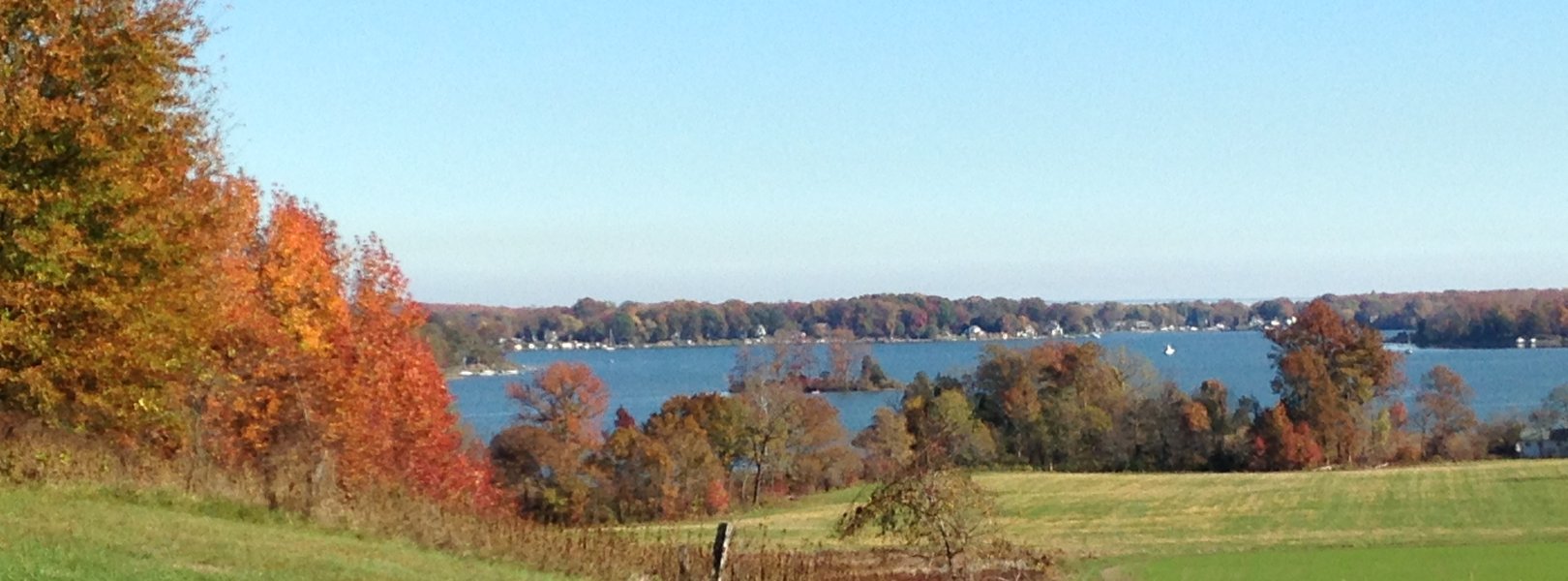
Landscape at the SERC field site

About Field Sites

Smithsonian Environmental Research Center (SERC) is a terrestrial NEON field site located in Anne Arundel county, Maryland on the Rhode River, a sub-estuary of the Chesapeake Bay. The 10.7 km2 (2650 acre) site is encompassed within and hosted by The Smithsonian Environmental Research Center, a research and educational center run by the Smithsonian Institution. This site is located within NEON's Mid-Atlantic Domain (D02), a densely populated region bounded by the Atlantic Ocean on the east and stretching down the Eastern Seaboard from southern New Jersey to northern Georgia. The Mid-Atlantic Domain includes two other terrestrial sites and two aquatic sites. [1] [2] [3]

Climate

The climate here is temperate and humid, with annual average minimum temperatures of 5-10°C (41-50°F) and average annual maximum temperatures of 16-21°C (61-70°F). Temperatures can often reach 32-35°C (90-95°F) during the hot and humid summer months. In winter, temperatures routinely fall below freezing. The average annual temperature is 13.6°C (56.5°F). On average, this location gets a total of 1075mm (42 in.) of precipitation annually. [7] [10]

Geology

The Smithsonian Environmental Research Center is located on the Nanjemoy Formation, consisting of sand, clay, and mud. The parent material at SERC is primarily fluvial marine deposits associated with a near-shore environment of the late Cretaceous seas, but there are some areas of alluvium and loess that overlie some of the fluvial marine deposits. Glauconite is a common mineral found at the site. [3] [4]

Soils

The major soil series found at SERC include Adelphia, Dodon, Cumberstone, Sassafras, Mattapex, Donlonton, Collington, Holmdel, Annapolis, Wist, Sharptown, Marr, Woodstown, and Hurlock. The parent material at SERC is primarily fluvial marine deposits with some areas of overlying alluvium and loess. Landforms at SERC include backslopes, footslopes, shoulders, summits, and toeslopes, which are consistent with uplands and hills. [3]

Hydrology

Anne Arundel County, Maryland is partially included in the larger Patuxent watershed which flows into the Chesapeake Bay. The other part of the county belongs to smaller watersheds that drain directly into the Chesapeake Bay. These watersheds are the South River, Rhode, and West River watersheds. [5] [6]

Vegetation

The SERC site’s land is dominated by coastal hardwood forests, encompassing varying habitat types including terrestrial, estuarine, and wetland habitats. Dominant vegetation within the hardwood forests include tulip poplar (Liriodendron tulipifera), American beech (Fagus grandifolia), and American sweetgum (Liquidambar styraciflua). Cropland also covers a large portion of the landscape. [2]

Fauna

Fauna native to the Mid-Atlantic region that encompasses SERC includes red fox (Vulpes vulpes), white-tailed deer (Odocoileus virginianus), raccoon (Procyon lotor), osprey (Pandion haliaetus), and American beaver (Castor canadensis). [8]

Past Land Management and Use

The Smithsonian Environmental Research Center has a complex history that spans over 50 years. In 1962, a Maryland dairy farmer named Robert Lee Forest left his 368-acre farm and other holdings to the Smithsonian Institution in his will. The old farm and holdings along the Rhode river were converted into a biological field site and, in 1965, the Chesapeake Bay Center for Field Biology was established. With an influx of grant money, in 1969 the Smithsonian purchased even more land, bringing the total acreage of the site to 933. Soon after, the center converted an old cow barn from Forest’s original farm into laboratories and a dormitory, establishing the center’s first on-site facilities. In 1970, the center’s name was changed to the Chesapeake Bay Center for Environmental Studies (CBCES) and research activities began to expand. The Smithsonian acquired even more land, increasing the size of the site to a total of 1800 acres, then began building new onsite facilities to support their work. In the 1980s, in addition to their research, the center officially established educational programs for both scientists and the public. In 1985, the center was renamed the Smithsonian Environmental Research Center (SERC). SERC continued diversifying and expanding its research activities and now works both locally and globally on important conservation issues. Today, the SERC site is 2650 acres, is home to numerous labs and state-of-the-art facilities, and continues to support a wide array of research and educational programs. [9]

Current Land Management and Use

The Smithsonian Environmental Research Center (SERC) is a research and educational institution based in Anne Arundel County, Maryland on the Chesapeake Bay. Established in 1965, the center conducts research in a variety of different areas, with an emphasis on understanding and conserving coastal ecosystems. SERC works both locally and globally on issues such as fisheries conservation, water quality, land use, and invasive species. In addition to its research, SERC provides environmental educational programs for K-12 students. [1]

NEON Site Establishment

Plot establishment for NEON’s SERC site was completed in April 2015. The site’s Initial Operations Capability/Capacity Review (IOCR), or when operations were officially approved to start, was June 2015 for terrestrial sampling. The site’s IOCR for tower operations was February 2016.

Additional Resources

[1] Minogue, K. (2014, November 13). About Us. Retrieved from https://serc.si.edu/about-us.

[2] Terrestrial Observation System (TOS) Site Characterization Report: Domain 02. (NEON Doc. #: NEON.DOC.003886)

[3] Taylor, G., Marshall, B., Verdone, D. (2016) NEON Site-Level Plot Summary Smithsonian Environmental Research Center (SERC). Retrieved from https://data.neonscience.org/documents/10179/2361410/SERC_Soil_Site+Sum…

[4] U.S. Geological Survey, 2005, Mineral Resources Data System: U.S. Geological Survey, Reston, Virginia. Retrieved from https://mrdata.usgs.gov/mrds/

[5] Blair, Ryan. (n.d.). Watershed Studies. Retrieved from https://www.aacounty.org/departments/public-works/wprp/watershed-assess…

[6] Chesapeake Bay Foundation. (n.d.). Major River Watersheds of the Chesapeake Bay. Retrieved from https://www.cbf.org/about-the-bay/maps/geography/major-river-watersheds….

[7] National Oceanic and Atmospheric Administration. (n.d.). U.S. Climate Atlas, National Centers for Environmental Information (NCEI). Retrieved from https://www.ncdc.noaa.gov/climateatlas/.

[8] Maryland Department of Natural Resources. (n.d.) Mammals. Retrieved from https://dnr.maryland.gov/wildlife/Pages/plants_wildlife/Mammals.aspx.

[9] Smithsonian Environmental Research Center. (2014, June 10). History. Retrieved from https://serc.si.edu/history

[10] PRISM Climate Group, Oregon State University, http://prism.oregonstate.edu, created 4 Feb 2004.

Field Site Information

Latitude/Longitude

38.890131, -76.560014

Geodetic Datum

WGS84

Location

Anne Arundel County
MD, US

Elevation

Mean: 33m
Minimum: 0m
Maximum: 43m

Mean Annual Temperature

13.6°C

Dominant Wind Direction

NNW

Mean Canopy Height

38.0m

Dominant NLCD Classes

Cultivated Crops, Deciduous Forest

Field Operations Office

1500 Remount Road
MRC 5560, Bldg 90
Front Royal, VA 22630

Research Access

If your proposed research requires access to field sites where NEON is present, we can help.

Request Access

Observation Types

Remote Sensing

Remote sensing surveys of this field site collect lidar, spectrometer and high-resolution RGB camera data.

Meteorological Measurements

This site has a flux/meteorological tower that is 62 m (203 ft) tall with six measurement levels. The tower top extends above the vegetation canopy to allow sensors mounted at the top and along the tower to capture the full profile of atmospheric conditions from the top of the vegetation canopy to the ground. The tower collects physical and chemical properties of atmosphere-related processes, such as humidity, wind, and net ecosystem gas exchange. Precipitation data are collected by a tipping bucket at the top of the tower and a series of throughfalls located in the soil array.

Phenocams

One phenocam is attached to the top and the bottom of the tower. Here we show the images from the most recent hour. The full collection of images can be viewed on the Phenocam Gallery - click on either of the images below.

Tower top

NEON.D02.SERC.DP1.10033

Tower bottom

NEON.D02.SERC.DP1.10042

Soil Sensor Measurements

This site has five soil plots placed in an array within the airshed of the flux tower. Photosynthetically Active Radiation (PAR) at soil surface, soil heat flux, solar radiation, and throughfall are measured at the soil surface in each soil plot. Soil moisture, soil temperature, and CO2 concentration are measured at multiple depths in each soil plot.

Observational Sampling

At terrestrial sites, field ecologists observe birds and plants, and sample ground beetles, mosquitoes, small mammals, soil microbes, and ticks. Lab analyses are carried out to provide further data on DNA sequences, pathogens, soils, sediments, and biogeochemistry. Learn more about terrestrial observations or explore this site's data products.


Field Site Data

Site

Site Host

Smithsonian Environmental Research Center

Site URL

https://serc.si.edu/get-involved/visiting-scientists-and-research-associates

Site Access Details

Some areas of the site have pre-existing experiments and a high density of markers, equipment, sensors, etc. Make sure to coordinate with on-going work at the site to avoid any impact. All researchers must be accompanied while on-site by at least one individual with an approved Visiting Scientist Agreement if they do not have their own agreement. Annual hunting activities may render this area completely inaccessible for short periods of time (1-2 days) over the course of the season.

Operations Office

NEON Field Operations Office

Domain 02 Support Facility

NEON Field Operations Address

1500 Remount Road
MRC 5560, Bldg 90
Front Royal, VA 22630

NEON Field Operations Phone

540.692.1919

Location

Latitude

38.890131

Longitude

-76.560014

Geodetic Datum

WGS84

UTM Northing

4305735.30m

UTM Easting

364703.66m

UTM Zone

18N

County

Anne Arundel

State

MD

Country

US

Mean Elevation

33m

Minimum Elevation

0m

Maximum Elevation

43m

Terrestrial Sampling Boundary Area

10.33km^2

Climate

Mean Annual Temperature

13.6°C

Mean Annual Precipitation

1075mm

Dominant Wind Direction

NNW

Vegetation

Mean Canopy Height

38.0m

Dominant NLCD Classes

Cultivated Crops, Deciduous Forest

Average number of green days

245

Average first greenness increase date

80 DOY

Average peak green date

155 DOY

Average first greenness decrease date

220 DOY

Average minimum greenness date

325 DOY

Tower

Tower Height

62m

Number of Tower Levels

6

Geology

USGS Geology Unit

MDTn;5

USGS Geology Name

Pamunkey Group; Nanjemoy Formation

USGS Lithologic Constituents

Dark green to gray, argillaceous, glauconitic, fine- to medium-grained sand; minor gray to pale brown clay; total thickness 0 to 125 feet; Marlboro Clay member at base: Pink to gray, homogeneous plastic clay with local lenses of very fine-grained white sand; thickness 0 to 30 feet; present west of Chesapeake Bay only; total thickness 0 to 125 feet.

USGS Geology Age

Eocene

Soils

Megapit Soil Family

Fine-loamy - mixed - active - mesic Aquic Hapludults

Soil Subgroup

Aquic Hapludults


Gallery

  • Photos
  • Videos

No Video


Related Field Sites

Other Domain D02 Field Sites

brown circle white drop icon Blandy Experimental Farm NEON
Gradient Terrestrial
blue circle white drop icon Lewis Run NEON
Gradient Aquatic
blue square white drop icon Posey Creek NEON
Core Aquatic
brown square white mountain icon Smithsonian Conservation Biology Institute NEON
Core Terrestrial
NSF NEON, Operated by Battelle

Follow Us:

Join Our Newsletter

Get updates on events, opportunities, and how NEON is being used today.

Subscribe Now

Footer

  • About Us
  • Contact Us
  • Terms & Conditions
  • Careers
  • Code of Conduct

Copyright © Battelle, 2026

The National Ecological Observatory Network is a major facility fully funded by the U.S. National Science Foundation.

Any opinions, findings and conclusions or recommendations expressed in this material do not necessarily reflect the views of the U.S. National Science Foundation.