NSF NEON, Operated by Battelle

Main navigation

  • About
    • NEON Overview
      • Vision and Management
      • Spatial and Temporal Design
      • History
    • About the NEON Biorepository
      • ASU Biorepository Staff
      • Contact the NEON Biorepository
    • Observatory Blog
    • Newsletters
    • Staff
    • FAQ
    • Contact Us

    About

  • Data
    • Data Portal
      • Data Availability Charts
      • API & GraphQL
      • Prototype Data
      • Externally Hosted Data
    • Data Collection Methods
      • Airborne Observation Platform (AOP)
      • Instrument System (IS)
        • Instrumented Collection Types
        • Aquatic Instrument System (AIS)
        • Terrestrial Instrument System (TIS)
      • Observational System (OS)
        • Observation Types
        • Observational Sampling Design
        • Sampling Schedules
        • Taxonomic Lists Used by Field Staff
        • Optimizing the Observational Sampling Designs
      • Protocols & Standardized Methods
    • Getting Started with NEON Data
      • neonUtilities for R and Python
      • Learning Hub
      • Code Hub
    • Using Data
      • Data Formats and Conventions
      • Released, Provisional, and Revised Data
      • Data Product Bundles
      • Usage Policies
      • Acknowledging and Citing NEON
      • Publishing Research Outputs
    • Data Notifications
    • NEON Data Management
      • Data Availability
      • Data Processing
      • Data Quality

    Data

  • Samples & Specimens
    • Biorepository Sample Portal at ASU
    • About Samples
      • Sample Types
      • Sample Repositories
      • Megapit and Distributed Initial Characterization Soil Archives
    • Finding and Accessing Sample Data
      • Species Checklists
      • Sample Explorer - Relationships and Data
      • Biorepository API
    • Requesting and Using Samples
      • Loans & Archival Requests
      • Usage Policies

    Samples & Specimens

  • Field Sites
    • Field Site Map and Info
    • Spatial Layers & Printable Maps

    Field Sites

  • Resources
    • Getting Started with NEON Data
    • Research Support Services
      • Field Site Coordination
      • Letters of Support
      • Mobile Deployment Platforms
      • Permits and Permissions
      • AOP Flight Campaigns
      • Research Support FAQs
      • Research Support Projects
    • Code Hub
      • neonUtilities for R and Python
      • Code Resources Guidelines
      • Code Resources Submission
      • NEON's GitHub Organization Homepage
    • Learning Hub
      • Tutorials
      • Workshops & Courses
      • Science Videos
      • Teaching Modules
    • Science Seminars and Data Skills Webinars
    • Document Library
    • Funding Opportunities

    Resources

  • Impact
    • Research Highlights
    • Papers & Publications
    • NEON in the News

    Impact

  • Get Involved
    • Upcoming Events
    • Research and Collaborations
      • Environmental Data Science Innovation and Inclusion Lab
      • Collaboration with DOE BER User Facilities and Programs
      • EFI-NEON Ecological Forecasting Challenge
      • NEON Great Lakes User Group
      • NCAR-NEON-Community Collaborations
    • Advisory Groups
      • Science, Technology & Education Advisory Committee
      • Technical Working Groups
    • NEON Ambassador Program
      • Exploring NEON-Derived Data Products Workshop Series
    • Partnerships
    • Community Engagement
    • Work Opportunities

    Get Involved

  • My Account
  • Search

Search

Welcome to the updated NEON website! This site features more intuitive navigation and a seamlessly integrated Biorepository portal, making it easier to explore NEON data, samples and resources. For a brief summary of changes visit this page. Your feedback is welcome through our webform through February 20.

Breadcrumb

  1. Get Involved
  2. Work Opportunities
  3. Internships

Internships

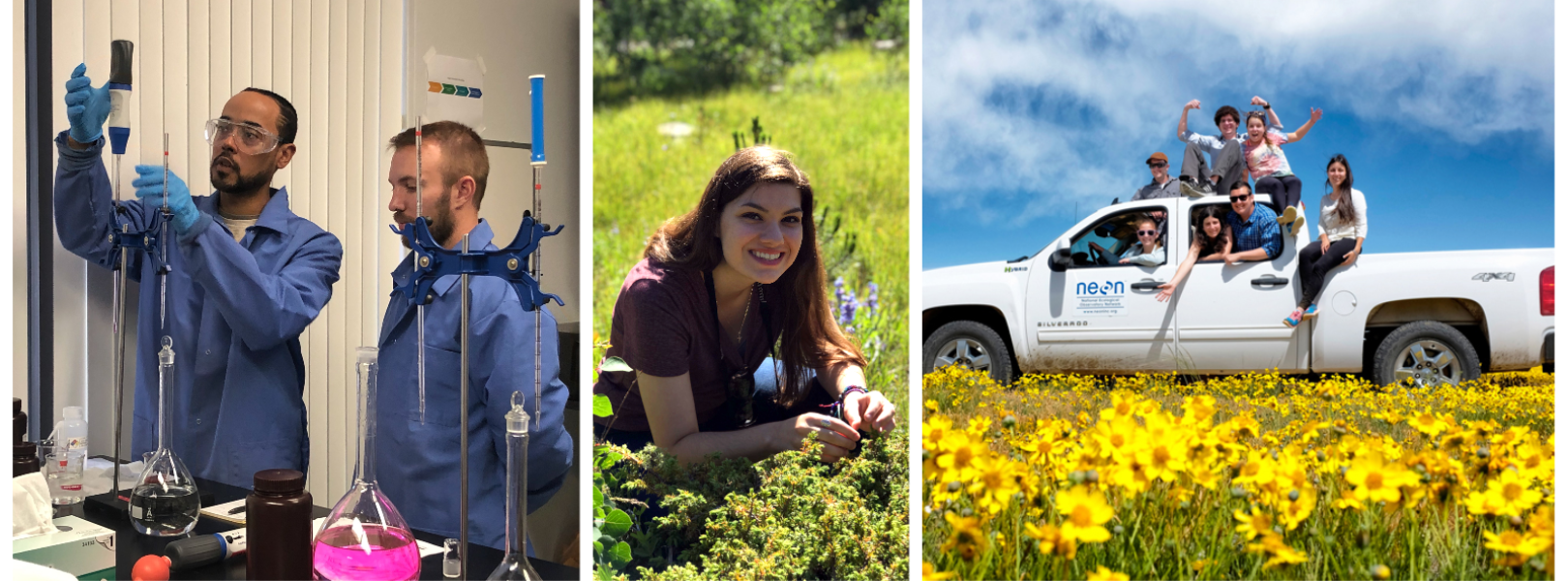
Research Internships banner

STEM professionals are essential for developing our country's technological and global competitiveness. Although STEM occupations are projected to grow at a rate twice that of non-STEM occupations, the supply of STEM professionals is not expected to meet this projected growth. Mentored internship opportunities are one way for individuals early in their careers to explore a particular field while developing skills and a professional network to succeed in a STEM career. NEON does not provide internships directly to students but does partner with other organizations to host their interns.

For other opportunities to work on the NEON program, please consider the seasonal fieldwork opportunities or work-experience/co-op internships occasionally posted on the Careers page.

Data & Technology Internships

The NEON program partners with colleges, universities, and other organizations to provide on-site and remote internship opportunities for students to work with NEON technologies and data. NEON only supports partnered internships where students are paid a salary or stipend during their internship. Organizations that are interested in partnering with NEON on internships should start the process by submitting a Letter of Support request.

Interns work closely with NEON mentors on real-world projects, and in the process begin the transition from student to professional colleagues. Interns have opportunities to explore career options through a variety of avenues including brownbag seminars and informational interviews with NEON staff.

The intern program coordinator will work with the sponsoring organization to identify appropriate internship projects and mentors for the educational background of the students involved. Internships are typically 8+ weeks during the summer months although other formats can be developed.

Interns in remote research internships typically work closely with a research mentor at their local institution on a research project they design or that their research mentor has designed. In addition, a mentor based at NEON with working knowledge of the data to be used will also be identified. The role of the NEON mentor is to facilitate the research and ensure that the intern understands how to properly work with the NEON data.

Field Internships

The NEON program also provides internships through external organizations to provide students and recent graduates with important hands-on training in collecting and handling ecological field data. Interns receive training in field collection methods and participate in NEON data collection alongside our field scientists. Interns are introduced to a variety of data collection methods from invertebrate trapping to plant phenology observations. These field experiences allow early career ecologists an opportunity to explore their interests in various aspects of field ecology.

The Former NEON Undergraduate Research Program

From 2013–2017, the NEON program supported an 11-week undergraduate research and engineering internship program each summer. During the construction of the Observatory, intern projects ranged from helping to design sensor assemblies to testing sampling protocols and analyzing preliminary data. Learn more about the projects completed by these interns on the Intern Alumni page.


NSF NEON, Operated by Battelle

Follow Us:

Join Our Newsletter

Get updates on events, opportunities, and how NEON is being used today.

Subscribe Now

Footer

  • About Us
  • Contact Us
  • Terms & Conditions
  • Careers
  • Code of Conduct

Copyright © Battelle, 2026

The National Ecological Observatory Network is a major facility fully funded by the U.S. National Science Foundation.

Any opinions, findings and conclusions or recommendations expressed in this material do not necessarily reflect the views of the U.S. National Science Foundation.