
NSF NEON, Operated by Battelle

Main navigation

    • About Overview
    • NEON Overview
    • About the NEON Biorepository
    • Observatory Blog
    • Newsletters
    • Staff
    • FAQ
    • User Accounts
    • Contact Us
    • Data Overview
    • Data Portal
    • Data Availability Charts
    • API & GraphQL
    • Prototype Data
    • Data Collection Methods
    • Getting Started with NEON Data
    • Using Data
    • Data Notifications
    • NEON Data Management
    • Samples & Specimens Overview
    • NEON Biorepository Sample Portal at ASU
    • About NEON Samples
    • Sample Types
    • Finding and Accessing Sample Data
    • Species Checklists
    • Requesting and Using Samples
    • Acknowledging and Citing the NEON Biorepository
    • Biorepository Research Projects
    • Field Sites Overview
    • Field Site Map and Info
    • Spatial Data Layers & Maps
    • Resources Overview
    • Getting Started with NEON Data
    • Research Support Services
    • Code Hub
    • Learning Hub
    • Science Seminars and Data Skills Webinars
    • Document Library
    • Funding Opportunities
    • Impact Overview
    • Research Highlights
    • Papers & Publications
    • NEON in the News
    • Get Involved Overview
    • Upcoming Events
    • Past Events
    • Research and Collaborations
    • Advisory Groups
    • NEON Ambassador Program
    • Partnerships
    • Community Engagement
    • Work Opportunities

Search

About

  • NEON Overview
  • About the NEON Biorepository
  • Observatory Blog
  • Newsletters
  • Staff
  • FAQ
  • User Accounts
  • Contact Us

Breadcrumb

  1. About
  2. Observatory Blog
  3. More terrestrial and aquatic observational protocols now available

More terrestrial and aquatic observational protocols now available

April 27, 2015
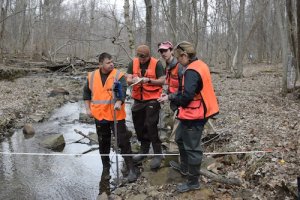
Discharge Protocol Testing In Domain 02

NEON released a second suite of protocols and science designs, which are now available in the NEON Data Portal Document Library. This release includes nine new terrestrial and aquatic operations protocols.

These protocols include:

  • Manual data transcription
  • Reaeration measuring diffusion of O2 across the water-air interface
  • Stable isotope sampling in surface and ground waters
  • Surface water chemistry sampling in wadeable streams
  • Surface water dissolve gas sampling
  • Measurement of leaf area index
  • Canopy foliage chemistry and leaf mass per area measurements
  • Tick and tick-borne pathogen sampling
  • Breeding landbird abundance and diversity

Today’s release follows an initial publication of 11 terrestrial operations protocols and science designs, which happen earlier this month. Standardized protocols are integral to the success of NEON because they lead to reproducible workflows and reduce measurement uncertainty; in addition, they provide researchers with valuable guidance on replicating NEON methods in the field and contribute to open science.  You can learn more about how NEON developed its standardized and quality-controlled data collection methods and processing systems here.

The Observatory will post more terrestrial and aquatic protocols and science designs next month, so please continue to check NEON’s website and data portal. If you have questions about the science designs and protocols, please contact us at info@battelleecology.org.
Share

Related Posts:

Sample-associated imagery now available through the NEON Biorepository

August 26, 2026

From Instrument to Insight: How NEON Builds Confidence in Ecological Data

May 29, 2026

Sensor to measure aspirated air temperature

Modification of Select NEON Data Products

January 29, 2026

NSF NEON, Operated by Battelle

Follow Us:

Join Our Newsletter

Get updates on events, opportunities, and how NEON is being used today.

Subscribe Now

Footer

  • About Us
  • Contact Us
  • Terms & Conditions
  • Careers
  • Code of Conduct

Copyright © Battelle, 2026

The National Ecological Observatory Network is a major facility fully funded by the U.S. National Science Foundation.

Any opinions, findings and conclusions or recommendations expressed in this material do not necessarily reflect the views of the U.S. National Science Foundation.