NSF NEON, Operated by Battelle

Main navigation

  • About
    • NEON Overview
      • Vision and Management
      • Spatial and Temporal Design
      • History
    • About the NEON Biorepository
      • ASU Biorepository Staff
      • Contact the NEON Biorepository
    • Observatory Blog
    • Newsletters
    • Staff
    • FAQ
    • Contact Us

    About

  • Data
    • Data Portal
      • Data Availability Charts
      • API & GraphQL
      • Prototype Data
      • Externally Hosted Data
    • Data Collection Methods
      • Airborne Observation Platform (AOP)
      • Instrument System (IS)
        • Instrumented Collection Types
        • Aquatic Instrument System (AIS)
        • Terrestrial Instrument System (TIS)
      • Observational System (OS)
        • Observation Types
        • Observational Sampling Design
        • Sampling Schedules
        • Taxonomic Lists Used by Field Staff
        • Optimizing the Observational Sampling Designs
      • Protocols & Standardized Methods
    • Getting Started with NEON Data
      • neonUtilities for R and Python
      • Learning Hub
      • Code Hub
    • Using Data
      • Data Formats and Conventions
      • Released, Provisional, and Revised Data
      • Data Product Bundles
      • Usage Policies
      • Acknowledging and Citing NEON
      • Publishing Research Outputs
    • Data Notifications
    • NEON Data Management
      • Data Availability
      • Data Processing
      • Data Quality

    Data

  • Samples & Specimens
    • Biorepository Sample Portal at ASU
    • About Samples
      • Sample Types
      • Sample Repositories
      • Megapit and Distributed Initial Characterization Soil Archives
    • Finding and Accessing Sample Data
      • Species Checklists
      • Sample Explorer - Relationships and Data
      • Biorepository API
    • Requesting and Using Samples
      • Loans & Archival Requests
      • Usage Policies

    Samples & Specimens

  • Field Sites
    • Field Site Map and Info
    • Spatial Layers & Printable Maps

    Field Sites

  • Resources
    • Getting Started with NEON Data
    • Research Support Services
      • Field Site Coordination
      • Letters of Support
      • Mobile Deployment Platforms
      • Permits and Permissions
      • AOP Flight Campaigns
      • Research Support FAQs
      • Research Support Projects
    • Code Hub
      • neonUtilities for R and Python
      • Code Resources Guidelines
      • Code Resources Submission
      • NEON's GitHub Organization Homepage
    • Learning Hub
      • Tutorials
      • Workshops & Courses
      • Science Videos
      • Teaching Modules
    • Science Seminars and Data Skills Webinars
    • Document Library
    • Funding Opportunities

    Resources

  • Impact
    • Research Highlights
    • Papers & Publications
    • NEON in the News

    Impact

  • Get Involved
    • Upcoming Events
    • Research and Collaborations
      • Environmental Data Science Innovation and Inclusion Lab
      • Collaboration with DOE BER User Facilities and Programs
      • EFI-NEON Ecological Forecasting Challenge
      • NEON Great Lakes User Group
      • NCAR-NEON-Community Collaborations
    • Advisory Groups
      • Science, Technology & Education Advisory Committee
      • Technical Working Groups
    • NEON Ambassador Program
      • Exploring NEON-Derived Data Products Workshop Series
    • Partnerships
    • Community Engagement
    • Work Opportunities

    Get Involved

  • My Account
  • Search

Search

About

  • NEON Overview
  • About the NEON Biorepository
  • Observatory Blog
  • Newsletters
  • Staff
  • FAQ
  • Contact Us

Breadcrumb

  1. About
  2. Observatory Blog
  3. Inaugural Data Institute: reproducible remote sensing science using NEON data

Inaugural Data Institute: reproducible remote sensing science using NEON data

September 15, 2016
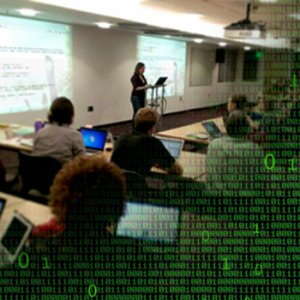
Data Carpentry Workshop

In mid-June, 23 early career scientists from far and wide descended upon NEON headquarters for a week-long Data Institute. The inaugural Institute featured NEON remote sensing data and focused on reproducible science methods with the goal of giving participants an understanding of how NEON data may be used to help answer questions they couldn’t previously address.

Participants came from institutions in the USA, Canada and the Netherlands. While 70% of the participants were graduate students, the Data Institute also attracted an undergraduate, post-docs, and university research staff and faculty.

Institute attendees were interested in using remote sensing data to answer a wide range of questions from wanting to be able to characterize forest structure and composition to using time series to detect vegetation disturbance patterns using remote sensing data.

Sarah Graves, from the University of Florida, said, “The NEON Data Institute gave us the tools to work with novel ecological data. With our own knowledge of the domain combined with NEON data and tools, we are in a position to ask novel ecological questions that will advance the field of ecology beyond what has been traditionally possible.” Jeff Atkins of Virginia Commonwealth University added, “Ecology increasingly depends on "big data" and remote sensing and scientists need the skills necessary to work with this data and to inform their hypotheses. NEON does an amazing job at helping scientists learn how to work with and use a suite of data and data products.”

Couldn't attend the Institute but interested in the course materials? We've made them all available online for you to work through at your own pace. Learn more about the Institute including how to access the course materials online.
Share

Related Posts:

Bug affecting neonUtilities in latest RStudio version on Windows

September 16, 2025

Featured Experts: Bridget Hass and Eric Sokol on NEON’s Impact at ESA 2025

August 28, 2025

ESA 2025

Discontinuation of Select NEON Data Products

January 29, 2026

NSF NEON, Operated by Battelle

Follow Us:

Join Our Newsletter

Get updates on events, opportunities, and how NEON is being used today.

Subscribe Now

Footer

  • About Us
  • Contact Us
  • Terms & Conditions
  • Careers
  • Code of Conduct

Copyright © Battelle, 2026

The National Ecological Observatory Network is a major facility fully funded by the U.S. National Science Foundation.

Any opinions, findings and conclusions or recommendations expressed in this material do not necessarily reflect the views of the U.S. National Science Foundation.