Cold Weather, Critical Work: How NEON Teams Winterize Aquatic Sites in Wisconsin (Domain 05) and North Dakota (Domain 09)
December 30, 2025
At NEON, ecological data collection doesn’t stop when the temperatures begin to drop, or when the snow starts to fall. When the autumn field season wraps up, aquatic teams at NEON’s northern sites work together to quickly secure sensors and systems before access becomes limited. Senior field ecologist – limnology, Jessie Hall (Domain 09, Jamestown, ND) and field ecologist II, Aaron Schoofs (Domain 05, Land O’Lakes, WI), are two of the experts leading this essential cold-weather work.
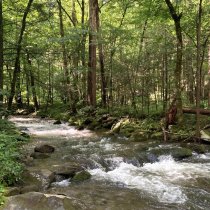
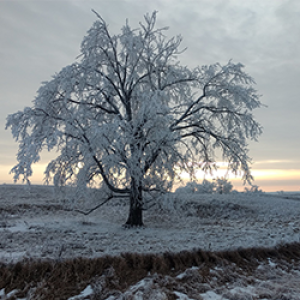
Though their domains differ, with Domain 05 spanning forested wetlands near the Wisconsin–Michigan border and Domain 09’s prairie lakes exposed to North Dakota’s winter winds, both teams face similar challenges: safeguarding equipment, ensuring uninterrupted data collection, and keeping their crews safe in sub-freezing conditions.
Protecting Equipment and Preserving Data
“Winterization is a race against the freeze,” Aaron explains. “We monitor weather forecasts constantly to time our work, leaving buoys in long enough to collect data, but pulling them before ice makes the lakes inaccessible.” Jessie adds, “This year, the lakes froze, thawed, and refroze again. We were chipping through ice to get to our buoys and collect water. It’s never predictable.”
Once the buoys are out of the water, teams shift focus to checking seals, replacing batteries and applying protective grease on in situ sensors, meteorological stations, and groundwater wells. “Snow load, dead batteries, even a pinched cable can compromise data,” Aaron notes.

Field Work in the Freezer
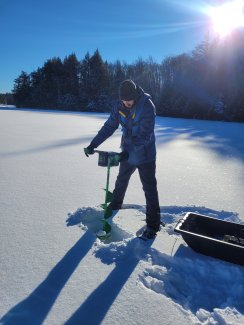
“Throughout the winter months we [D05] continue to collect water chemistry, dissolved gas, aquatic stable isotopes, and aquatic microbes.” Aaron explains. “We also visit each field site biweekly to perform maintenance on instrumentation at our littoral stations, ground water monitoring wells, and meteorological station.” Jessie’s team continues collecting surface water chemistry throughout winter as well. “We’re hauling gear on sleds across frozen lakes, drilling through the ice, and trying to keep samples from freezing as we collect them,” she says. “There’s no windbreak, and sometimes it’s -4°F with high winds. It’s intense, but we take precautions with float coats, ice picks, and warming breaks in the UTV. Safety is always first.”
Flexibility and Collaboration
Site variability means each team tailors its prep. Domain 05 deals with forest debris, battery strain, and heavy snowpack, while Domain 09 focuses on maintaining lake access with tracked UTVs and planning around rapid freeze-thaw cycles.
Both Jessie and Aaron emphasize the importance of teamwork and communication. “Everyone on our crew cross-trains,” Jessie says. “I bring out staff from other protocols so they can step in if needed.” Aaron adds, “Jessie and I stay in close contact. We share strategies, and it helps us all adapt.”
“Winter fieldwork is tough,” Jessie says, “but this work keeps the vital NEON site running year-round, and that feels extremely rewarding.”