
NSF NEON, Operated by Battelle

Main navigation

  • About
    • NEON Overview
      • Vision and Management
      • Spatial and Temporal Design
      • History
    • About the NEON Biorepository
      • ASU Biorepository Staff
      • Contact the NEON Biorepository
    • Observatory Blog
    • Newsletters
    • Staff
    • FAQ
    • Contact Us

    About

  • Data
    • Data Portal
      • Data Availability Charts
      • API & GraphQL
      • Prototype Data
      • Externally Hosted Data
    • Data Collection Methods
      • Airborne Observation Platform (AOP)
      • Instrument System (IS)
        • Instrumented Collection Types
        • Aquatic Instrument System (AIS)
        • Terrestrial Instrument System (TIS)
      • Observational System (OS)
        • Observation Types
        • Observational Sampling Design
        • Sampling Schedules
        • Taxonomic Lists Used by Field Staff
        • Optimizing the Observational Sampling Designs
      • Protocols & Standardized Methods
    • Getting Started with NEON Data
      • neonUtilities for R and Python
      • Learning Hub
      • Code Hub
    • Using Data
      • Data Formats and Conventions
      • Released, Provisional, and Revised Data
      • Data Product Bundles
      • Usage Policies
      • Acknowledging and Citing NEON
      • Publishing Research Outputs
    • Data Notifications
    • NEON Data Management
      • Data Availability
      • Data Processing
      • Data Quality

    Data

  • Samples & Specimens
    • Biorepository Sample Portal at ASU
    • About Samples
      • Sample Types
      • Sample Repositories
      • Megapit and Distributed Initial Characterization Soil Archives
    • Finding and Accessing Sample Data
      • Species Checklists
      • Sample Explorer - Relationships and Data
      • Biorepository API
    • Requesting and Using Samples
      • Loans & Archival Requests
      • Usage Policies

    Samples & Specimens

  • Field Sites
    • Field Site Map and Info
    • Spatial Layers & Printable Maps

    Field Sites

  • Resources
    • Getting Started with NEON Data
    • Research Support Services
      • Field Site Coordination
      • Letters of Support
      • Mobile Deployment Platforms
      • Permits and Permissions
      • AOP Flight Campaigns
      • Research Support FAQs
      • Research Support Projects
    • Code Hub
      • neonUtilities for R and Python
      • Code Resources Guidelines
      • Code Resources Submission
      • NEON's GitHub Organization Homepage
    • Learning Hub
      • Tutorials
      • Workshops & Courses
      • Science Videos
      • Teaching Modules
    • Science Seminars and Data Skills Webinars
    • Document Library
    • Funding Opportunities

    Resources

  • Impact
    • Research Highlights
    • Papers & Publications
    • NEON in the News

    Impact

  • Get Involved
    • Upcoming Events
    • Research and Collaborations
      • Environmental Data Science Innovation and Inclusion Lab
      • Collaboration with DOE BER User Facilities and Programs
      • EFI-NEON Ecological Forecasting Challenge
      • NEON Great Lakes User Group
      • NCAR-NEON-Community Collaborations
    • Advisory Groups
      • Science, Technology & Education Advisory Committee
      • Technical Working Groups
    • NEON Ambassador Program
      • Exploring NEON-Derived Data Products Workshop Series
    • Partnerships
    • Community Engagement
    • Work Opportunities

    Get Involved

  • My Account
  • Search

Search

Field Sites

  • Field Site Map and Info
  • Spatial Layers & Printable Maps

Breadcrumb

  1. Field Sites
  2. Prairie Pothole NEON

Field Site

Prairie Pothole NEON / PRPO

blue square white drop icon

Core Aquatic, ND, D09: Northern Plains
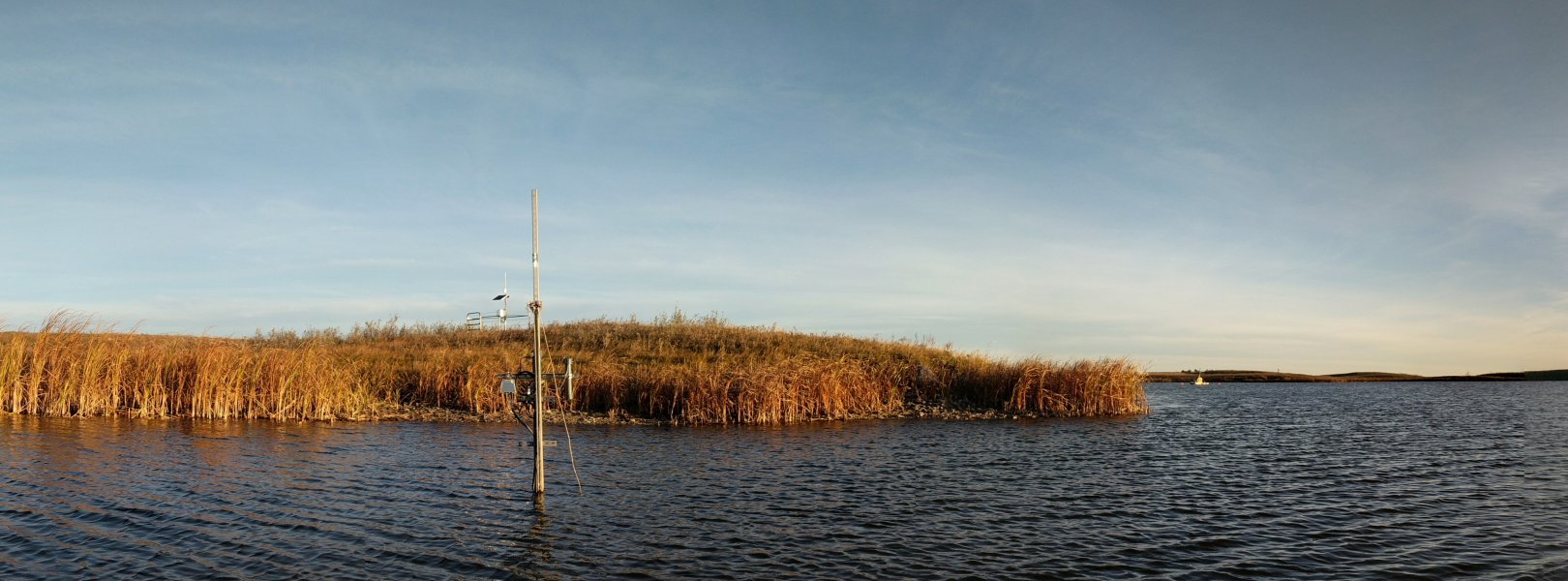
Prairie Pothole (PRPO) aquatic field site

About Field Sites

Prairie Pothole (PRPO) is an aquatic NEON field site located about 160 km (100 mi.) northeast of Bismarck, North Dakota. This site's watershed is 1.4 km2 (346 acres) and is managed by the U.S Geological Survey and U.S. Fish and Wildlife Service as part of the larger Chase Lake National Wildlife Refuge. PRPO sits among the restored prairie and is part of a matrix of small lakes, ponds, and ephemeral prairie potholes in the area. The region is characterized by an immense number of prairie potholes, which are depressional wetlands that are primarily freshwater marshes. The site is part of NEON's Northern Plains Domain (D09). The Domain has one other aquatic field site and three terrestrial field sites. PRPO is colocated with The Northern Plains- Woodworth (WOOD) terrestrial site. [1] [2]

Climate

North Dakota has continental climate characterized by vast variations in both seasonal and daily temperatures. Air flow throughout the region creates windy conditions. In the winter, arctic air masses create cold and dry conditions. Summer airflow from the Northern Pacific air masses bring warmer dry conditions, while occasional tropical air flow creates warm and wet conditions. This highly variably shift in air masses ultimately provides North Dakota with moderate precipitation annually of around 330-508 mm (13-20 in.). Average annual temperature ranges from 2.8-6.1°C (37-43°F), with winters often below -17.8°C (0°F) and summers above 32°C (90°F). The mean annual temperature in the vicinity is 4.9°C (40.8°F) and mean annual precipitation is 495 mm (19.5 in.). Precipitation varies from year to year, with more precipitation falling during the summer months when thunderstorm activity is the highest. Weather exhibits extreme variability, with periodic droughts, hailstorms, fluctuations in temperature, and frequent strong winds. The most severe storms can produce hail, tornadoes, or damaging straight-line winds. [5] [9] [11]

Geology

The geology of this site is characterized by glacial settlements of mud, clay, and silt underlain by the Pierre Formation. [7] [8]

Soils

Soils at this site are dominantly Mollisols in the subgroup Typic Haplustolls, with lesser proportions classified within the Inceptisols Order. The soils have textures of Fine-Loamy with lesser proportions of fine, fine-loamy over sandy, sandy-skeletal, and sandy textures. [7] [8]

Hydrology

The landscape around PRPO is characterized by an undulating matrix of small lakes, ponds, and ephemeral prairie potholes. The lake at PRPO is a year-long depressional freshwater wetland that fills with snowmelt and rain during spring and summer storms. [1] [2] [3]

Vegetation

PRPO lake is dominated by prairie grasses and sparse patches of reeds, cattails, and large woody debris in the riparian area. The landscape surrounding PRPO is dominantly characterized by rolling hills with herbaceous grasslands and legumes as the dominant vegetation type. [3]

Fauna

Animals that call this area home include the Bison (Bison bison), Mule deer (Odocoileus hemionus), and Pronghorn antelope (Antilocapra Americana). Prairie potholes are unique habitat that provide various resources for birds such as the White Pelican (‎Pelecanus erythrorhynchos) and the piping plover (Charadrius melodus), an endangered species that relies on the Great Plains for breeding habitat. NEON conducts electrofishing, macroinvertebrate, and zooplankton sampling protocols at the PRPO site. [1] [2] [4]

Past Land Management and Use

Native American presence in the area dates back to 10,000 years ago, following the retreat of the continental glaciers. Before European settlers arrived, the Dakota or Lakota nation, as well as the Assiniboine, Cheyenne, Mandan, Hidatsa, and Arikara groups were present in what is now North Dakota. Native Americans and Euro-Americans came into contact in the 18th Century and further American settlement commenced in 1861 following the establishment of North Dakota as a territory. Since 1969, this site has been used for studying the response of wildlife to applied treatments of grazing, burning, idling, and annual cropping. The U.S. Fish and Wildlife Service conducts annual wildlife surveys to determine the size and health of nesting bird populations around the lake. The site has been historically tilled, cultivated, and grazed. [1] [6] [12] [13]

Current Land Management and Use

The U.S. Geological Survey and U.S. Fish and Wildlife Service manage the Larger Chase Lake National Wildlife Refuge-Woodworth where Prairie Pothole (PRPO) is located. At Chase Lake NWR, all but 1 km2 (230 acres) of the 19.5 km2 (4,835 acres) are designated as Wilderness Area. Land management at Chase LAKE NWR is focused on maintaining the biological diversity, integrity, and overall environmental health of the ecosystem in and around the lake. Private landowners play a role in protecting the wetlands and grasslands in the Prairie Pothole Region, which serve as critical migration and breeding habitat for birds. The primary human activities here are research and wilderness recreation, including bird watching. Limited trapping is allowed in the NWR with proper permits. Historically, grazing bison and wildfires caused by lightning helped evolve and shape the mixed-grass prairie. Current land management at PRPO is focused on continuing this cycle by re-seeding with native plant species and using light cattle grazing and prescribed burns to promote the growth of native species. [1] [10] [12]

NEON Site Establishment

Prairie Pothole is colocated with the site of Woodworth (WOOD). The initial site characterization was completed in 2014 with aquatics sampling beginning that same year. Aquatic instrumentation construction was completed in 2017 when data came online.

Additional Resources

[1] Terrestrial Observation System (TOS) Site Characterization Report: Domain 09. NEON.DOC.003893vB

[2] https://www.epa.gov/wetlands/prairie-potholes

[3] Aquatic Instrument System (AIS) Site Characterization Report: Domain 09. NEON.DOC.001670vB

[4] https://gf.nd.gov/wildlife/id/shorebirds

[5] PRISM Climate Group, Oregon State University, http://prism.oregonstate.edu,created 4 Feb 2004.

[6] https://www.history.nd.gov/ndhistory/firstpeople.html

[7] U.S. Geological Survey, 2005, Mineral Resources Data System: U.S. Geological Survey, Reston, Virginia. https://mrdata.usgs.gov/mrds/

[8] Parsley, J. (2016). NEON Site-Level Plot Summary, Woodworth (WOOD), July 2016. https://data.neonscience.org/documents/10179/2361410/WOOD_Soil_SiteSumm…

[9] https://gf.nd.gov/wildlife/habitats/climate

[10] USFWS: https://www.fws.gov/refuge/Chase_Lake/visit/visitor_activities.html

[11] https://statesummaries.ncics.org/chapter/nd/

[12] USFWS: https://www.fws.gov/refuge/Chase_Lake/about.html#:~:text=About%20the%20…

[13] USFWS: https://www.fws.gov/refuge/Chase_Lake/what_we_do/resource_management.ht…

[14] USFWS: https://www.fws.gov/refuge/chase_lake_wmd/easements/wetland.html

Field Site Information

Latitude/Longitude

47.129839, -99.253147

Geodetic Datum

WGS84

Location

Stutsman County
ND, US

Elevation

Mean: 579m

Mean Annual Temperature

4.9°C

Dominant NLCD Classes

Grassland/Herbaceous

Colocated Site(s)

Chase Lake National Wildlife Refuge NEON

Colocated Research

Chase Lake National Wildlife Refuge
Woodworth National Atmospheric Deposition Program

Field Operations Office

1503 Business Loop East
Jamestown, ND 58401

Research Access

If your proposed research requires access to field sites where NEON is present, we can help.

Request Access

Observation Types

Remote Sensing

Remote sensing surveys of this field site collect lidar, spectrometer and high-resolution RGB camera data.

Meteorological Measurements

This site has one meteorological station located in the riparian area and one meteorological station above water on a buoy. The met stations are outfitted with the a subset of the same sensors used at terrestrial sites. Measurements include wind speed and direction, air temperature, barometric pressure, relative humidity, shortwave radiation, and PAR.

Phenocams

A phenocam is pointed toward the land-water interface of the site. Here we show the images from the most recent hour. The full collection of images can be viewed on the Phenocam Gallery - click on the image below.

NEON.D09.PRPO.DP1.20002


Field Site Data

Site

Site Host

Chase Lake National Wildlife Refuge

Site URL

https://www.fws.gov/refuge/chase_lake/

Site Access Details

The site host encourages additional research activities that are related to the US Fish and Wildlife mission.

Operations Office

NEON Field Operations Office

Domain 09 Support Facility

NEON Field Operations Address

1503 Business Loop East
Jamestown, ND 58401

NEON Field Operations Phone

701.952.6728

Location

Latitude

47.129839

Longitude

-99.253147

Geodetic Datum

WGS84

UTM Northing

5219640.04m

UTM Easting

480997.97m

UTM Zone

14N

County

Stutsman

State

ND

Country

US

Mean Elevation

579m

Climate

Mean Annual Temperature

4.9°C

Mean Annual Precipitation

494mm

Vegetation

Dominant NLCD Classes

Grassland/Herbaceous

Watershed

USGS HUC

h07050002

Watershed Name

Pipestem

Geology

USGS Geology Unit

NDQccr;0

USGS Geology Name

Glacial Sediment- Collapsed Glacial Sediment

USGS Lithologic Constituents

Clay, silt, or mud

USGS Geology Age

Pleistocene to Holocene


Gallery

  • Photos
  • Videos

No Video


Related Field Sites

Other Domain D09 Field Sites

brown square white mountain icon Chase Lake National Wildlife Refuge NEON
Core Terrestrial
brown circle white drop icon Dakota Coteau Field Site NEON
Gradient Terrestrial
brown circle white drop icon Northern Great Plains Research Laboratory NEON
Gradient Terrestrial
blue circle white drop icon Prairie Lake NEON
Gradient Aquatic

Other Field Sites in ND

brown square white mountain icon Chase Lake National Wildlife Refuge NEON
Core Terrestrial
brown circle white drop icon Dakota Coteau Field Site NEON
Gradient Terrestrial
brown circle white drop icon Northern Great Plains Research Laboratory NEON
Gradient Terrestrial
blue circle white drop icon Prairie Lake NEON
Gradient Aquatic
NSF NEON, Operated by Battelle

Follow Us:

Join Our Newsletter

Get updates on events, opportunities, and how NEON is being used today.

Subscribe Now

Footer

  • About Us
  • Contact Us
  • Terms & Conditions
  • Careers
  • Code of Conduct

Copyright © Battelle, 2026

The National Ecological Observatory Network is a major facility fully funded by the U.S. National Science Foundation.

Any opinions, findings and conclusions or recommendations expressed in this material do not necessarily reflect the views of the U.S. National Science Foundation.