
NSF NEON, Operated by Battelle

Main navigation

  • About
    • NEON Overview
      • Vision and Management
      • Spatial and Temporal Design
      • History
    • About the NEON Biorepository
      • ASU Biorepository Staff
      • Contact the NEON Biorepository
    • Observatory Blog
    • Newsletters
    • Staff
    • FAQ
    • Contact Us

    About

  • Data
    • Data Portal
      • Data Availability Charts
      • API & GraphQL
      • Prototype Data
      • Externally Hosted Data
    • Data Collection Methods
      • Airborne Observation Platform (AOP)
      • Instrument System (IS)
        • Instrumented Collection Types
        • Aquatic Instrument System (AIS)
        • Terrestrial Instrument System (TIS)
      • Observational System (OS)
        • Observation Types
        • Observational Sampling Design
        • Sampling Schedules
        • Taxonomic Lists Used by Field Staff
        • Optimizing the Observational Sampling Designs
      • Protocols & Standardized Methods
    • Getting Started with NEON Data
      • neonUtilities for R and Python
      • Learning Hub
      • Code Hub
    • Using Data
      • Data Formats and Conventions
      • Released, Provisional, and Revised Data
      • Data Product Bundles
      • Usage Policies
      • Acknowledging and Citing NEON
      • Publishing Research Outputs
    • Data Notifications
    • NEON Data Management
      • Data Availability
      • Data Processing
      • Data Quality

    Data

  • Samples & Specimens
    • Biorepository Sample Portal at ASU
    • About Samples
      • Sample Types
      • Sample Repositories
      • Megapit and Distributed Initial Characterization Soil Archives
    • Finding and Accessing Sample Data
      • Species Checklists
      • Sample Explorer - Relationships and Data
      • Biorepository API
    • Requesting and Using Samples
      • Loans & Archival Requests
      • Usage Policies

    Samples & Specimens

  • Field Sites
    • Field Site Map and Info
    • Spatial Layers & Printable Maps

    Field Sites

  • Resources
    • Getting Started with NEON Data
    • Research Support Services
      • Field Site Coordination
      • Letters of Support
      • Mobile Deployment Platforms
      • Permits and Permissions
      • AOP Flight Campaigns
      • Research Support FAQs
      • Research Support Projects
    • Code Hub
      • neonUtilities for R and Python
      • Code Resources Guidelines
      • Code Resources Submission
      • NEON's GitHub Organization Homepage
    • Learning Hub
      • Tutorials
      • Workshops & Courses
      • Science Videos
      • Teaching Modules
    • Science Seminars and Data Skills Webinars
    • Document Library
    • Funding Opportunities

    Resources

  • Impact
    • Research Highlights
    • Papers & Publications
    • NEON in the News

    Impact

  • Get Involved
    • Upcoming Events
    • Research and Collaborations
      • Environmental Data Science Innovation and Inclusion Lab
      • Collaboration with DOE BER User Facilities and Programs
      • EFI-NEON Ecological Forecasting Challenge
      • NEON Great Lakes User Group
      • NCAR-NEON-Community Collaborations
    • Advisory Groups
      • Science, Technology & Education Advisory Committee
      • Technical Working Groups
    • NEON Ambassador Program
      • Exploring NEON-Derived Data Products Workshop Series
    • Partnerships
    • Community Engagement
    • Work Opportunities

    Get Involved

  • My Account
  • Search

Search

Field Sites

  • Field Site Map and Info
  • Spatial Layers & Printable Maps

Breadcrumb

  1. Field Sites
  2. Northern Great Plains Research Laboratory NEON

Field Site

Northern Great Plains Research Laboratory NEON / NOGP

brown circle white drop icon

Gradient Terrestrial, ND, D09: Northern Plains
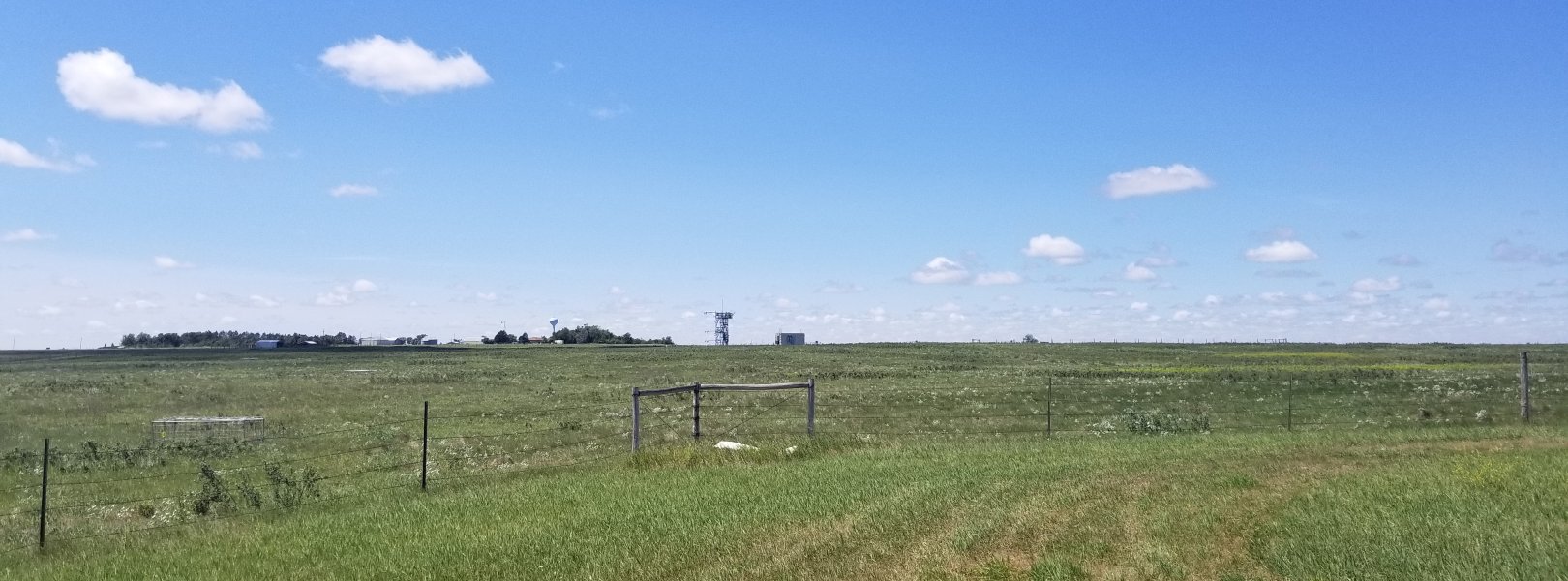
Northern Great Plains Research Laboratory (NOGP) field site at North Dakota

About Field Sites

The Northern Great Plains Research Laboratory (NOGP) is a terrestrial NEON field site located 9.6 km (6 mi.) west of Bismarck, North Dakota. The sampling area is about 6 km2 (1483 acres), placed on land that has been managed by the U.S. Department of Agriculture and the Agriculture Research Service (ARS) for over 100 years. The site is full of sprawling grassland vegetation which represent much of NEON's 770,995 km2 (190.5 million acre) Northern Plains Domain (D09), NEON's second largest Domain. D09 includes two other terrestrial field sites and two aquatic field sites. NOCP is not colocated with an aquatic site. [1] [2]

Climate

North Dakota has continental climate characterized by vast variations in both seasonal and daily temperatures. Air flow throughout the region creates windy conditions. In the winter, arctic air masses create cold and dry conditions. Summer airflow from the Northern Pacific air masses bring warmer dry conditions, while occasional tropical air flow creates warm and wet conditions. This highly variably shift in air masses ultimately provides North Dakota with moderate precipitation annually of around 330-508 mm (13-20 in.). Average annual temperature ranges from 2.8-6.1°C (37-43°F), with winters often below -17.8°C (0°F) and summers above 32°C (90°F). The mean annual temperature in the vicinity is 5.9°C (42.6°F) and mean annual precipitation is 455 mm (18 in.). Preipitation varies from year to year, with more precipitation falling during the summer months when thunderstorm activity is the highest. Weather exhibits extreme variability, with periodic droughts, hailstorms, fluctuations in temperature, and frequent strong winds. The most severe storms can produce hail, tornadoes, or damaging straight-line winds. [5] [11] [14]

Geology

NOGP sits above the Oahe Formation, a geologic formation from the late Quaternary age consisting predominately of wind-blown silt. [3] [10]

Soils

Soils at NOGP are nearly all Mollisols, which is characteristic of prairie grasslands. They are part of the subgroup Typic Argiustolls and have surface horizons that are dark and mollic with a thickness of 18-89 cm (7-35 in.). A small area of a shallow entisol of the Cabba series also exists at the site. Parent materials are sedimentary sandstone, siltstone, mudstone, and shale. [9] [10]

Hydrology

NOGP has vast spanses of prairie potholes across its landscape. Prairie potholes are both seasonal and year-long depressional freshwater wetlands that fill with snowmelt and rain during spring and summer storms.[4]

Vegetation

The Great Plains region is dominated by native grasslands, tame grasses, legumes, and many species of wildflowers. Smooth Brome (Bromus inermis L.) and Kentucky blue grass (Poa pretensis L.) dominate the NOGP tower area along with various crop species planted depending on type of research being conducted in the field site. The five most common species within NOGP include Russian Olive (Elaeagnus angustifolia L.), Kentucky Bluegrass (Poa pratensis L.), Snowberry (Symphoricarpos occidentalis Hook.), Green Needlegrass (Nassella viridula (Trin.)), and Smooth Brome (Bromus inemis Leyss). [1]

Fauna

Some animals that call this region home include Bison (Bison bison), Red fox (Vulpes vulpes), Coyote (Canis latrans), American Badger (Taxidea taxus), and more. NEON collects data on four types of wildlife here: small mammals, birds, mosquitoes, and ground beetles. Common species collected at NOGP include the Thirteen-lined squirrel (Ictidomus tredecemlineatus), Deer Mouse (Peromyscus maniculatus), and many ground beetles such as Cyclotrachelus torvus. [1] [6] [7]

Past Land Management and Use

The Northern Great Plains Research Laboratory was established by Congress on August 8, 1912 to respond to the needs of farmers and ranchers of the Northern Plains. Research began in 1914 on vegetables, shrubs, ornamentals, berries, fruits, wheat, flax, forages, grazing management, windbreaks, and forestry. Research programs have changed significantly across the years; programs focused on evaluating trees and shrubs for windbreaks, developing methods to reclaim mine-land spoils, and examining the feasibility of dairy production, have been replaced with new long-term research. The prairie section at NOGP was historically grazed and hayed with no history of tillage; however, it has been undisturbed since 2005. The arable section at NOGP has been managed for annual grain production for over 50 years but has not been tilled since 1992. [2] [12] [13]

Current Land Management and Use

The Northern Great Plain Research Laboratory has been conducting agricultural studies for over a hundred years at the NOGP site. Their mission is “To develop adaptive and integrative practices for sustainable, crop, livestock and rangeland systems.” The Agricultural Research Service (ARS) manages the land, focusing on developing solutions to agricultural problems that affect millions of Americans. [8] [12]

NEON Site Establishment

NOGP plots were officially established in November 2015, with a last phase of development with the instrumentation tower in July of 2017. Sensor data started collection in July 2017. Sampling for Terrestrial Observations began in August 2016, making it one of the earlier sites to be sampled within NEON.

Additional Resources

[1] Terrestrial Observation System (TOS) Site Characterization Report: Domain 09. NEON.DOC.003893vB

[2] http://www.mandanhistory.org/arealandmarks/greatplainsexpermtstn.html

[3] Clayton, L., Moran, S.R., & Bickely, W.B. (1976) Stratigraphy, origin, and climactic implications of the late quaternary upland silt in North Dakota. North Dakota Geological Survey. https://www.dmr.nd.gov/ndgs/documents/Publication_List/pdf/MiscSeries/M…

[4] https://www.epa.gov/wetlands/prairie-potholes

[5] https://gf.nd.gov/wildlife/habitats/climate

[6] https://gf.nd.gov/gnf/education/habitats-of-nd/habitats-of-nd-prairie.p…

[7] https://bugguide.net/node/view/127442

[8] https://www.ars.usda.gov/research/programs-projects/?modeCode=30-64-05-…

[9] Heilig, Jeanne. 2017. NEON Site Level Plot Summary, Northern Great Plains (NOGP), November 2017. https://data.neonscience.org/documents/10179/2361410/NOGP_Soil_SiteSumm…

[10] U.S. Geological Survey, 2005, Mineral Resources Data System: U.S. Geological Survey, Reston, Virginia. https://mrdata.usgs.gov/mrds/

[11] https://statesummaries.ncics.org/chapter/nd/

[12] https://www.ars.usda.gov/plains-area/mandan-nd/ngprl/docs/about-us/

[13] Terrestrial Instrument System (TIS, FIU) Site Characterization Supporting Data: Domain 09. NEON.DOC.011055vB

[14] PRISM Climate Group, Oregon State University, http://prism.oregonstate.edu,created 4 Feb 2004.

Field Site Information

Latitude/Longitude

46.76972, -100.91535

Geodetic Datum

WGS84

Location

Morton County
ND, US

Elevation

Mean: 589m
Minimum: 517m
Maximum: 592m

Mean Annual Temperature

5.9°C

Dominant Wind Direction

NNE

Mean Canopy Height

0.4m

Dominant NLCD Classes

Grassland/Herbaceous

Colocated Research

USDA Agricultural Research Service Northern Great Plains Research Lab
Northern Plains - LTAR
Critical Zone Exploration Network
Ameriflux

Field Operations Office

1503 Business Loop East
Jamestown, ND 58401

Research Access

If your proposed research requires access to field sites where NEON is present, we can help.

Request Access

Observation Types

Remote Sensing

Remote sensing surveys of this field site collect lidar, spectrometer and high-resolution RGB camera data.

Meteorological Measurements

This site has a flux/meteorological tower that is 8 m (26 ft) tall with four measurement levels. The tower top extends above the vegetation canopy to allow sensors mounted at the top and along the tower to capture the full profile of atmospheric conditions from the top of the vegetation canopy to the ground. The tower collects physical and chemical properties of atmosphere-related processes, such as humidity, wind, and net ecosystem gas exchange. Precipitation data are collected by a tipping bucket at the top of the tower.

Phenocams

One phenocam is attached to the top and the bottom of the tower. Here we show the images from the most recent hour. The full collection of images can be viewed on the Phenocam Gallery - click on either of the images below.

Tower top

NEON.D09.NOGP.DP1.10033

Tower bottom

NEON.D09.NOGP.DP1.10042

Soil Sensor Measurements

This site has five soil plots placed in an array within the airshed of the flux tower. Photosynthetically Active Radiation (PAR) at soil surface, soil heat flux, and solar radiation are measured at the soil surface in each soil plot. Soil moisture, soil temperature, and CO2 concentration are measured at multiple depths in each soil plot.

Observational Sampling

At terrestrial sites, field ecologists observe birds and plants, and sample ground beetles, mosquitoes, small mammals, soil microbes, and ticks. Lab analyses are carried out to provide further data on DNA sequences, pathogens, soils, sediments, and biogeochemistry. Learn more about terrestrial observations or explore this site's data products.


Field Site Data

Site

Site Host

Northern Great Plains Research Laboratory

Site URL

https://www.ars.usda.gov/plains-area/mandan-nd/ngprl/

Site Access Details

The site host encourages additional research activities that are related to the USDA Agricultural Research Service mission.

Operations Office

NEON Field Operations Office

Domain 09 Support Facility

NEON Field Operations Address

1503 Business Loop East
Jamestown, ND 58401

NEON Field Operations Phone

701.952.6728

Location

Latitude

46.76972

Longitude

-100.91535

Geodetic Datum

WGS84

UTM Northing

5181355.71m

UTM Easting

353761.60m

UTM Zone

14N

County

Morton

State

ND

Country

US

Mean Elevation

589m

Minimum Elevation

517m

Maximum Elevation

592m

Terrestrial Sampling Boundary Area

6.02km^2

Climate

Mean Annual Temperature

5.9°C

Mean Annual Precipitation

457mm

Dominant Wind Direction

NNE

Vegetation

Mean Canopy Height

0.4m

Dominant NLCD Classes

Grassland/Herbaceous

Average number of green days

175

Average first greenness increase date

115 DOY

Average peak green date

170 DOY

Average first greenness decrease date

200 DOY

Average minimum greenness date

290 DOY

Tower

Tower Height

8m

Number of Tower Levels

4

Soils

Megapit Soil Family

Fine-loamy - mixed - superactive - frigid Typic Argiustolls

Soil Subgroup

Typic Argiustolls


Gallery

  • Photos
  • Videos

No Video


Related Field Sites

Other Domain D09 Field Sites

brown square white mountain icon Chase Lake National Wildlife Refuge NEON
Core Terrestrial
brown circle white drop icon Dakota Coteau Field Site NEON
Gradient Terrestrial
blue circle white drop icon Prairie Lake NEON
Gradient Aquatic
blue square white drop icon Prairie Pothole NEON
Core Aquatic

Other Field Sites in ND

brown square white mountain icon Chase Lake National Wildlife Refuge NEON
Core Terrestrial
brown circle white drop icon Dakota Coteau Field Site NEON
Gradient Terrestrial
blue circle white drop icon Prairie Lake NEON
Gradient Aquatic
blue square white drop icon Prairie Pothole NEON
Core Aquatic
NSF NEON, Operated by Battelle

Follow Us:

Join Our Newsletter

Get updates on events, opportunities, and how NEON is being used today.

Subscribe Now

Footer

  • About Us
  • Contact Us
  • Terms & Conditions
  • Careers
  • Code of Conduct

Copyright © Battelle, 2026

The National Ecological Observatory Network is a major facility fully funded by the U.S. National Science Foundation.

Any opinions, findings and conclusions or recommendations expressed in this material do not necessarily reflect the views of the U.S. National Science Foundation.