
NSF NEON, Operated by Battelle

Main navigation

  • About
    • NEON Overview
      • Vision and Management
      • Spatial and Temporal Design
      • History
    • About the NEON Biorepository
      • ASU Biorepository Staff
      • Contact the NEON Biorepository
    • Observatory Blog
    • Newsletters
    • Staff
    • FAQ
    • Contact Us

    About

  • Data
    • Data Portal
      • Data Availability Charts
      • API & GraphQL
      • Prototype Data
      • Externally Hosted Data
    • Data Collection Methods
      • Airborne Observation Platform (AOP)
      • Instrument System (IS)
        • Instrumented Collection Types
        • Aquatic Instrument System (AIS)
        • Terrestrial Instrument System (TIS)
      • Observational System (OS)
        • Observation Types
        • Observational Sampling Design
        • Sampling Schedules
        • Taxonomic Lists Used by Field Staff
        • Optimizing the Observational Sampling Designs
      • Protocols & Standardized Methods
    • Getting Started with NEON Data
      • neonUtilities for R and Python
      • Learning Hub
      • Code Hub
    • Using Data
      • Data Formats and Conventions
      • Released, Provisional, and Revised Data
      • Data Product Bundles
      • Usage Policies
      • Acknowledging and Citing NEON
      • Publishing Research Outputs
    • Data Notifications
    • NEON Data Management
      • Data Availability
      • Data Processing
      • Data Quality

    Data

  • Samples & Specimens
    • Biorepository Sample Portal at ASU
    • About Samples
      • Sample Types
      • Sample Repositories
      • Megapit and Distributed Initial Characterization Soil Archives
    • Finding and Accessing Sample Data
      • Species Checklists
      • Sample Explorer - Relationships and Data
      • Biorepository API
    • Requesting and Using Samples
      • Loans & Archival Requests
      • Usage Policies

    Samples & Specimens

  • Field Sites
    • Field Site Map and Info
    • Spatial Layers & Printable Maps

    Field Sites

  • Resources
    • Getting Started with NEON Data
    • Research Support Services
      • Field Site Coordination
      • Letters of Support
      • Mobile Deployment Platforms
      • Permits and Permissions
      • AOP Flight Campaigns
      • Research Support FAQs
      • Research Support Projects
    • Code Hub
      • neonUtilities for R and Python
      • Code Resources Guidelines
      • Code Resources Submission
      • NEON's GitHub Organization Homepage
    • Learning Hub
      • Tutorials
      • Workshops & Courses
      • Science Videos
      • Teaching Modules
    • Science Seminars and Data Skills Webinars
    • Document Library
    • Funding Opportunities

    Resources

  • Impact
    • Research Highlights
    • Papers & Publications
    • NEON in the News

    Impact

  • Get Involved
    • Upcoming Events
    • Research and Collaborations
      • Environmental Data Science Innovation and Inclusion Lab
      • Collaboration with DOE BER User Facilities and Programs
      • EFI-NEON Ecological Forecasting Challenge
      • NEON Great Lakes User Group
      • NCAR-NEON-Community Collaborations
    • Advisory Groups
      • Science, Technology & Education Advisory Committee
      • Technical Working Groups
    • NEON Ambassador Program
      • Exploring NEON-Derived Data Products Workshop Series
    • Partnerships
    • Community Engagement
    • Work Opportunities

    Get Involved

  • My Account
  • Search

Search

About

  • NEON Overview
  • About the NEON Biorepository
  • Observatory Blog
  • Newsletters
  • Staff
  • FAQ
  • Contact Us

Breadcrumb

  1. About
  2. Observatory Blog
  3. Explore the new NEON Data Portal

Explore the new NEON Data Portal

May 20, 2015
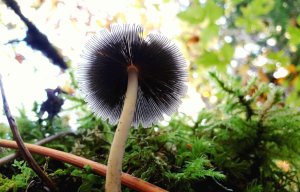
Fungi on the forest floor

Searching for NEON data? Explore the new portal! Based on user testing and discussions with the scientific community, NEON redesigned the data portal to improve overall usability and accessibility.

New data portal features

  • A more visually appealing and intuitive way to discover data products by data theme, location and date range
  • Live status bars that display product search and retrieval progress
  • Data retrieval customization options, including relevant documentation
  • Logged-in users can save queries and retrieve them later using citation codes

Data availability

All organismal data available via the previous data portal are now available on the new data portal, including:

  • Ground beetles sampled from pitfall traps
  • Plant phenology observations
  • Plant presence and percent cover
  • Small mammal box trapping
  • Herbaceous clip harvest

Products undergoing reprocessing

  • 2D Wind Speed and Direction
  • Single Aspirated Air Temperature
  • Triple Aspirated Air Temperature
  • Barometric Pressure
  • IR Biological Temperature
  • Precipitation (Secondary Precipitation subproduct)
  • Shortwave Radiation (Direct and Diffuse Pyranometer)
  • Shortwave Radiation (Primary Pyranometer)
  • Shortwave and Longwave Radiation (Net Radiometer)
  • Photosynthetically Active Radiation (PAR)
  • Spectral Sun Photometer - Calibrated Sky Radiances
  • Photosynthetically Active Radiation (Quantum Line)

Protocol availability

NEON also recently added more than 20 protocols and 9 science designs to the Document Library on the data portal, for both terrestrial and aquatic observations.

Share your experience

NEON data users, please explore the new Data Portal and share your feedback! Submit comments, issues and suggestions for improvement here. As NEON continues to fine-tune design and functionality, check back for updates and new content. For general NEON news and additional Data Portal updates, subscribe to the NEON newsletter.


Share

Related Posts:

AOP Data Availability Notification – Release 2026

December 15, 2025

Pilot Results and Updated Methodology - mosquito pathogen status (DP1.10041.001)

October 30, 2025

Version 1.2.0 of neonutilities Python package released

October 29, 2025

NSF NEON, Operated by Battelle

Follow Us:

Join Our Newsletter

Get updates on events, opportunities, and how NEON is being used today.

Subscribe Now

Footer

  • About Us
  • Contact Us
  • Terms & Conditions
  • Careers
  • Code of Conduct

Copyright © Battelle, 2026

The National Ecological Observatory Network is a major facility fully funded by the U.S. National Science Foundation.

Any opinions, findings and conclusions or recommendations expressed in this material do not necessarily reflect the views of the U.S. National Science Foundation.