
NSF NEON, Operated by Battelle

Main navigation

  • About
    • NEON Overview
      • Vision and Management
      • Spatial and Temporal Design
      • History
    • About the NEON Biorepository
      • ASU Biorepository Staff
      • Contact the NEON Biorepository
    • Observatory Blog
    • Newsletters
    • Staff
    • FAQ
    • Contact Us

    About

  • Data
    • Data Portal
      • Data Availability Charts
      • API & GraphQL
      • Prototype Data
      • Externally Hosted Data
    • Data Collection Methods
      • Airborne Observation Platform (AOP)
      • Instrument System (IS)
        • Instrumented Collection Types
        • Aquatic Instrument System (AIS)
        • Terrestrial Instrument System (TIS)
      • Observational System (OS)
        • Observation Types
        • Observational Sampling Design
        • Sampling Schedules
        • Taxonomic Lists Used by Field Staff
        • Optimizing the Observational Sampling Designs
      • Protocols & Standardized Methods
    • Getting Started with NEON Data
      • neonUtilities for R and Python
      • Learning Hub
      • Code Hub
    • Using Data
      • Data Formats and Conventions
      • Released, Provisional, and Revised Data
      • Data Product Bundles
      • Usage Policies
      • Acknowledging and Citing NEON
      • Publishing Research Outputs
    • Data Notifications
    • NEON Data Management
      • Data Availability
      • Data Processing
      • Data Quality

    Data

  • Samples & Specimens
    • Biorepository Sample Portal at ASU
    • About Samples
      • Sample Types
      • Sample Repositories
      • Megapit and Distributed Initial Characterization Soil Archives
    • Finding and Accessing Sample Data
      • Species Checklists
      • Sample Explorer - Relationships and Data
      • Biorepository API
    • Requesting and Using Samples
      • Loans & Archival Requests
      • Usage Policies

    Samples & Specimens

  • Field Sites
    • Field Site Map and Info
    • Spatial Layers & Printable Maps

    Field Sites

  • Resources
    • Getting Started with NEON Data
    • Research Support Services
      • Field Site Coordination
      • Letters of Support
      • Mobile Deployment Platforms
      • Permits and Permissions
      • AOP Flight Campaigns
      • Research Support FAQs
      • Research Support Projects
    • Code Hub
      • neonUtilities for R and Python
      • Code Resources Guidelines
      • Code Resources Submission
      • NEON's GitHub Organization Homepage
    • Learning Hub
      • Tutorials
      • Workshops & Courses
      • Science Videos
      • Teaching Modules
    • Science Seminars and Data Skills Webinars
    • Document Library
    • Funding Opportunities

    Resources

  • Impact
    • Research Highlights
    • Papers & Publications
    • NEON in the News

    Impact

  • Get Involved
    • Upcoming Events
    • Research and Collaborations
      • Environmental Data Science Innovation and Inclusion Lab
      • Collaboration with DOE BER User Facilities and Programs
      • EFI-NEON Ecological Forecasting Challenge
      • NEON Great Lakes User Group
      • NCAR-NEON-Community Collaborations
    • Advisory Groups
      • Science, Technology & Education Advisory Committee
      • Technical Working Groups
    • NEON Ambassador Program
      • Exploring NEON-Derived Data Products Workshop Series
    • Partnerships
    • Community Engagement
    • Work Opportunities

    Get Involved

  • My Account
  • Search

Search

Field Sites

  • Field Site Map and Info
  • Spatial Layers & Printable Maps

Breadcrumb

  1. Field Sites
  2. Niwot Ridge NEON

Field Site

Niwot Ridge NEON / NIWO

brown square white mountain icon

Core Terrestrial, CO, D13: Southern Rockies & Colorado Plateau
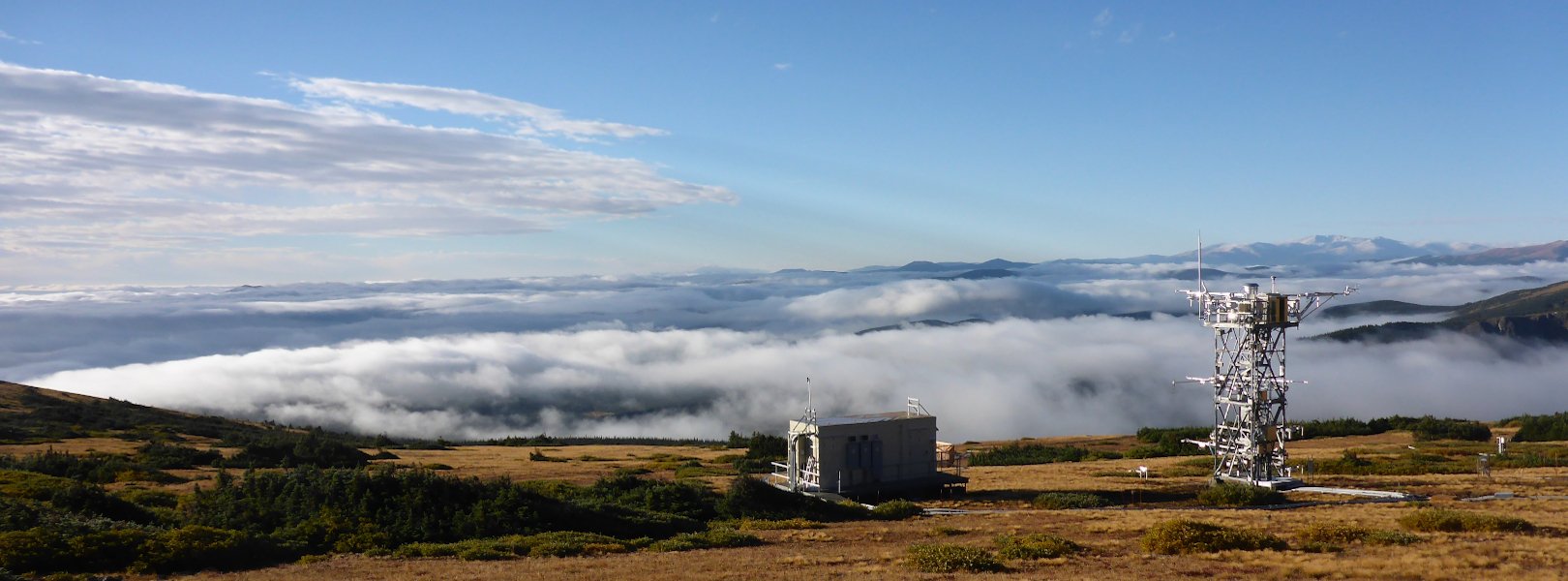
Niwot Ridge (NIWO) tower in the autumn

About Field Sites

The Niwot Ridge Mountain Research Station (NIWO) is a terrestrial site within the Front Range of the Rocky Mountains, 27 km (16.8 mi.) west of Boulder, Colorado and 6 km (3.7 mi.) east of the Continental Divide. NEON collects data over 13.4 km2 (3311 acres) at the site, which is on land managed by the University of Colorado in Boulder and the U.S. Forest Service. Sitting at 3000-3600 m (9843-11810 ft.) in elevation, this site's climate and biota are representative of the diverse landscapes of the Southern Rocky Mountains. Diverse gradients allow NEON to challenge questions surrounding land use change, climate impacts, and disturbance processes at multiple elevations. NIWO is part of NEON's Southern Rockies and Colorado Plateau Domain (D13). D13 includes one other terrestrial site and two aquatic sites. NIWO is located near the COMO aquatic site. [1]

Climate

NIWO is located in the Southern Rockies, which, due to elevational changes, have a climate characterized by dramatic differences in precipitation and temperature over very short distances. In general, precipitation decreases and temperature increases with a decrease in elevation. NIWO ranges through several elevation gradients, creating diverse climates across the region. It is considered an alpine tundra ecosystem. Mean annual temperature is 0.3°C (32.5°F) with the majority the of the mean annual 1005 mm (39.5 in.) of precipitation being snow at the highest elevations. Snow is brought from the east by cyclonic easterly upslope flows of air at the lower elevations. Spring storms often occur during the afternoons. Fall is the driest season in this region with the lowest average precipitation recorded. At the lower elevations there are many distinct microclimates within the saddles, knolls, moraines, and other glacial features. [2] [4] [7]

Geology

The geology at Niwot Ridge consists of schist, migmatite, and biotitic gneiss. [5]

Soils

The dominate soil order found at NIWO are Mollisols. Overall, soil can be described as Coarse-loamy - mixed - superactive Typic Haplocryolls. [1]

Hydrology

NIWO is located within the Rocky Mountains, which are covered in snowmelt-fed springs and upland catchments which deliver water to downstream basins. Boulder receives most of its drinking water from these basins. [6]

Vegetation

Flora varies along an elevation gradient at NIWO. On the low-elevation east and south facing slopes, lodgepole pine (Pinus contorta) and aspen (Populus tremuloides) groves dominate the landscape. The transition zone between the closed subalpine forest and alpine tundra are full of meadows interspersed with stunted patches of coniferous trees. The alpine tundra sits above the treeline and is dominated by herbaceous plants such as Ross’ avens (Geum rossii) and curly sedge (Carex rupestris). The steepest, highest regions of NIWO are dominated by microplants and scree.

Fauna

The Rockies have many diverse animal species that call them home including Black bear (Ursus americanus), snowshoe hare (Lepus americanus), porcupine (Erithizon dorsatum) and elk (Cervus danadensis). Niwot ridge has both seasonal and year round residents such as the white-tailed ptarmigan (Lagopus leucura) and is host to 31 species of mammals. NEON collects fauna data on small mammals, birds, ticks, mosquitoes, and ground beetles. Commonly sampled species at NIWO are deer mice (Peromyscus maniculatus), redbacked voles (Myodes gapperi), and the ground beetle Pterostichus surgens. [1] [2]

Past Land Management and Use

The area has experienced multiple ecological disturbances throughout history, including stand-replacing fires, episodic insect outbreaks, and occasional wind damage. In the early 1900s the logging industry clear cut the forest. The area is encompassed within Niwot Ridge, which was established as a site in the NSF-sponsored Long Term Ecological Research (LTER) Program in 1980. [8]

Current Land Management and Use

NIWO is hosted by and operated under the Forest Service and the University of Colorado-Boulder (CU Boulder). The Mountain Research Station (MRS) at Niwot Ridge is an interdisciplinary research facility of the Institute of Arctic and Alpine Research at CU Boulder, which facilitates research to understand mountain ecosystems and advance education. Within this station, research is conducted via several organizations sponsored by the National Science Foundation including the Niwot Ridge LTER, Boulder Creek Critical Zone Program, and the NEON program. The MRS program was established at its current site in 1920 on property leased by the U.S. Forest Service. Research themes at Niwot Ridge include the movement of energy and nutrients across the subalpine-alpine landscape, the influence of nitrogen deposition on ecosystems and hydrology, and the influence of climate on diversity and ecosystem function. [1] [3] [9]

NEON Site Establishment

Characterization of NIWO began in May 2015. Terrestrial sampling readiness reviews were completed and initial site sampling began in August of that year. Tower establishment was completed and TIS became operational in April 2017.

Additional Resources

[1] Terrestrial Observation System (TOS) Site Characterization Report: Domain 13. NEON.DOC.003896vB

[2] Greenland, David 1989. The Climate of Niwot Ridge, Front Range,Colorado, U.S.A.

[3] https://www.colorado.edu/mrs/general-info/mission-history

[4] PRISM Climate Group, Oregon State University, http://prism.oregonstate.edu, created 4 Feb 2004.

[5] U.S. Geological Survey, 2005, Mineral Resources Data System: U.S. Geological Survey, Reston, Virginia. https://mrdata.usgs.gov/mrds/

[6] Fields, Jordan F.; Dethier, David P. 2019 From on high: Geochemistry of alpine springs, Niwot Ridge, Colorado Front Range, USA

[7] https://climate.colostate.edu/climate_long.html

[8] https://www.nrs.fs.fed.us/data/lcms/niwot/

[9] https://www.colorado.edu/mrs/general-info

Field Site Information

Latitude/Longitude

40.05425, -105.58237

Geodetic Datum

WGS84

Location

Boulder County
CO, US

Elevation

Mean: 3490m
Minimum: 2975m
Maximum: 3583m

Mean Annual Temperature

0.3°C

Dominant Wind Direction

WNW

Mean Canopy Height

0.2m

Dominant NLCD Classes

Evergreen Forest, Grassland/Herbaceous

Colocated Site(s)

Como Creek NEON

Colocated Research

Boulder Creek CZO
Niwot Saddle National Atmospheric Deposition Program
Critical Zone Exploration Network
University of Colorado
Ameriflux
NOAA Earth System Research Laboratories Global Monitoring Laboratory
NOAA U.S. Climate Reference Network

Field Operations Office

1685 38th Street, Suite 100
Boulder, CO 80301

Research Access

If your proposed research requires access to field sites where NEON is present, we can help.

Request Access

Observation Types

Remote Sensing

Remote sensing surveys of this field site collect lidar, spectrometer and high-resolution RGB camera data.

Meteorological Measurements

This site has a flux/meteorological tower that is 8 m (26 ft) tall with four measurement levels. The tower top extends above the vegetation canopy to allow sensors mounted at the top and along the tower to capture the full profile of atmospheric conditions from the top of the vegetation canopy to the ground. The tower collects physical and chemical properties of atmosphere-related processes, such as humidity, wind, and net ecosystem gas exchange. Precipitation data may be collected by a tipping bucket at the top of the tower, and a Double Fence Intercomparison Reference (DFIR) near the tower.

Phenocams

One phenocam is attached to the top and the bottom of the tower. Here we show the images from the most recent hour. The full collection of images can be viewed on the Phenocam Gallery - click on either of the images below.

Tower top

NEON.D13.NIWO.DP1.10033

Tower bottom

NEON.D13.NIWO.DP1.10042

Soil Sensor Measurements

This site has five soil plots placed in an array within the airshed of the flux tower. Photosynthetically Active Radiation (PAR) at soil surface, soil heat flux, and solar radiation are measured at the soil surface in each soil plot. Soil moisture, soil temperature, and CO2 concentration are measured at multiple depths in each soil plot.

Observational Sampling

At terrestrial sites, field ecologists observe birds and plants, and sample ground beetles, mosquitoes, small mammals, soil microbes, and ticks. Lab analyses are carried out to provide further data on DNA sequences, pathogens, soils, sediments, and biogeochemistry. Learn more about terrestrial observations or explore this site's data products.


Field Site Data

Site

Site Host

University of Colorado Boulder

Site URL

https://www.colorado.edu/mrs/research-natural-history/research-application-form

Site Access Details

Please coordinate efforts with the site manager to submit a site research permit (applications open in mid-Feb and closes May). Site is behind a locked gate, arrange with NEON Domain Manager for access. During winter months (early Nov-late May) road is closed to truck usage and only possible by a specialized vehicle (deep snow) or snowshoe/ski 2-4 mi up road.

Site Host

Arapaho and Roosevelt National Forests & Pawnee National Grassland

Site URL

https://www.fs.usda.gov/r02/arp

Site Access Details

Mountain Research Station (MRS) is situated within Arapaho and Roosevelt National Forests & Pawnee National Grassland. Please coordinate NIWO research access with the MRS contacts.

Operations Office

NEON Field Operations Office

Domain 10/13 Support Facility

NEON Field Operations Address

1685 38th Street, Suite 100
Boulder, CO 80301

NEON Field Operations Phone

720.836.2439

Location

Latitude

40.05425

Longitude

-105.58237

Geodetic Datum

WGS84

UTM Northing

4433940.92m

UTM Easting

450328.28m

UTM Zone

13N

County

Boulder

State

CO

Country

US

Mean Elevation

3490m

Minimum Elevation

2975m

Maximum Elevation

3583m

Terrestrial Sampling Boundary Area

13.40km^2

Climate

Mean Annual Temperature

0.3°C

Mean Annual Precipitation

1005mm

Dominant Wind Direction

WNW

Vegetation

Mean Canopy Height

0.2m

Dominant NLCD Classes

Evergreen Forest, Grassland/Herbaceous

Average number of green days

130

Average first greenness increase date

140 DOY

Average peak green date

190 DOY

Average first greenness decrease date

220 DOY

Average minimum greenness date

270 DOY

Tower

Tower Height

8m

Number of Tower Levels

4

Soils

Megapit Soil Family

Coarse-loamy - mixed - superactive Typic Haplocryolls

Soil Subgroup

Typic Haplocryolls


Gallery

  • Photos
  • Videos

No Video


Related Field Sites

Other Domain D13 Field Sites

blue square white drop icon Como Creek NEON
Core Aquatic
brown circle white drop icon Moab NEON
Gradient Terrestrial
blue circle white drop icon West St. Louis Creek NEON
Gradient Aquatic

Other Field Sites in CO

blue square white drop icon Arikaree River NEON
Core Aquatic
brown square white mountain icon Central Plains Experimental Range NEON
Core Terrestrial
blue square white drop icon Como Creek NEON
Core Aquatic
brown circle white drop icon North Sterling NEON
Gradient Terrestrial
brown circle white drop icon Rocky Mountains NEON
Gradient Terrestrial
blue circle white drop icon West St. Louis Creek NEON
Gradient Aquatic
NSF NEON, Operated by Battelle

Follow Us:

Join Our Newsletter

Get updates on events, opportunities, and how NEON is being used today.

Subscribe Now

Footer

  • About Us
  • Contact Us
  • Terms & Conditions
  • Careers
  • Code of Conduct

Copyright © Battelle, 2026

The National Ecological Observatory Network is a major facility fully funded by the U.S. National Science Foundation.

Any opinions, findings and conclusions or recommendations expressed in this material do not necessarily reflect the views of the U.S. National Science Foundation.