
AOP Flight Campaigns
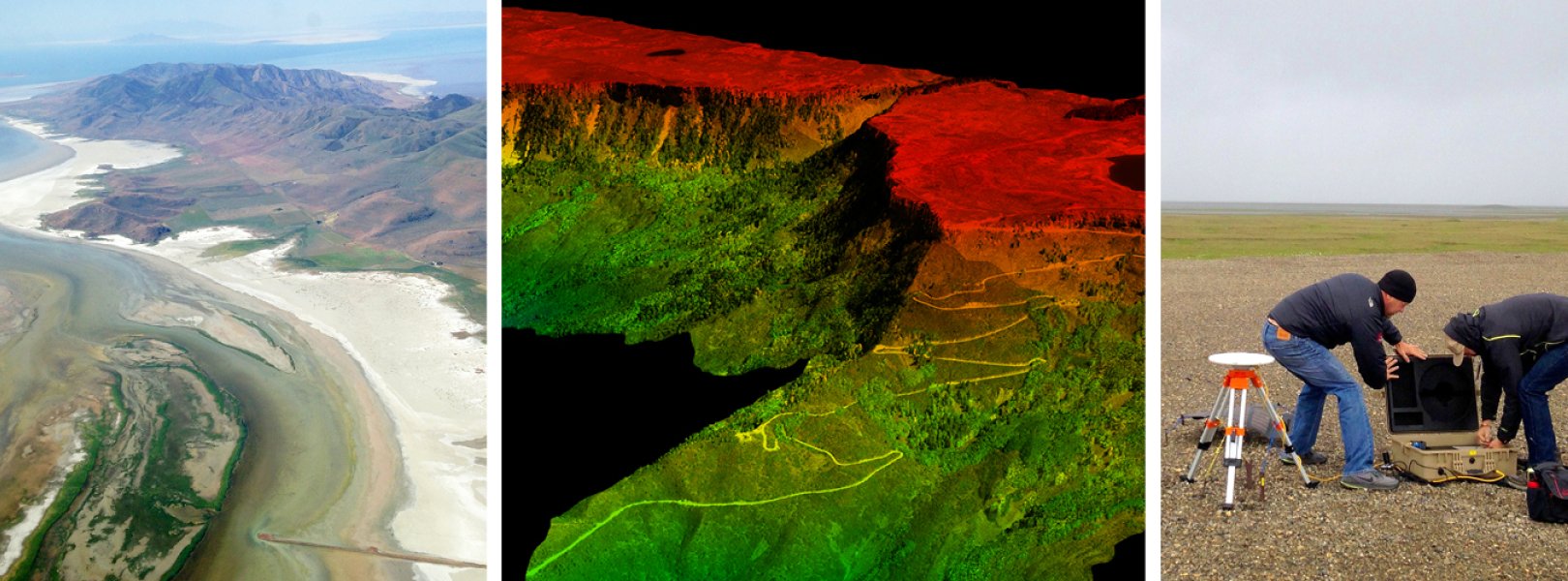
Vegetation health, distribution, and biochemistry play an important role in how ecosystems change. Collecting airborne remote sensing data from an ecosystem can provide valuable insights into these processes, especially when they are surveyed following major disturbance events such as floods or wildfires. However, the equipment needed to collect these data can be cost prohibitive for a research study. To enable researchers to gather their own remote sensing data, NEON can conduct airborne remote sensing flight campaigns using the NEON Airborne Observation Platform (AOP).
How It Works
NEON's ability to provide researchers with access to an AOP depends on whether a unit is available for use at a given time. As with NEON's other Research Support Services (NRSS), the requesting research team is responsible for research project costs.
The AOP available through the NRSS program is equipped with the same instrumentation and data systems used to collect airborne remote sensing data over NEON field sites. During a flight campaign, the AOP is deployed and operated by a NEON airborne sensor team. The data collected by the AOP are processed by NEON and then delivered to the research team. NEON can also provide ground support (e.g., ASD field spectroradiometer to collect foliar spectral measurements, ground validation point collection) for flight campaigns as needed.
Once a request is submitted, NEON works with the requestor to develop cost estimates and flight plans. During this process, flight parameters are adjusted based on researchers' needs. For example, NEON will determine cloud cover and phenology for the area of interest; what altitude the data will be collected at; and whether the plan will include patterns, transects, etc.
Requesting an AOP Flight Campaign
An AOP flight campaign may be requested through NEON Research Support Services, which allows researchers to request the use of NEON infrastructure to advance ecological research and environmental studies.
- All AOP requests undergo a feasibility evaluation by NEON program staff prior to approval.
- As with all of NEON's Research Support Services, the investigators are responsible for providing funding to cover costs associated with each campaign. Research teams often secure such support through grant programs administered by the U.S. National Science Foundation and other agencies.
- Requests should be made as early as feasible to better incorporate deployments into NEON's annual flight schedule. The goal is to receive and process requests during the winter before the next flight season begins. Urgent requests, such as those funded by NSF Rapid Response Research (RAPID) grants, may be accommodated more quickly and are determined by asset availability.
Fill out the downloadable Research Support Services requests form to request a NEON AOP for an airborne remote sensing survey.