Spotlight
Recognition of Expertise & Service: Outgoing STEAC Members
November 19, 2026
The NEON Science, Technology & Education Advisory Committee (STEAC) often goes through a transition this time of year when some members reach the end of their terms (3-year +1 optional) and new members join the committee. NEON deeply values the expertise and commitment of the passionate, forward-thinking professionals who serve on the STEAC. Their perspectives and guidance help NEON remain responsive to the evolving needs of the scientific community and successfully execute the NEON mission and vision.
As several STEAC members complete their terms, NEON is pleased to recognize their service and the meaningful contributions they have made.
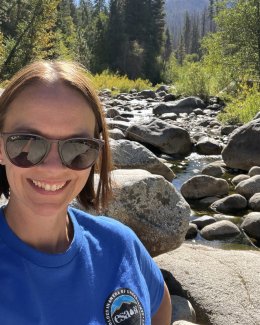
Adrienne Sponberg
As Dr. Adrienne Sponberg was finishing her PhD in Ecology, Evolution & Environmental Biology at the University of Notre Dame, she spent a year working in the U.S. Senate, where she was often frustrated by the absence of scientists in conversations where science deserved a seat at the table. Since then, she has dedicated her career to making science matter in broader society. She spent the past 25 years working with professional science societies working to support research, scientists, education, publishing, and public engagement. Today, as Executive Director of ESA, she supports ecologists and ecological science on a broad scale. Before joining ESA, Dr. Sponberg served as director of communications and science and Editor in Chief for the Limnology and Oceanography Bulletin of the Association for the Sciences of Limnology and Oceanography (ASLO) and as director of public policy with the American Institute of Biological Sciences. Throughout her career, Sponberg has received several prestigious fellowships, including an ORISE NOAA fellowship and a Sea Grant Knauss Marine Policy Fellowship.
What did you enjoy most about being a STEAC member?
Having been involved with NEON since the earliest community discussions through the Infrastructure for Biology at Regional to Continental Scales (IBRCS) program and later the NEON Consortium Development Committee, it was incredibly rewarding to serve as a STEAC member. I especially enjoyed seeing how the vision for NEON had been translated into a functioning national observatory. NEON represents the tangible results of sustained investment in scientific infrastructure and the collective efforts of hundreds of ecologists over decades. Having advocated for research and science funding throughout my career, it has been gratifying to see the long-term vision for NEON become a reality that now benefits researchers, educators, students, and society.
Visiting the Niwot Ridge Mountain Research Station and NEON headquarters in Boulder was also a particular highlight of my STEAC service. It was incredibly inspiring to see both the scale of the enterprise and the dedication of the people behind it. I also greatly valued the thoughtful engagement of fellow STEAC members and Battelle staff in exploring new ways to maximize the scientific impact of NEON's unique data streams.
What have you been most proud of during your time as a STEAC member?
I’ve been proud to contribute to discussions about how NEON can best serve the ecological community and ensure that the extraordinary investments in data collection translate into meaningful scientific advances.
What are you most excited about watching NEON develop into the future?
It’s been very exciting to see how early career researchers are embracing big data and utilizing NEON data streams to address ecological questions that would have been impossible to answer when the project was first conceived several decades ago. As the length of the data record increases, the value of NEON will continue to grow.
Has being on the STEAC impacted your professional career, if so, how?
Serving on the STEAC gave me the opportunity to tap into my ecology roots while bringing the community engagement and management skills I've gained through 25 years as a scientific nonprofit professional. As Executive Director of ESA, it has also been valuable to get an inside look and gain a deeper understanding of this remarkable national investment in ecological science.
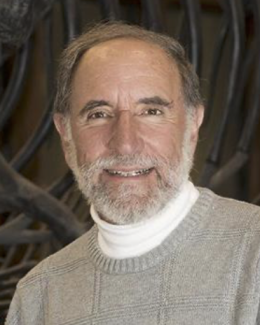
Daniel Rubenstein
Dr. Daniel Rubenstein is a behavioral ecologist who studies decision-making in animals, ranging from insects, fish, birds, and mammals, but, in particular, the equids—horses, zebras and wild asses. Understanding why animal societies take on the forms they do; why and how social networks vary; and how wildlife on shared landscapes impact, and are impacted by, people and their livestock are some of the problems he addresses. He has helped develop theory that predicts how environmental forces shape these patterns and animal decisions and tested his hypotheses using experiments and judicious comparisons. Of late, Dr. Rubenstein has been leading the way in using drones and AI to expand the scale and scope of behavioral and conservation research.
Dr. Rubenstein has been elected to the American Academy of Arts and Sciences, made Fellow of the American Academy for the Advancement of Science and the Animal Behavior Society, and was the Eastman Professor at Oxford. At Princeton, he received the distinguished Teaching Award and was chair of the Ecology and Evolutionary Biology Department for 23 years as well as director of the Program in Africa Studies and the Program in Environmental Studies. Currently he serves as an elected Council Member of his town, championing environmental and social good.
What did you enjoy most about being a STEAC member?
When I joined STEAC, all I knew was that it was the committee that would serve as a sounding board for issues that NEON staff were wrestling with as they managed many sites distributed across varying terrestrial and aquatic landscapes.
What I didn’t know was how challenging serving would be. As ecological questions change, NEON had to ensure that new types of data, or new approaches to data gathering, could be blended seamlessly with existing data sets. But given the breadth and depth of the committee members, the deep discussions we had usually guided NEON leadership to meet the challenges. My STEAC colleagues were terrific and so bright, it was fun interacting with them. Moreover, meeting the dedicated and highly qualified NEON leaders and coming up with solutions to challenging questions and problems was very rewarding.
What have you been most proud of during your time as a STEAC member?
As part of the NSF-funded Imageomics team, of which the emeritus NEON Chief Scientist & Observatory Director Dr. Mabee was a member, we decided to carry out the field component of our 'AI and Ecology Course' at the NEON site on the big island of Hawaii. The overall aim was to meld computer vision to solving ecological problems. The Hawaiian team proposed two challenging questions that I and my students took on. I was proud that we were able to answer the posed questions and demonstrate to the NEON team that AI and Machine Learning could be used to not only repeat what labor intensive efforts were currently producing, but also that remotely gathered data could reveal mechanisms underlying patterns because the data was gathered without human disturbance. I was most proud that this proof of concept expanded the horizons of NEON senior leadership who is now exploring ways of embedding these remotely sensed data gathering techniques into a variety of work plans and using them to expand the types of questions that can be asked.
What are you most excited about watching NEON develop into the future?
I’m most excited to see NEON explore how high tech, AI, and Machine Learning can expand and enrich the ability of NEON to stay true to its mission in more efficient and economic ways.
Has being on the STEAC impacted your professional career, if so, how?
I never would have thought of using NEON data in solving some of the problems that I as a behavioral ecologist want to explore. Given my experience both on the STEAC as well as working with NEON teams, my eyes have been opened, and I will draw on NEON data going forward.
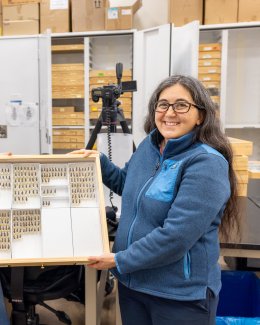
Sydne Record
Dr. Sydne Record is a Professor of Landscape Conservation in the Department of Wildlife, Fisheries, and Conservation Biology at the University of Maine. An interdisciplinary scientist whose work bridges ecology, statistics, and computer science, she studies the processes that shape species distributions and biodiversity across large landscapes and oceans. Her research combines ecological theory and field observations with large datasets and quantitative approaches, including remote sensing and artificial intelligence, to explore topics such as forest disturbance, wildlife habitat, and patterns of genetic, trait, and species diversity.
Dr. Record joined the University of Maine in 2022 after serving as Associate Provost of Curricular Assessment and Sustainability and Associate Professor of Biology at Bryn Mawr College. She earned her Ph.D. in Plant Biology from the University of Massachusetts Amherst and her B.S. from the University of Puget Sound.
What did you enjoy most about being a STEAC member?
Before joining the STEAC, I knew of NEON’s many data products, but I did not fully appreciate how much goes on behind the scenes to deliver quality data to the NEON-enabled science community. I enjoyed the opportunity to 'look under the hood' and see how the operations at the Observatory run. Even more so, I enjoyed getting to know all the excellent and knowledgeable staff at NEON who invest an enormous amount of time and expertise to ensure that the observatory runs smoothly. NEON has a great team that knows how to make things happen, and I was honored as a STEAC member to get to know the team and see all that they do. I also really appreciated that NEON and Battelle always took the feedback from the STEAC sincerely and would follow up with us on how they would incorporate our feedback into operations.
What have you been most proud of during your time as a STEAC member?
I have been proud to see more people engaging with NEON data. For instance, I was amazed at the number of great NEON presentations at the Ecological Society of America meeting this year. Years ago, it was possible to pinpoint just a handful of presentations with NEON in them, but this year it was hard to keep track of all the presenters using NEON data. I am especially excited about how the NEON Ambassadors program is highlighting awesome work done by next generation scientists who represent the future of NEON-enabled science and helping to launch their careers. I love that the observatory invests in building and maintaining these relationships with the community.
What are you most excited about watching NEON develop into the future?
I am looking forward to seeing the data streams lengthen and the new scientific insights to be made from them. With NEON being a long-term observatory, I think there are really interesting ecological questions that will be able to be answered. Additionally, I am excited to see how the observatory remains nimble and adapts to using novel technologies and addressing scientific questions that were not even imagined during the observatory’s inception.
Has being on the STEAC impacted your professional career, if so, how?
Yes, it has helped me to increase my professional network. Connecting with the other STEAC members and the NEON staff I have been able to meet during my term has expanded my network into expertise and areas far and wide.