Spotlight
Recognition of Expertise & Service: New STEAC Members
November 23, 2026
The NEON Science, Technology & Education Advisory Committee (STEAC) often goes through a transition this time of year when some members reach the end of their terms (3-year +1 optional) and new members join the committee. NEON deeply values the expertise and commitment of the passionate, forward-thinking professionals who serve on the STEAC. Their perspectives and guidance help NEON remain responsive to the evolving needs of the scientific community and successfully execute the NEON mission and vision.
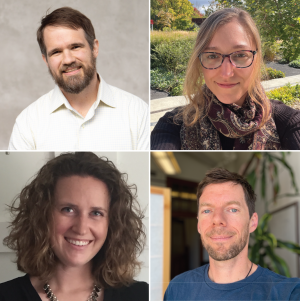
NEON is pleased to welcome four STEAC members onto the Committee this year.
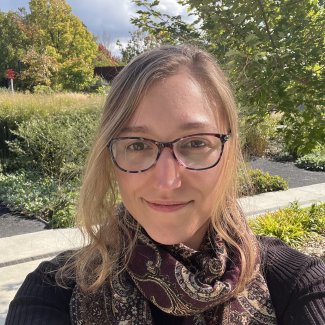
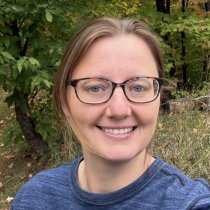
Elizabeth Campolongo
Dr. Elizabeth Campolongo is the Senior Data Scientist for both the Imageomics Institute and AI & Biodiversity Change (ABC) Global Center, based at The Ohio State University. She specializes in large-scale data analysis and preparation, with particular expertise in identifying, evaluating, and preparing biodiversity data for AI/ML model training and evaluation. She has led the creation of a FAIR and reproducible digital AI research product ecosystem, with web-based guides, templates, and tools for interdisciplinary teams, with a particular emphasis on AI for nature. Within the FAIR4AI-Bio network, she leads the AI-FAIR checklist initiative for enabling AI-assisted data workflows. She is passionate about open-science and has been a co-lead on various workshops and challenges designed to engage the broader community in ML for science pursuits.
Dr. Campolongo has been working in interdisciplinary research since her undergrad at New York University Gallatin School of Individualized Study. She earned her Ph.D. in Mathematics from The Ohio State University in 2022 under the supervision of Dr. Krystal Taylor, and was nominated by OSU for the 2024 Council of Graduate Schools (CGS)/ProQuest Distinguished Dissertation Award in Mathematics, Physical Sciences and Engineering. Her dissertation, Lattice Point Counting through Fractal Geometry and Stationary Phase for Surfaces with Vanishing Curvature, applied harmonic analysis and geometric measure theory to a classical problem in number theory.
What are you looking forward to as a STEAC member?
I spend a lot of time in this space, working with researchers at the intersection of AI and ecology/biology, with a great emphasis on how we communicate research from our groups. I enjoy finding connections between what we’ve done and the research goals of others, connecting products to people and getting data, models, and code into the hands of researchers who can use them. How we communicate science and resources to other scientists and the broader community helps determine the impact it will have. Part of that communication is the format in which they’re packaged and the breadth of examples provided; this is a major focus of our AI-FAIR Checklist, closing the gap between FAIR and AI-ready data. NEON has a plethora of resources to offer that are invaluable to these pursuits, and I am thrilled to offer my perspectives in this space and work with this group to help further NEON’s mission.

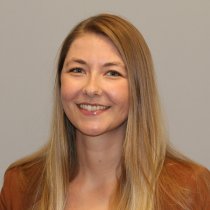
Emiley Eloe-Fadrosh
Dr. Emiley Eloe-Fadrosh is the Metagenome Program Head at the Department of Energy’s Joint Genome Institute where she manages a large portfolio of environmental genomics projects. She oversees scientific planning and production metrics, working closely with the user community from project initiation through data synthesis and publication. Her research focuses on developing and applying bioinformatics tools at scale to characterize microbes, environmental viruses, and ecosystem processes. Her interdisciplinary research team led the development of the largest genomic catalog across Earth’s biomes in collaboration with >200 researchers worldwide. Dr. Eloe-Fadrosh was also the Program Lead of the National Microbiome Data Collaborative (NMDC) that ran from 2019-2026. She is the recipient of the 2020 LBNL Director’s Award for Exceptional Early Scientific Career Achievement, serves on the Board of the Genomic Standards Consortium, and was elected 2026 Fellow of the American Academy of Microbiology.
Prior to joining Berkeley Lab, Dr. Eloe-Fadrosh served as a Program Fellow for the Marine Microbiology Initiative at the Gordon and Betty Moore Foundation where she advised in the areas of computational biology and bioinformatics. She conducted her postdoctoral training in human microbiome research at the Institute for Genome Sciences at the University of Maryland School of Medicine and her graduate training in microbial oceanography at Scripps Institution of Oceanography.
What are you looking forward to as a STEAC member?
I am particularly interested in collaborating on initiatives that bridge disciplinary siloes and to think creatively about expanding to new research communities to do high-impact science with NEON. I have actively collaborated with the NEON team over the past several years to expand how NEON's metagenome data is processed and made more broadly accessible to the research community. Having recently served on the steering committee for the 2025 NEON Convergence Summit, I am eager to further contribute to NEON’s interdisciplinary open science approach and how nascent AI efforts might shape the future.
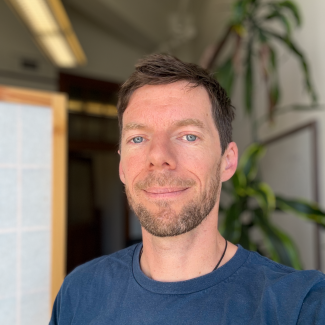
Trevor Keenan
Dr. Trevor Keenan is a Professor in the Department of Environmental Science, Policy and Management at UC Berkeley, where he holds the Chen Chancellor's Chair in Climate Science and Solutions, and a Faculty Scientist at Lawrence Berkeley National Laboratory. He leads the Quantitative Ecosystem Dynamics (Q.E.D.) Lab, which studies how terrestrial ecosystems respond to and shape a changing climate by combining eddy covariance flux networks, satellite and lidar remote sensing, machine learning, and Earth system models. He chairs the FLUXNET Community Council, directs the FLUXNET Coordination Project, and is a co-PI on the AmeriFlux Management Project. He also recently received AGU’s Piers J. Sellers Global Environmental Change Mid-Career Award.
What are you looking forward to as a STEAC member?
I'm looking forward to helping NEON get the most out of its observations for the broader research community, particularly by strengthening the links between NEON's flux towers and the AmeriFlux and FLUXNET networks, and by making NEON data easier to use with emerging AI and machine learning tools.
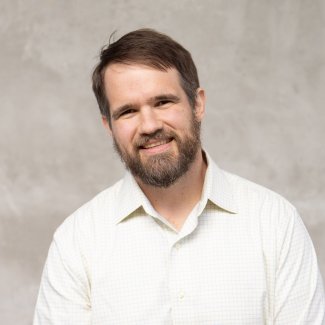
Naupaka Zimmerman
Dr. Naupaka Zimmerman is a microbial ecologist with a particular interest in the ecology of the foliar microbiome. His research group conducts field, greenhouse, and lab experiments to understand the ecology of plant-fungal interactions. He is currently an Assistant Professor in the Department of Earth, Energy, and Environment at the University of Kansas. Before starting the position in Kansas, Dr. Zimmerman was on the faculty of the University of San Francisco in the Biology Department for 9 years. He holds a PhD in Ecology and a BA in Environmental Science, Public Policy, and Cultural Anthropology.
In addition to his position at the University of Kansas, Dr. Zimmerman is also involved with the Ecological Society of America in a number of roles, including most recently as co-Program Chair for the 2025 Annual Meeting in Baltimore, MD. He has also volunteered with the Carpentries (an organization helping to train researchers in core computational skills) for over a decade, where he helps maintain several of the Data and Software Carpentry lessons and serves as chair of the genomics curriculum committee. During his training years, Dr. Zimmerman was supported by fellowships from the NSF Graduate Research Fellowship Program and was a Gordon and Betty Moore Postdoctoral Fellow of the Life Sciences Research Foundation.
What are you looking forward to as a STEAC member?
I am excited to work with other folks interested in helping NEON reach its full potential and get its amazing datasets into the hands of more researchers and educators. While I've had some insight into the challenges and opportunities NEON faces through my involvement with several of the Technical Working Groups, I am looking forward to getting a sense for how NEON is navigating decisions at a broader organizational level.